July 30, 2026
Quick Answer
Cold weather concrete patching is possible, but the repair material and construction method must be suitable for low temperatures.
The main challenge during winter repair is not simply making the material harden. Concrete patch materials need time for hydration and bonding with the existing concrete. When temperatures drop, these processes slow down, which can extend curing time and increase the risk of failure before the repair becomes strong enough.
For cold-weather repairs, contractors usually need to consider three factors: the temperature of the existing concrete, the type of repair material being used, and how the repair will be protected after placement.
A standard concrete patch product that works well at normal temperatures may not perform as expected in winter conditions. Depending on the application, cold-weather repairs may require polymer-modified repair mortars, epoxy-based patch materials, MMA repair systems, or other products designed for lower temperatures.
However, even a specialized cold-weather repair material cannot solve every problem. A patch placed on frozen concrete or exposed to freezing conditions before sufficient strength develops can still experience bonding problems, cracking, and premature deterioration.
Why Concrete Patch Is Difficult in Cold Weather
Concrete repair in winter is more challenging because the repair material must develop strength while the surrounding environment is working against it.
A concrete patch does not only need to become hard. It must create a strong connection with the existing concrete surface and maintain that bond when exposed to traffic, moisture, temperature changes, and freeze-thaw cycles.
When temperatures decrease, the chemical reactions inside cement-based materials slow down. This means the repair may remain weak for a longer period, increasing the time during which it needs protection.
For outdoor repairs, the problem becomes more serious because the patch is usually exposed to cold air, wind, and moisture. Even a small repair area can lose heat quickly, especially when the surrounding concrete and substrate are already cold.
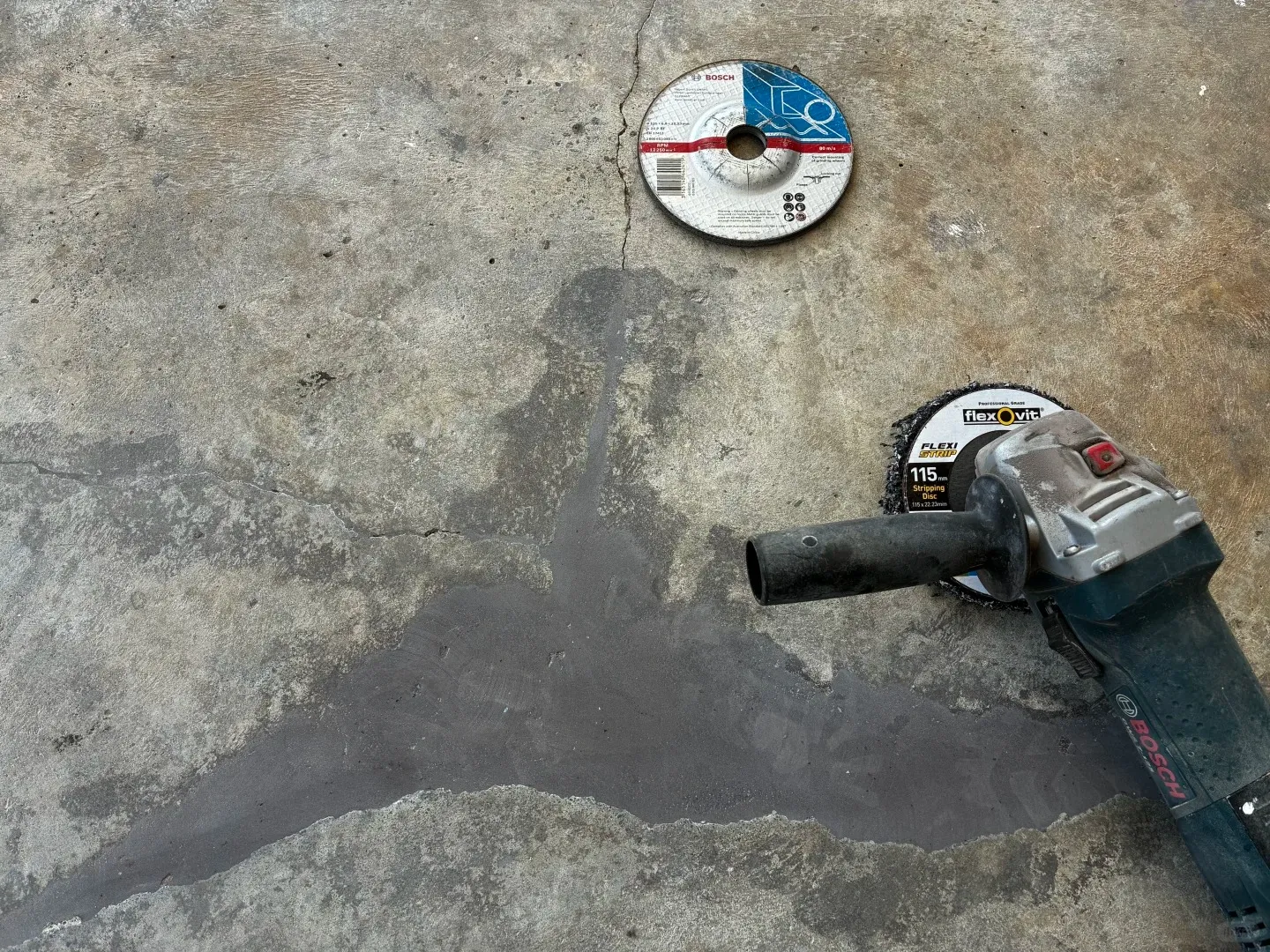
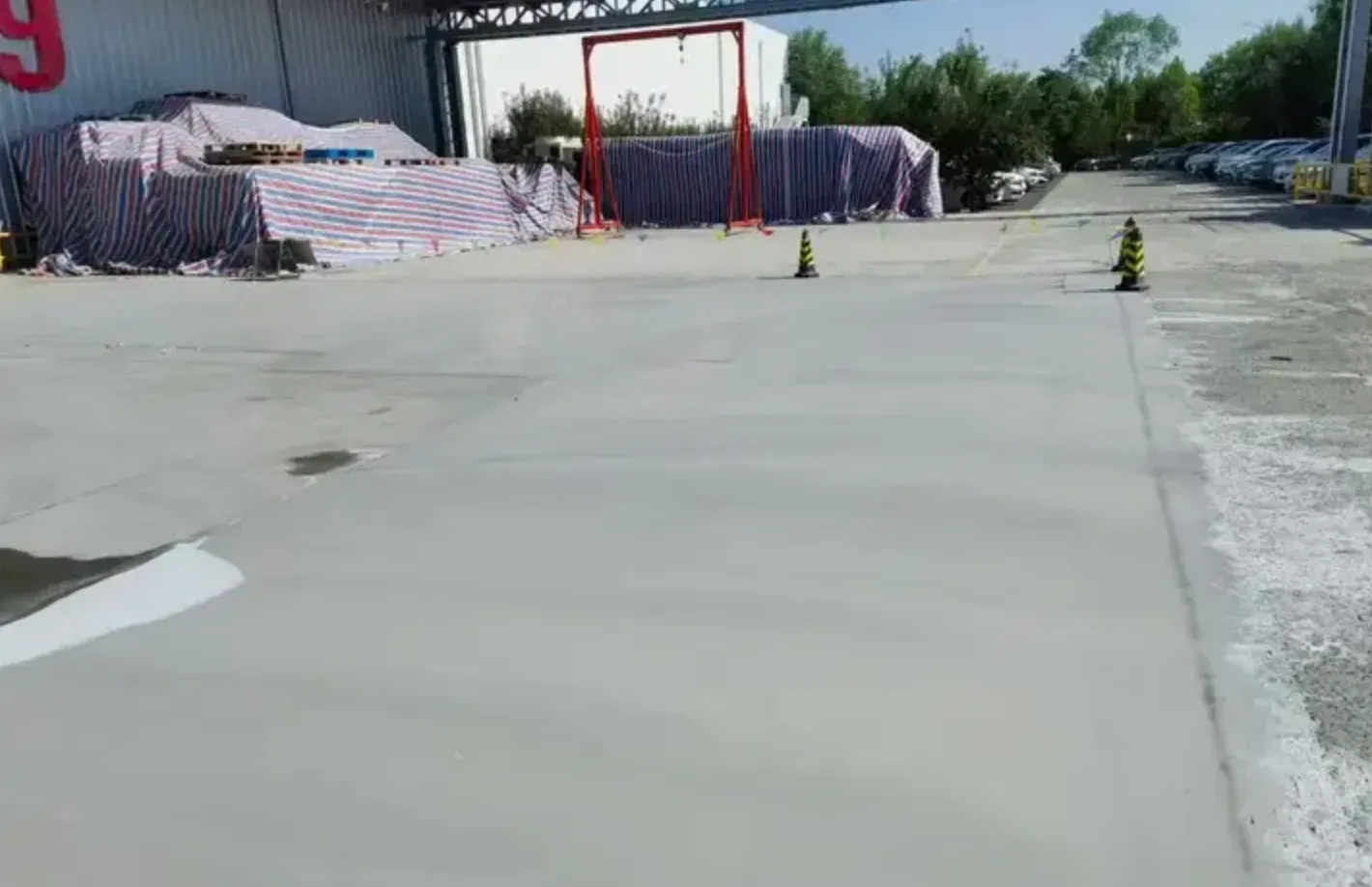 A repaired concrete floor surface after applying cement-based repair material for industrial applications.
Cold Temperatures Slow the Curing Process
Most cement-based concrete patch materials gain strength through hydration, which is the reaction between cement and water. This reaction produces the compounds responsible for the hardness and strength of the repair.
Temperature has a direct effect on the speed of this process. At normal construction temperatures, repair materials can develop strength within the expected time. When the temperature drops toward 40°F (4°C) or lower, hydration becomes slower and the repair may need much more time before it can handle normal service conditions.
This creates practical problems on construction sites. A repair area may need to remain closed longer, finishing operations may be delayed, and the material may stay exposed to freezing conditions during the most vulnerable stage of curing.
For winter repairs, the goal is not only to place the material successfully but also to maintain suitable conditions until the repair has developed enough strength.
 Low temperatures slow cement hydration, delay setting, increase the risk of early freezing before sufficient strength develops, and extend the time required for stripping, loading, and service.
Freezing Can Damage Fresh Concrete Repairs
The greatest risk during cold weather repair is early freezing.
Fresh concrete patch materials contain water, and before the material becomes strong enough, this water can freeze when temperatures fall below the freezing point. Ice formation creates expansion pressure inside the developing repair structure and can interrupt the bonding process.
The damage caused by early freezing is not always visible immediately. A patch may look acceptable after installation, but the internal structure may already be weakened. Over time, this can lead to cracking, loss of adhesion, surface breakdown, or reduced service life when the repaired area is exposed to repeated loading and freeze-thaw cycles.
Cold-weather concrete guidance commonly refers to achieving approximately 500 psi compressive strength before allowing fresh concrete to experience freezing conditions. Before reaching this level, the repair requires protection from low temperatures.
This is why a fast-setting repair product alone is not a complete solution. The material must also be installed on a suitable surface and protected during the early curing period.
 A visible crack on a concrete column being inspected to evaluate potential structural repair requirements.
Small Concrete Patches Lose Heat Faster
A concrete patch behaves differently from a large concrete placement.
Large concrete pours contain a greater volume of material, which allows hydration heat to build up inside the concrete mass. A small repair area has much less material and a larger exposed surface area compared with its volume, so heat escapes much faster.
This makes small repairs more sensitive to winter conditions. Thin patches, edge repairs, sidewalk repairs, and surface repairs can cool quickly after placement, especially when the existing concrete, base material, or surrounding air temperature is low.
For this reason, cold-weather patching requires more attention to protection than many people expect. The size of the repair, not only the air temperature, affects how quickly the material loses heat and how long it needs protection.
Can You Patch Concrete Below 40°F?
Whether concrete can be patched below 40°F depends on the repair material, surface conditions, and the protection method used after placement. Temperature alone does not determine whether a repair will succeed.
Many conventional concrete patch products are designed for warmer conditions. When the air temperature and concrete surface temperature fall below the recommended range, curing becomes slower and the repair may not achieve the expected performance.
In cold weather work, the temperature of the existing concrete is just as important as the surrounding air temperature. A repair material placed on a frozen slab or a surface covered with frost may fail even if the product itself is designed for winter use.
Above 40°F (4°C)
When temperatures remain above 40°F (4°C), many standard repair materials can still be used if the concrete surface is clean, dry, and stable.
However, contractors should still pay attention to overnight temperatures. A repair placed during a relatively mild afternoon can experience freezing conditions several hours later, before the material has developed enough strength.
For projects in this temperature range, proper scheduling is often as important as material selection. Placing the repair during the warmest part of the day and allowing sufficient curing time before nighttime temperature drops can reduce the risk of early damage.
Between 32°F and 40°F (0°C–4°C)
When temperatures approach freezing, normal repair procedures become less reliable.
At these temperatures, repair materials may still cure, but the process can become much slower. The existing concrete may also remain cold for many hours, which reduces the temperature of the fresh repair after placement.
In this situation, contractors often need to select materials that are more suitable for cold conditions and take additional steps to maintain temperature during curing.
The repair area should be protected from wind and freezing temperatures, and the substrate should be checked carefully before application. A cold but unfrozen surface may be acceptable for some materials, while a frozen surface can prevent proper bonding.
Below Freezing Temperatures
Concrete patching below freezing is possible, but it requires much more control.
At temperatures below 32°F (0°C), water inside cement-based materials can freeze before the repair develops sufficient strength. Standard repair mortars are generally not designed for these conditions unless special precautions are taken.
Projects performed in freezing weather often require a combination of low-temperature repair materials and environmental protection. This may include heated enclosures, insulated blankets, or temporary heating systems to keep the repair within a suitable curing range.
The key point is that cold-weather repair is not achieved by simply adding a chemical accelerator or choosing a product labeled “winter grade.” The entire repair process, including substrate preparation, material selection, placement, and curing protection, must be considered together.
Choosing the Right Cold Weather Concrete Patch Material
The best concrete patch for cold weather depends on the repair location, required service time, and environmental exposure. A material that works well for a freezer floor may not be the right choice for a sidewalk or a bridge repair.
Cold-weather repair materials generally fall into several categories, each with different performance characteristics.
Cementitious Repair Mortars
Cement-based repair mortars are the most common type of concrete patch material because they are chemically similar to existing concrete.
They are often selected for general repairs where compatibility with the existing concrete is important and the repair does not require extremely fast return to service.
However, cementitious materials are sensitive to temperature because they rely on hydration to develop strength. In cold conditions, they may require longer curing periods and additional protection to prevent freezing before they become strong enough.
They are commonly used for:
- surface repairs
- damaged concrete edges
- sidewalks
- general concrete restoration work
For winter applications, the product temperature requirements and curing recommendations from the manufacturer should always be followed.
 Flowable repair mortar spreading across a concrete surface during repair work.
Polymer-Modified Concrete Patch Materials
Polymer-modified repair mortars combine cement-based chemistry with polymer components that improve bonding and durability.
The polymer phase helps the repair material adhere to existing concrete and improves resistance to shrinkage and environmental stress. This makes polymer-modified materials useful when the repair needs better adhesion than a standard cement mortar can provide.
They are often used for areas where the repair surface experiences repeated movement, moisture exposure, or temperature changes.
Typical applications include:
- concrete overlays
- damaged floors
- repair areas requiring stronger bonding performance
Although polymer modification improves performance, these materials still require appropriate curing conditions. Low temperatures can affect both cement hydration and polymer development, so temperature limits should be considered before application.
 Polymer-modified repair mortar being applied to a concrete surface for restoration and surface improvement.
Epoxy Concrete Patch
Epoxy-based repair materials are widely used for cold-weather concrete repairs where strength, durability, and chemical resistance are important.
Unlike cement-based repair materials, epoxy systems do not depend on cement hydration as their primary curing mechanism. This allows some epoxy repair products to perform in temperature ranges where traditional cementitious patches may struggle.
Epoxy mortars are commonly selected for industrial environments where the repaired surface must withstand heavy traffic, impact, abrasion, or chemical exposure. They are frequently used in locations such as warehouses, manufacturing facilities, loading docks, and cold storage areas.
One advantage of epoxy repair materials is their high mechanical performance. Many epoxy mortars can achieve compressive strengths significantly above ordinary concrete repair materials, making them suitable for areas exposed to repeated loading.
However, epoxy products also have limitations. They usually require careful surface preparation because the bond depends heavily on the condition of the existing concrete. Oil contamination, dust, moisture, or weak concrete can reduce adhesion. The material cost is also generally higher than conventional cement-based repair mortars.
For cold weather applications, the product’s minimum application temperature must be checked carefully. Not every epoxy system is designed for freezing conditions.
MMA Polymer Concrete Repair
Methyl methacrylate (MMA) repair systems are used when a project requires rapid return to service, especially in situations where long shutdown periods are not possible.
MMA materials cure through polymerization rather than cement hydration, allowing them to develop strength quickly even in conditions where cement-based materials would require extended curing time.
They are commonly used for demanding repair projects such as:
- bridge decks
- airport pavement
- highway repairs
- expansion joint repairs
- industrial areas requiring rapid reopening
Another advantage of MMA systems is their resistance to freeze-thaw cycles and temperature changes. This makes them suitable for infrastructure repairs exposed to repeated seasonal changes.
The main limitation is that MMA products are specialized materials that require proper handling and application procedures. They are usually selected for critical repairs rather than routine concrete patching.
Cold Weather Concrete Patch Material Comparison
Choosing a repair material is not only about how quickly it sets. The material must also match the environment where the repair will be used.
A sidewalk repair exposed to occasional freezing conditions has different requirements from a freezer floor, bridge deck, or industrial loading area.
| Material Type | Main Characteristics | Typical Applications |
| Cementitious repair mortar | Similar to concrete, economical, widely compatible | General concrete repairs, sidewalks, surface damage |
| Polymer-modified mortar | Improved bonding and durability compared with standard mortar | Overlays, floor repairs, areas with movement or moisture exposure |
| Epoxy mortar | High strength, abrasion resistance, chemical resistance | Industrial floors, warehouses, cold storage areas |
| MMA repair system | Rapid curing and fast return to service | Bridges, highways, emergency repairs |
The correct choice depends on the required curing speed, expected temperature conditions, traffic loading, and long-term durability requirements.
Best Applications for Cold Weather Concrete Patch
Cold weather concrete patching is used in many situations where waiting until warmer weather is not practical. The repair method depends heavily on where the damage occurs because different locations create different performance requirements.
Driveways and Sidewalk Repairs
Residential and commercial sidewalks are among the most common concrete repair applications. During winter, small cracks and surface defects can become larger problems because water enters the damaged area and expands during freezing.
For these repairs, the main concerns are usually surface bonding, freeze-thaw resistance, and appearance. A repair material must adhere properly to the existing concrete and tolerate repeated temperature changes after curing.
Small surface repairs can often be completed in colder seasons when the right material and curing protection are used. However, repairs should not be placed on frozen concrete or during conditions where the material cannot develop sufficient strength.
Industrial Floors and Loading Docks
Industrial concrete floors experience much greater mechanical stress than residential surfaces. Forklifts, pallet trucks, heavy equipment, and repeated impact can quickly damage weak repairs.
Cold weather creates additional challenges because many industrial areas, such as warehouses and loading docks, may have large temperature differences between indoor and outdoor environments.
These applications often require repair materials with strong bonding ability and resistance to abrasion. Epoxy mortars and high-performance polymer repair materials are commonly considered for these conditions because they can withstand repeated loading after curing.
For facilities that cannot stop operations for several days, repair speed becomes another important factor when selecting a material.
A repaired concrete floor surface after applying cement-based repair material for industrial applications.Freezer and Cold Storage Areas
Cold storage facilities create some of the most demanding conditions for concrete repair.
Unlike normal outdoor winter conditions, freezer floors may remain at low temperatures continuously. The repair material must perform not only during installation but also during long-term exposure to freezing conditions.
Concrete floors in refrigerated warehouses, food processing facilities, and freezer rooms often suffer from surface damage caused by heavy traffic, thermal movement, moisture, and repeated freeze-thaw exposure.
For these areas, ordinary concrete patch materials may not be suitable because the repair needs to develop strength under cold conditions and maintain its bond with the existing slab.
Cold-weather repair materials used in freezer environments are often selected based on their ability to cure at low temperatures, resist impact from equipment traffic, and maintain durability under constant temperature changes.
Before repairing a freezer floor, the damaged area should be completely cleaned and prepared. Any loose concrete, oil contamination, or weak material left behind can reduce the bond between the patch and the existing slab.
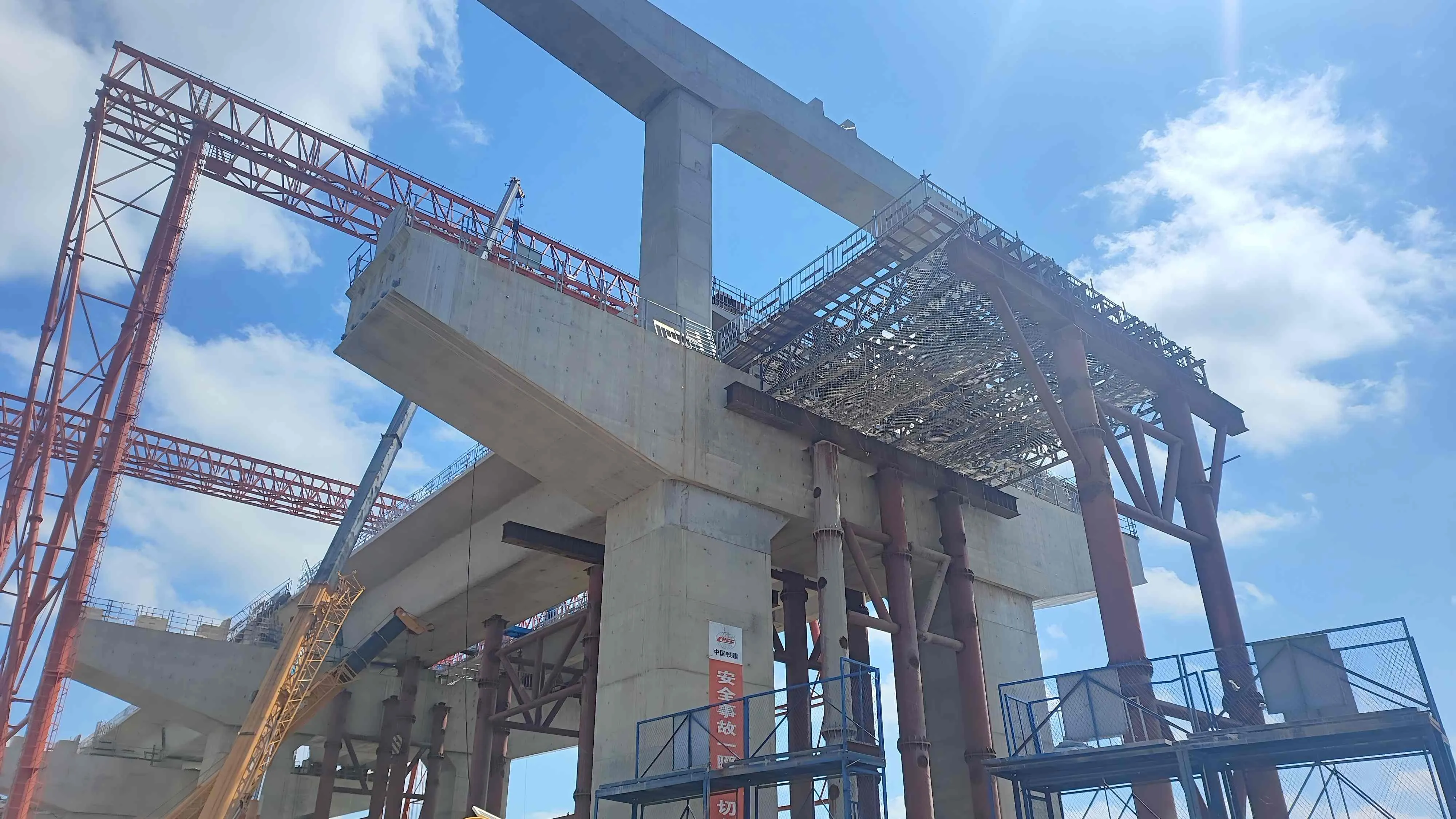
Bridge and Infrastructure Repair
Concrete repairs on bridges, roads, and other infrastructure projects often cannot wait for warm weather.
Traffic disruption, safety concerns, and maintenance schedules may require repairs during winter months. In these situations, repair materials must develop strength quickly while still providing long-term durability.
Bridge decks and highway pavements are especially challenging because they are exposed to:
- repeated freezing and thawing
- deicing chemicals
- vehicle loads
- moisture penetration
- temperature changes
Rapid-setting repair materials, including MMA systems and specialized polymer-modified mortars, are often used when reopening the repaired area quickly is necessary.
However, fast setting does not mean the repair can ignore curing conditions. The substrate temperature, moisture condition, and protection after placement still influence the final performance of the repair.
 Application of cement-based repair mortar for repairing damaged concrete structures.
How to Apply Concrete Patch in Cold Weather
Cold weather repair success depends on more than choosing a low-temperature product. Preparation, placement, and curing conditions determine whether the repair will last.
A material designed for winter use can still fail if it is placed on frozen concrete, mixed incorrectly, or exposed to freezing before it develops enough strength.
Check the Temperature Before Repair
Before starting the repair, check both the air temperature and the temperature of the existing concrete.
The surface temperature of the damaged concrete is often more important than the surrounding air temperature. A slab that has been exposed to freezing conditions may remain cold even when the daytime air temperature rises.
Cold-weather repairs should not be performed on frozen substrates. Ice inside cracks or pores can prevent proper bonding and create weak areas below the repair.
For projects where temperature conditions are uncertain, an infrared thermometer can be used to check the surface temperature before application.
Prepare the Existing Concrete Surface
Surface preparation is one of the most important steps in concrete patch repair.
The damaged concrete should be removed until a solid and stable surface is reached. Loose particles, dust, oil, and other contaminants can interfere with bonding.
In cold conditions, moisture requires extra attention. Water trapped inside the repair area can freeze and affect the connection between the old concrete and the new patch material.
For deeper repairs, the edges of the repair area should be properly prepared so the patch can mechanically lock into the existing concrete rather than relying only on surface adhesion.
Mix and Place the Repair Material Correctly
Cold temperatures can affect the working time and consistency of repair materials.
For cement-based products, using warm mixing water can help maintain a suitable material temperature. However, the water should not be excessively hot because it may affect setting behavior.
The amount of water must also be controlled carefully. Adding extra water to make cold repair material easier to place can increase the water-cement ratio and reduce final strength.
For polymer or resin-based repair materials, the mixing procedure should follow the manufacturer’s instructions because incorrect proportions can affect curing performance.
Protect the Repair During Curing
Protection after placement is one of the most important parts of cold-weather concrete repair.
Fresh cement-based repairs need protection from freezing until they develop enough strength to resist damage. According to commonly referenced cold-weather concrete practices, concrete should reach approximately 500 psi compressive strength before being exposed to freezing conditions.
Protection methods may include insulated blankets, temporary enclosures, or controlled heating.
The purpose of protection is not only to keep the repair warm. It also helps maintain a stable curing environment so the material can develop its designed properties.
Rapid temperature changes should also be avoided. Removing protection too quickly in very cold conditions can create thermal stress and affect the repair surface.
Common Mistakes When Repairing Concrete in Cold Weather
Many cold-weather repair failures are not caused by the repair material itself. They usually happen because the surrounding conditions were not properly controlled.
One common mistake is applying repair material directly onto frozen concrete. Even a high-performance patch cannot create a reliable bond when ice remains between the old concrete and the new material.
Another problem is assuming that an accelerator or fast-setting product eliminates the need for curing protection. Accelerators can help reduce setting delays, but they do not make concrete completely resistant to freezing.
Using too much water during mixing is another frequent issue. Cold materials often feel stiff, which may tempt workers to add additional water. This can weaken the repair and reduce durability.
Finally, repairs should not be selected only by temperature rating. A product that works at low temperatures may not be suitable for every application. A freezer floor, bridge deck, and warehouse floor all require different performance characteristics.
How to Choose the Right Concrete Patch for Cold Weather
Choosing a concrete patch for cold weather is not only about finding a product that can be applied at a low temperature. The repair material must match the actual service condition, including temperature range, traffic requirements, repair depth, and time available before the area needs to return to service.
A material that works well for a small sidewalk repair may not be suitable for an industrial freezer floor or a heavily loaded bridge deck.
The first question should be: How quickly does the repaired area need to be used again?
For temporary repairs or areas with little traffic, a standard cold-weather cementitious repair mortar may be sufficient when combined with proper protection. For areas that need to reopen within hours, rapid-setting systems such as MMA, epoxy, or specially formulated repair mortars may be more appropriate.
Consider the Application Temperature
Every repair material has a recommended application temperature range.
Some cold-weather patch products are designed for use slightly below normal construction temperatures, while specialized materials can perform at temperatures below freezing.
For example, epoxy-based repair systems may be suitable for applications around 35°F (2°C) and above, while some methyl methacrylate (MMA) repair materials are designed for much lower temperatures.
The important point is that the temperature rating applies to the entire repair process, not only the moment of installation. The existing concrete, mixing environment, and curing period must also meet the required conditions.
Match the Material to the Repair Location
The location of the repair often determines the type of patch material needed.
For warehouse floors and industrial areas, the repair material must resist repeated wheel traffic, impact, and abrasion. A patch that only achieves acceptable compressive strength but lacks impact resistance may deteriorate quickly under forklifts or heavy equipment.
For freezer rooms and refrigerated facilities, the material must tolerate continuous low temperatures and repeated thermal movement.
For bridge decks and transportation structures, the repair material must combine rapid strength development with resistance to freeze-thaw cycles and environmental exposure.
The correct material depends on the actual conditions after repair, not only the temperature during installation.
Consider Repair Depth and Size
The thickness of the repair also affects material selection.
Thin surface repairs lose heat quickly and are more sensitive to low temperatures. They often require materials specifically designed for shallow applications.
Deep repairs behave differently because the larger volume of material can generate heat during curing. However, deeper sections may also experience internal temperature differences that require monitoring.
Before selecting a patch material, consider the actual repair depth and whether the product is designed for that thickness.
Cement-Based Patch vs Polymer-Based Patch
Cold-weather concrete patches are generally divided into cement-based systems and polymer-based systems.
Cement-based repair mortars are commonly used because they are compatible with existing concrete and are suitable for many structural and surface repairs. Their performance depends strongly on temperature control and curing protection.
Polymer-based repair materials, including epoxy and MMA systems, often provide faster strength development and better performance in some extreme environments. They are frequently selected for repairs where downtime must be minimized.
However, polymer systems usually require more careful handling, surface preparation, and cost consideration.
The best choice depends on the repair requirements rather than the material category alone.
Conclusion
Cold weather concrete patching is possible, but it requires more planning than normal-temperature repairs.
The biggest challenge is not simply making the repair material harden. The challenge is allowing the repair to develop a strong bond and enough early strength before freezing conditions damage the new material.
A successful winter repair usually combines three factors: a suitable repair material, proper surface preparation, and protection during curing.
For small repairs, a cold-weather cementitious patch with insulation may be enough. For industrial floors, freezer rooms, bridge repairs, or emergency repairs where downtime is expensive, specialized rapid-setting materials may provide a better solution.
The goal is not only to complete the repair during winter. The goal is to create a repair that continues performing after the temperature rises and the structure returns to normal service conditions.
Frequently Asked Questions
Can you patch concrete in cold weather?
Yes, concrete can be patched in cold weather if the correct material and procedures are used. The existing concrete should not be frozen, and the repair must be protected until sufficient strength develops.
What temperature is too cold for concrete patching?
There is no single temperature that applies to every repair product. Standard cement-based repair materials often require temperatures around 40°F (4°C) or higher, while specialized cold-weather products can be applied at lower temperatures.
The product instructions and curing requirements should always be followed.
Can I use concrete patch in freezing temperatures?
Some specially designed repair materials can be used in freezing conditions. However, ordinary concrete patch products may fail if they freeze before developing strength.
Does adding accelerator make concrete patch freeze-proof?
No. Accelerators help speed up hydration and early strength development, but they do not prevent water in the repair material from freezing.
The repair still needs proper temperature control and protection.
How long should a concrete patch be protected in cold weather?
The protection period depends on the material, temperature, and project requirements. Cement-based repairs are commonly protected for at least 24 to 48 hours, while some applications may require longer protection.