July 30, 2026

For the normal 24-hour, 7-day, and 28-day timeline, see our complete guide to how long concrete takes to cure.
Quick Answer
Yes. Fresh concrete normally appears darker immediately after placement because its surface contains more moisture. As curing progresses and the surface gradually dries, the concrete typically becomes lighter and more uniform in appearance. This is a normal part of concrete curing rather than a sign of poor quality
However, not every color difference indicates a defect. Slight shade variations are expected because concrete is a natural composite made from cement, aggregates, water, and supplementary cementitious materials, each of which can vary slightly. More noticeable blotches or sharp color differences are usually caused by inconsistent materials, finishing, or curing practices rather than the normal curing process itself
Although 28 days is the standard age for measuring design compressive strength, the surface appearance may continue changing for weeks or even several months as moisture gradually equalizes and carbonation slowly develops. Color stabilization and strength development are related, but they are not the same process
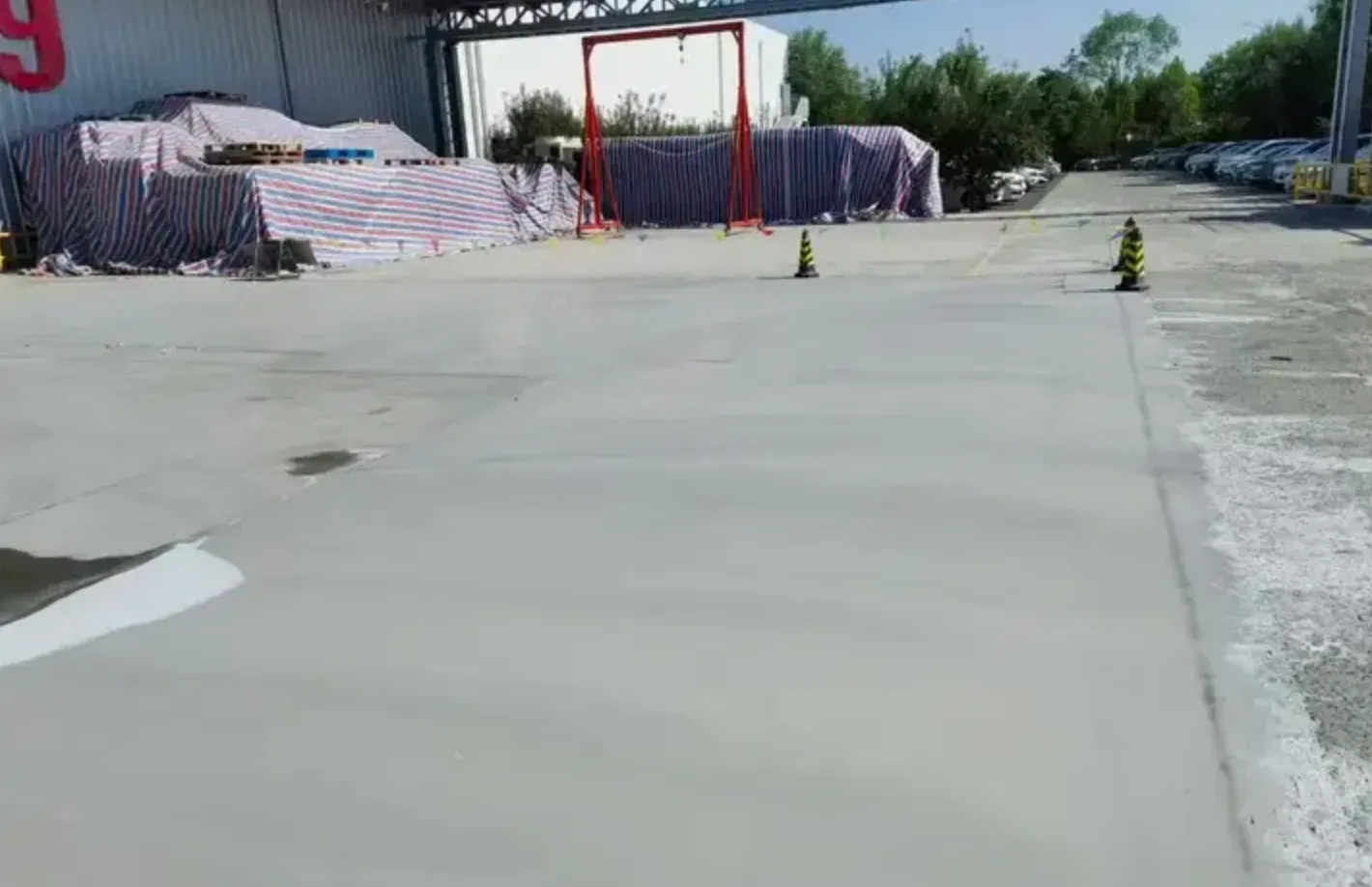
A newly cured concrete slab showing widespread whitening caused by surface residue or moisture-related discoloration.Article Outline
- Why Does Concrete Change Color as It Cures?
- How Long Does Concrete Keep Changing Color?
- What Factors Affect the Final Color of Concrete?
- Normal Color Changes vs. Concrete Discoloration
- Why Is My Concrete Different Colors?
- Will Colored Concrete Change Color Too?
- Best Practices for Achieving Uniform Concrete Color
- Frequently Asked Questions
- Final Thoughts
Why Does Concrete Change Color as It Cures?
Concrete changes color during curing because its surface moisture, light reflection, and internal hydration are all changing at the same time. Freshly placed concrete usually appears dark gray because the surface is saturated with water. As curing progresses, the surface gradually dries, the way it reflects light changes, and the concrete develops a lighter, more uniform appearance. This is a normal physical and chemical process rather than a sign of poor-quality concrete.
Fresh Concrete Looks Darker Because of Surface Moisture
Immediately after placement, the concrete surface is covered by a thin film of water and contains a high amount of free moisture within its pores. Water reduces light scattering and increases light absorption, making the surface appear darker than it will later.
This is why freshly poured concrete often looks much darker than the final finished slab. The same effect can be seen after rain—a cured concrete surface temporarily darkens when it becomes wet and returns to its original color after drying.

As Concrete Cures, the Surface Gradually Becomes Lighter
As curing continues, excess surface moisture gradually evaporates while cement hydration continues inside the concrete. Hydration consumes part of the mixing water to form calcium silicate hydrate (C-S-H), the compound responsible for concrete strength, while the remaining free water slowly leaves the surface.
With less moisture on the surface, more light is scattered instead of absorbed, so the concrete gradually changes from a darker gray to a lighter, more uniform color. The rate of this visual change depends on temperature, humidity, and exposure conditions, which is why two slabs poured on different days may lighten at different speeds even when they use the same concrete mix.

Color Change Does Not Mean Curing Is Complete
One of the most common misconceptions is that lighter concrete is fully cured. In reality, appearance and strength develop independently.
The surface may become noticeably lighter within days as moisture decreases, while hydration continues beneath the surface, allowing the concrete to keep gaining strength. In other words, a lighter color simply indicates that the surface is drying—it does not mean the concrete has reached its design strength or finished curing.
How Long Does Concrete Keep Changing Color?
Concrete does not reach its final appearance overnight. Its color changes most rapidly during the first few days after placement, then gradually becomes more uniform over the following weeks. Even after the concrete has developed its design strength, its appearance can continue changing slowly as it dries and is exposed to the environment.

First 24–48 Hours
The first 24–48 hours are when concrete usually appears its darkest. Surface moisture remains high, so the slab often has a deep gray appearance. During this period, noticeable color differences between wet and partially dried areas are also common.
First Week
The most obvious visual change typically occurs during the first 7 days. As the surface gradually dries, the concrete becomes lighter and more uniform. Under similar curing conditions, much of the visible color transition occurs during this period, although the exact rate depends on temperature, humidity, and exposure.
Around 28 Days
By about 28 days, most concrete has developed a relatively stable appearance under normal conditions. While minor shade differences may still exist, the dramatic dark-to-light transition seen during the first week is usually complete. This is also the standard age used for evaluating concrete’s design compressive strength, although color stabilization and strength development are separate processes.
Months After Curing
Concrete can continue changing slightly for several months after placement. Ongoing drying gradually equalizes moisture throughout the slab, while carbonation slowly alters the surface as carbon dioxide reacts with cement hydration products. Normal weathering from sunlight, rain, and seasonal moisture changes can also produce subtle shifts in appearance over time. These gradual changes are generally expected and do not necessarily indicate a problem.
What Factors Affect the Final Color of Concrete?
Even when two concrete slabs are placed close together, they may not end up the same color. Concrete appearance is influenced by the materials used, the mix design, environmental conditions, and construction practices. In most cases, noticeable color differences are caused by small inconsistencies rather than a single major problem.
| Factor | Effect on Color |
| Cement type | Different cement sources or colors can produce different shades. |
| Supplementary cementitious materials (SCMs) | Fly ash, slag, and silica fume can change the final hue or brightness. |
| Water-cement ratio | Higher water-cement ratios generally produce lighter-colored concrete surfaces. |
| Aggregates | Aggregate color and fines can subtly influence the overall appearance, especially in lighter concrete. |
| Admixtures | Some admixtures alter hydration or setting, causing slight color changes; calcium chloride is well known for increasing discoloration risk. |
| Weather | Temperature, humidity, rain, and sunlight affect the rate at which color develops. |
| Finishing | Differences in finishing timing or technique can produce visible shade variations. |
| Curing | Uneven curing often results in uneven color development. |
Water-Cement Ratio
The water-cement ratio (w/c ratio) refers to the amount of mixing water relative to the amount of cement. It should not be confused with the surface moisture discussed earlier.
Concrete with a higher water-cement ratio generally develops a lighter surface because the additional water leaves behind a more porous cement paste after drying. In contrast, a lower water-cement ratio typically produces a denser paste and a darker appearance. This is why adding water to a concrete truck at the jobsite can result in noticeable color differences between adjacent placements.
Cement, SCMs, and Aggregates
Concrete color starts with its raw materials. White cement produces brighter colors than gray cement, while different cement plants may supply cement with slightly different natural shades.
Supplementary cementitious materials (SCMs) also influence appearance. Fly ash may create buff or brown tones, while ground granulated blast-furnace slag (GGBFS) can initially give concrete a slight blue or green tint that gradually fades with exposure. Fine aggregates also contribute to the overall color, particularly in lighter concrete mixes.
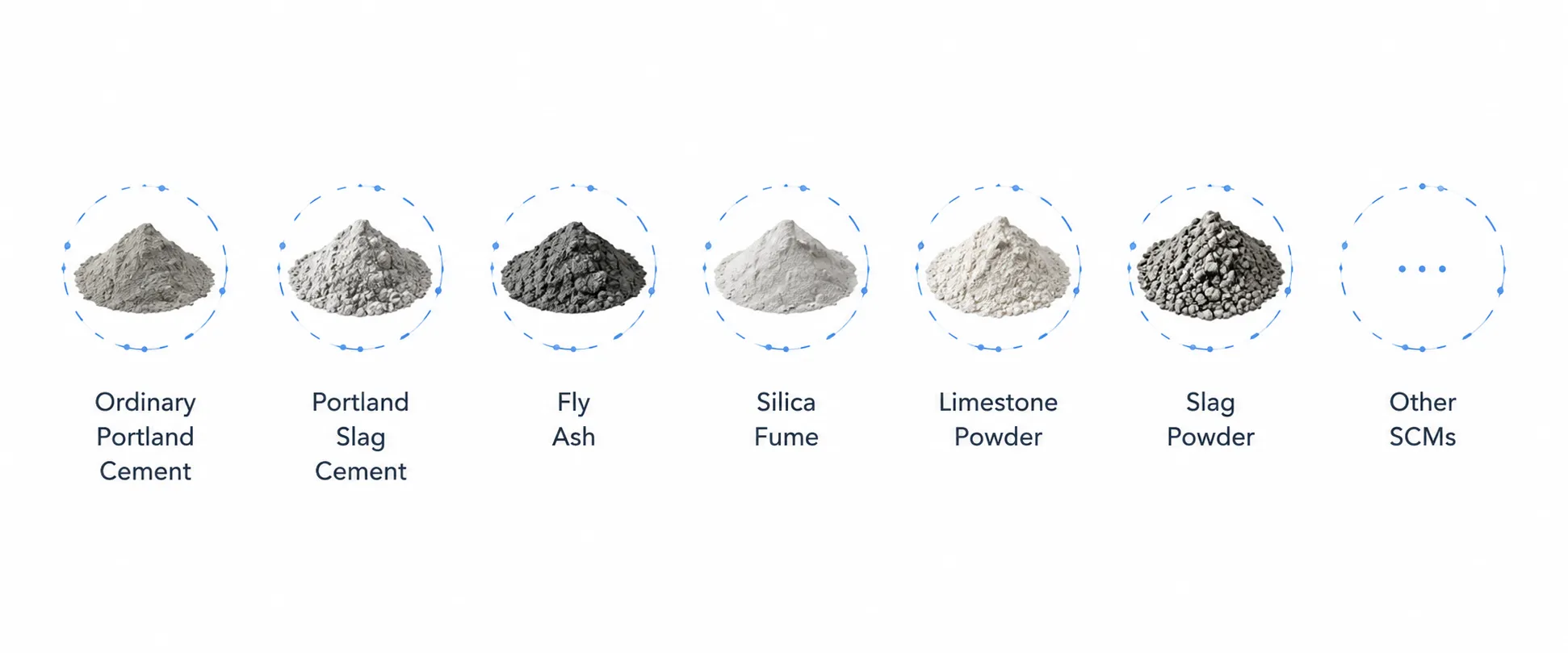 Customized PCE formulations compatible with different global cement systems and supplementary cementitious materials.
Finishing and Curing Practices
Even when the concrete mix is identical, differences in finishing or curing can produce different final colors.
Finishing before the bleed water has disappeared, adding water during finishing, or curing one area differently from another can all create uneven color development. Consistent finishing methods and uniform curing conditions help concrete develop a more uniform appearance across the entire slab.

Normal Color Changes vs. Concrete Discoloration
Not every color difference indicates a problem. Concrete naturally changes appearance as it cures, and slight shade variations are expected. The key is distinguishing normal color development from true discoloration caused by moisture movement, material inconsistency, or construction conditions.
| Appearance | Normal or Problem? | Typical Cause |
| Concrete gradually becomes lighter across the entire surface | Normal | Surface drying and ongoing curing |
| Slight shade variation between areas | Usually normal | Natural variation in concrete materials and curing |
| White powder or white crystalline deposits | Efflorescence | Water carries soluble salts to the surface, where they crystallize after evaporation. |
| Localized dark patches that remain longer than surrounding areas | Possible issue | Trapped or uneven moisture within the slab |
| Sharp color boundary between adjacent pours | Construction inconsistency | Differences in mix proportions, materials, or finishing practices |
| Rain marks or irregular surface streaks | Surface issue | Rainwater was affecting the concrete surface before it had adequately hardened |
In general, uniform color changes are part of normal curing, while isolated spots, sharp boundaries, or persistent stains deserve closer inspection. Even then, many appearance issues are cosmetic rather than structural and do not necessarily affect concrete strength.
Why Is My Concrete Different Colors?
Color differences are one of the most common concerns after a concrete pour. In many cases, the concrete is structurally sound and the variation is only cosmetic. The appearance usually provides clues about what caused the color difference.
Dark Spots
What you see: Isolated dark areas remain while the surrounding concrete has already become lighter.
Most likely cause: These areas are usually retaining moisture longer than the rest of the slab. They often become less noticeable as moisture equalizes, although trapped moisture beneath dense surface finishes or sealers can make them persist longer.
 Dark patches on concrete usually indicate areas that are retaining moisture longer than the surrounding surface during the drying process.
Light Patches
What you see:
Irregular light-colored areas or blotches scattered across the surface.
Most likely cause: Light patches are commonly associated with differences in the concrete mixture or finishing process, such as a higher local water-cement ratio or inconsistent finishing practices. They are usually cosmetic and do not indicate reduced structural performance.
 Irregular light-colored patches on concrete are commonly caused by localized variations in the concrete mixture or finishing process and are typically cosmetic.
White Stains
What you see:
White powdery deposits or streaks appear on the concrete surface.
Most likely cause: This is usually efflorescence. Water moving through the concrete dissolves naturally occurring salts and carries them to the surface, where they remain after the water evaporates. Efflorescence is generally an appearance issue rather than a structural defect, although it may reappear until the concrete dries more completely.
 White patches on concrete often result from moisture carrying soluble salts to the surface during drying.
Two Concrete Pours Don’t Match
What you see:
Adjacent pours have noticeably different shades even though they were intended to look identical.
Most likely cause: Even when the same supplier and nominal mix design are used, differences in cement batches, supplementary cementitious materials, added water, weather conditions, finishing, or curing can produce visible color variation. Complete color matching between separate placements is difficult, which is why mock-up panels are often recommended for architectural concrete projects.

Will Colored Concrete Change Color Too?
Yes. Colored concrete follows the same curing process as regular gray concrete. Freshly placed colored concrete is usually darker because of its higher surface moisture. As curing progresses and the surface dries, the color gradually becomes lighter and more uniform. The difference is that these changes are often more noticeable because pigments make even small shade variations easier to see.
The curing mechanism does not change simply because pigment has been added. However, colored concrete is more sensitive to differences in materials, finishing, and curing, so inconsistent construction practices are more likely to produce visible color variation than with ordinary gray concrete.
After curing, a film-forming sealer will usually make colored concrete appear darker and richer, similar to the way concrete looks when it is wet. The pigment itself remains in the concrete, but the sealer changes how light reflects from the surface, altering its appearance.
Best Practices for Achieving Uniform Concrete Color
While some color variation is unavoidable, following consistent construction practices can greatly improve color uniformity.
Checklist for more uniform concrete color:
- Use a consistent concrete mixthroughout the project, including the same cement source, aggregates, SCMs, and admixtures whenever possible.
- Don’t add water at the jobsite.Increasing the water-cement ratio can produce lighter areas and visible color differences between batches.
- Use consistent finishing methods.Changes in finishing timing or technique can create noticeable shade variations across the slab.
- Maintain uniform curing conditions.Keep moisture and curing methods consistent across the entire surface to reduce uneven color development.
- Avoid calcium chloride when appearance is important.Calcium chloride accelerators are well known to increase the risk of concrete discoloration.
- Evaluate color only after sufficient curing.Fresh concrete almost always changes appearance during curing, so avoid judging the final color immediately after placement.
Conclusion
Concrete color is influenced by materials, mix design, construction practices, curing, and time—not by a single factor. Fresh concrete is normally darker, then gradually becomes lighter and more uniform as curing progresses. Even after the concrete reaches its design strength, its appearance may continue to change slowly because of drying, carbonation, and weather exposure.
Understanding the difference between normal color development and true discoloration helps set realistic expectations and prevents unnecessary concern. In most cases, gradual, uniform color change is a normal part of concrete curing rather than a sign of poor-quality concrete.
Frequently Asked Questions
Does concrete always get lighter as it cures?
In most cases, yes. Fresh concrete is usually darkest immediately after placement because of its high surface moisture. As curing progresses and the surface dries, it typically becomes lighter and more uniform.
Why is my new concrete darker than yesterday?
If the slab is darker than expected, it is often because parts of the surface still contain more moisture than others. Rain, shade, or slower drying can temporarily make concrete appear darker without affecting its strength.
Is uneven concrete color normal?
Slight color variation is normal because concrete is a natural composite material. However, sharp boundaries, persistent dark patches, or extensive white deposits usually indicate differences in materials, curing, or finishing rather than normal color development.
Why is my concrete still changing color after 28 days?
Although concrete reaches its design strength at about 28 days under standard testing conditions, its appearance can continue changing for several months. Continued drying, carbonation, and normal weather exposure gradually affect the surface color over time.
Can rain change concrete color?
Yes. Rain can temporarily darken cured concrete by wetting the surface. If rain falls on fresh concrete before it has hardened sufficiently, it may also leave streaks, surface marks, or uneven color that remain after curing.
Does wet concrete always look darker?
Generally, yes. Water changes how light reflects from the concrete surface, making wet concrete appear darker. Once the surface dries, it usually returns to its previous color.
Does colored concrete cure differently?
No. Colored concrete cures through the same hydration process as ordinary concrete. The difference is that color variations caused by moisture or construction practices are usually more noticeable because of the added pigment.
Can concrete be recolored after it has cured?
Yes. Existing concrete can be recolored using products such as penetrating stains, tinted sealers, or cementitious coatings. The most suitable method depends on the existing surface condition and the desired appearance.
Will sealing concrete change its color?
Usually, yes. Many film-forming sealers deepen the color and make concrete look similar to its appearance when wet, while natural-look penetrating sealers produce much less visible change.