July 30, 2026
Why Fresh Concrete Problems Occur
Fresh concrete problems are rarely caused by a single defective material. In most cases, they result from the interaction of multiple factors within the concrete system. A mixture that performs well in one project may behave very differently in another, even when the same mix design and admixture dosage are used.
The most influential factors include cement, aggregates, water, supplementary cementitious materials (SCMs), chemical admixtures, and ambient temperature. Changes in cement chemistry may alter the effectiveness of a superplasticizer, while variations in aggregate grading or clay content can increase water demand and accelerate slump loss. Differences in fly ash quality, water content, transportation time, or hot-weather conditions can further change workability, setting behavior, bleeding, and segregation before the concrete is placed.
Construction practices also play an important role. Improper batching, insufficient mixing time, excessive discharge height, inadequate vibration, or poor curing practices may create defects even when the concrete mixture itself is properly designed. As a result, field problems often reflect the combined effects of materials, mix proportioning, production, transportation, and placement rather than a failure of one individual component.
For this reason, troubleshooting should begin with a systematic evaluation of the entire concrete system instead of focusing only on the admixture. Laboratory trial mixes, raw material verification, and compatibility testing are generally more effective than making adjustments based solely on field observations.
Rather than simply increasing the dosage of a superplasticizer or adding extra water, producers should first identify the root cause before modifying the concrete mix. Understanding how each material influences fresh concrete performance is the first step toward solving problems consistently. For a detailed explanation of these influencing factors, see our guide to Fresh Concrete Properties Explained: Composition, Workability and Performance Factors.
Poor Aggregate Coating
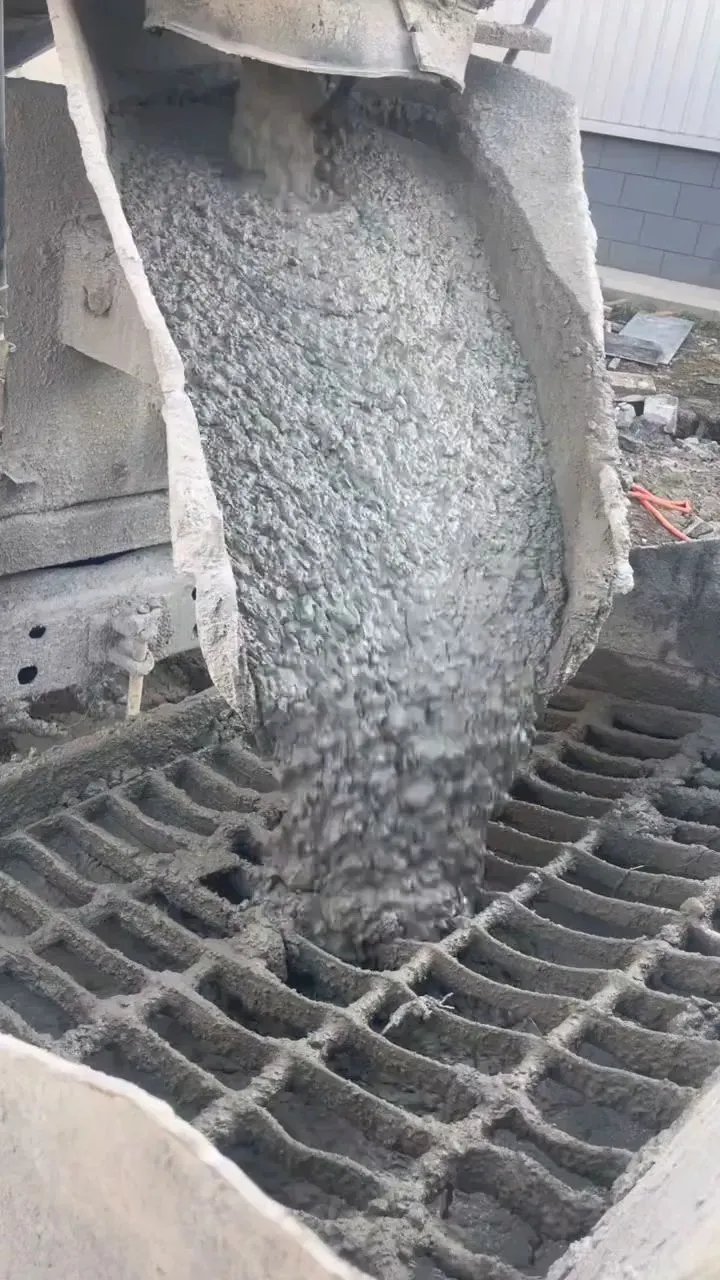
Poor aggregate coating occurs when the cement paste cannot completely surround coarse aggregates, leaving exposed stone particles and an uneven mortar distribution. This condition reduces workability, makes pumping and finishing more difficult, and often indicates that the concrete mixture lacks sufficient paste stability.
Symptoms
Common signs of poor aggregate coating include:
- Coarse aggregates remain exposed instead of being fully coated with mortar.
- The concrete appears harsh and lacks sufficient paste.
- Pumpability and surface finish deteriorate.
- Aggregates separate easily during handling or placement.
- Fresh concrete has poor cohesion and an uneven appearance.
 Poor aggregate coating leaves coarse aggregates exposed instead of being fully covered by cement mortar. This condition is commonly associated with low paste cohesion, poor aggregate grading, insufficient fines, or an unbalanced admixture dosage, reducing workability and pumpability.
Causes
Poor aggregate coating is usually caused by insufficient paste volume or inadequate paste viscosity rather than by a single material defect. Common causes include:
- Excessive superplasticizer dosage or excessive mixing water. Although higher water content increases slump, excessive water or overdosage of a water reducer may reduce paste viscosity, making it difficult for the mortar to adhere to coarse aggregates.
- Low air content. Insufficient entrained air reduces the cohesiveness of the fresh concrete and weakens aggregate suspension.
- Poor aggregate grading. Gap-graded or poorly graded aggregates create larger voids that require additional paste to achieve complete coating.
- Low sand ratio. Insufficient fine aggregate reduces the mortar volume surrounding coarse aggregates, lowering the aggregate coating rate and making the mixture appear harsh.
- Insufficient fine particles (<0.15 mm). When the content of particles finer than 0.15 mm is too low, paste viscosity decreases, reducing cohesion and making it more difficult for the mortar to uniformly coat coarse aggregates.
Solutions
Improving aggregate coating generally requires increasing mortar stability rather than simply increasing slump. Recommended corrective measures include:
- Increase the air content to improve cohesion and aggregate suspension.
- Increase the sand ratio to provide sufficient mortar for coating coarse aggregates.
- Reduce the dosage of the superplasticizer if overdosage is reducing paste viscosity.
- Optimize aggregate grading to reduce internal voids and improve particle packing.
- Increase the content of fine particles or supplementary cementitious materials when paste viscosity is insufficient.
- Verify the concrete mixture through laboratory trial batches before making production adjustments.
Addressing the underlying cause of poor aggregate coating not only improves workability and pumpability but also reduces the risk of segregation, bleeding, and surface defects during concrete placement.
Rapid Slump Loss
Rapid slump loss refers to a significant reduction in concrete workability within the required transportation or placement time. Concrete that leaves the batching plant with an acceptable slump may become stiff before placement, making pumping, consolidation, and finishing difficult.
 Rapid slump loss causes fresh concrete to lose workability within a short period after mixing. High concrete temperature, poor cement–admixture compatibility, unsuitable superplasticizer dosage, and accelerated cement hydration are common causes.
Symptoms
Typical signs include:
- Slump decreases significantly within 30–60 minutes after mixing.
- Concrete becomes stiff and difficult to remix.
- Pumpability decreases and pumping pressure increases.
- Concrete remains cohesive but loses its ability to flow.
- The delivered concrete no longer satisfies construction requirements.
Causes
Rapid slump loss is usually the result of several interacting factors rather than a single cause.
- Insufficient or unsuitable superplasticizer dosage. The selected water reducer may not provide adequate slump retention for the transportation time or ambient conditions.
- High clay content in aggregates. Clay absorbs both water and superplasticizer, reducing the effective dosage available for cement dispersion.
- Excessive sand ratio. A high sand ratio increases paste viscosity and internal friction, reducing concrete flowability.
- Inadequate retarder dosage. Retarders that are incorrectly selected or underdosed cannot effectively control hydration during transportation.
- High ambient temperature. Elevated temperatures accelerate cement hydration and water evaporation, causing slump to decrease more rapidly.
- Cement properties. High C₃A content, unsuitable gypsum type, or excessive cement fineness increase admixture adsorption and accelerate workability loss.
Solutions
Recommended corrective measures include:
- Select a more suitable slump-retaining superplasticizer or increase the dosage within laboratory-verified limits.
- Increase the mixing water only if permitted by the specified water-to-cementitious materials ratio.
- Reduce the sand ratio while maintaining adequate workability and stability.
- Select an appropriate retarder and optimize its dosage according to transportation time and ambient temperature.
- Lower concrete temperature by using chilled mixing water or shading aggregates from direct sunlight.
- Verify cement–admixture compatibility through laboratory testing before adjusting the mix. In many cases, poor compatibility—not insufficient dosage—is the primary cause of rapid slump loss. See our guide to Cement–Admixture Compatibility in Concrete for a detailed explanation.
- For some concrete mixtures, delayed addition (split dosing) of the superplasticizer after one to three minutes of mixing or immediately before placement can significantly improve slump retention.
Concrete Bleeding
ACI defines bleeding as the process in which water rises to the surface of freshly placed concrete as the heavier solid particles settle before setting begins. Moderate bleeding is normal, but excessive bleeding may weaken the concrete surface and contribute to finishing problems.
 Bleeding occurs when water rises to the surface of fresh concrete, forming water pockets and reducing mixture stability.
Symptoms
Common signs include:
- Water accumulates on the concrete surface before finishing.
- Coarse aggregates settle while water rises through the mortar.
- Surface laitance develops after bleed water evaporates.
- Surface strength decreases and dusting may occur.
- Plastic settlement cracking may develop around reinforcing steel.
Causes
Excessive bleeding is generally associated with insufficient paste stability.
- Excessive water or excessive superplasticizer dosage.
- Poor aggregate grading, especially single-sized or gap-graded aggregates.
- Low sand ratio, resulting in insufficient mortar viscosity.
- Excessive retarder dosage or an unsuitable retarder.
- Insufficient fine particles (<0.15 mm), reducing paste viscosity.
- Low C₃A or C₃S cement content or coarse cement fineness, slowing hydration and reducing early paste stability.
Solutions
To reduce bleeding:
- Reduce unnecessary mixing water.
- Optimize or reduce the superplasticizer dosage.
- Increase the sand ratio to improve mortar stability.
- Select an appropriate retarder and reduce excessive dosage.
- Improve aggregate grading.
- Increase fly ash or other suitable SCMs to enhance paste cohesion.
- Use viscosity-modifying admixtures or water-retaining components where appropriate.
Air Bubble Instability
Air bubble instability occurs when entrained air bubbles are unable to remain stable within fresh concrete. Instead of remaining uniformly distributed throughout the mixture, the bubbles continuously rise to the surface and burst before placement. This reduces the effective air content of the concrete, resulting in inconsistent workability and potentially lower freeze–thaw durability.
 Unstable entrained air bubbles continuously rise and burst in fresh concrete, reducing the effective air content before placement. This condition is commonly associated with cement–admixture incompatibility, high concrete temperature, or an unsuitable air-entraining agent.
Symptoms
Typical signs include:
- Numerous air bubbles appear immediately after mixing.
- Air bubbles continuously rise to the surface and burst.
- The measured air content decreases before concrete is placed.
- Excessive foaming is visible at discharge but gradually disappears after placement.
- Fresh concrete becomes less cohesive as air bubbles collapse.
Causes
Air bubble instability is commonly caused by:
- Cement chemistry that is incompatible with the air-entraining admixture.
- An unsuitable or incompatible air-entraining agent.
- Low cement content or insufficient paste volume.
- An improper sand ratio.
- High concrete or ambient temperatures that accelerate bubble collapse.
Solutions
Recommended corrective measures include:
- Select an air-entraining admixture that is compatible with the cement.
- Optimize the sand ratio and paste volume.
- Reduce concrete temperature by using chilled mixing water or shading aggregates.
- Verify cement–admixture compatibility through laboratory testing before production.
Excessive Retardation
Excessive retardation occurs when fresh concrete remains plastic far longer than expected because cement hydration has been excessively delayed. While retarders are commonly used to extend working time, excessive retardation can delay construction, reduce finishing efficiency, and increase the risk of surface defects.
 Excessive retardation occurs when cement hydration is delayed beyond the expected setting time. The surface may appear partially hardened while the interior remains soft, delaying finishing operations and strength development.
Symptoms
Typical signs include:
- Fresh concrete remains unset more than 24 hours after placement.
- Excessive bleed water remains on the surface, sometimes appearing brownish in color.
- The surface may appear firm while the interior remains soft or rubber-like.
- Finishing and formwork removal are significantly delayed.
- Early-age strength development is much slower than expected.
Causes
Excessive retardation is usually caused by one or more of the following:
- Overdosage of a water reducer or retarding admixture.
- Retarder dosage not adjusted for low ambient temperatures.
- Poor cement quality or unexpected changes in cement properties.
- The use of slag cement or slow-reacting cement in cold weather.
- Insufficient mixing, particularly when powdered admixtures are not fully dispersed.
- Poor compatibility between the cement and the chemical admixture.
Solutions
Recommended corrective measures include:
- Determine whether the retarding admixture has been overdosed and adjust the dosage accordingly.
- Modify the admixture formulation or select a more compatible product.
- Verify cement quality and consider changing the cement source or production batch if compatibility problems are identified.
- Maintain adequate curing temperature and protect the concrete from excessive heat loss so hydration can continue normally.
- Monitor strength development before deciding on corrective action, as moderately retarded concrete may recover if proper curing is maintained.
- If the concrete remains unset after several days and laboratory evaluation confirms abnormal hydration, removal and replacement may be necessary.
Excessive retardation is often mistaken for admixture failure. In practice, it is frequently the result of interactions between cement chemistry, admixture dosage, temperature, and curing conditions. Laboratory compatibility testing is the most reliable way to prevent delayed setting before concrete production begins.
Concrete Segregation
Concrete segregation occurs when coarse aggregates separate from the cement mortar during transportation, pumping, placement, or vibration. Segregation often develops together with bleeding because both result from inadequate mixture stability.
 Excessive water reducer dosage can make concrete overly fluid, causing coarse aggregates to separate from the cement paste and resulting in segregation.
Symptoms
Typical indicators include:
- Coarse aggregates accumulate at the bottom of the concrete.
- Mortar flows away from the aggregate.
- Uneven concrete appearance after placement.
- Excessive bleeding accompanies aggregate settlement.
- Reduced strength and durability after hardening.
Causes
Segregation is commonly caused by:
- Excessive slump resulting from too much water or excessive superplasticizer.
- Poor aggregate grading.
- Low mortar content or low sand ratio.
- Insufficient fine particles.
- Excessive free-fall height during placement.
- Over-vibration or improper consolidation.
- Poor aggregate coating caused by inadequate paste stability.
Solutions
Effective corrective measures include:
- Maintain the specified water-to-cementitious materials ratio.
- Improve aggregate grading.
- Increase mortar stability by adjusting the sand ratio and fines content.
- Avoid excessive vibration and excessive free-fall heights.
- Optimize admixture dosage through laboratory trial batches rather than field adjustments.
Honeycombing
Honeycombing is a structural defect in which hardened concrete contains large interconnected voids because mortar fails to completely fill the spaces between coarse aggregates.
 Honeycombing occurs when mortar fails to completely fill the spaces between coarse aggregates, leaving interconnected voids after formwork removal. Poor vibration, inadequate workability, improper mix proportions, or reinforcement congestion are common causes.
Symptoms
Common signs include:
- Large exposed coarse aggregates after form removal.
- Continuous voids resembling a honeycomb.
- Insufficient mortar surrounding aggregates.
- Reduced load-bearing capacity and durability.
Causes
Honeycombing is usually caused by one or more of the following:
- Incorrect mix proportion resulting in insufficient mortar.
- Inadequate batching accuracy.
- Poor workability caused by insufficient mixing.
- Inadequate vibration or missed vibration.
- Excessive concrete placement height causing segregation.
- Leakage of cement paste through formwork joints.
- Congested reinforcement combined with oversized coarse aggregates or low slump.、
- Placing upper lifts before the lower layer has settled sufficiently, particularly in columns and walls, may increase the risk of honeycombing near the base of the element.
Solutions
Preventing honeycombing requires both proper mix design and proper construction practices.
- Maintain accurate batching and proportioning.
- Ensure adequate mixing and suitable slump before placement.
- Limit free-fall height to approximately 2 m (6.5 ft) or use chutes or tremie pipes where necessary.
- Place concrete in layers and consolidate each layer thoroughly.
- Seal formwork joints to prevent mortar leakage.
- Select aggregate sizes appropriate for reinforcement spacing.
- Allow foundations, columns, and walls to settle before placing additional concrete layers when required.
Repair
For minor honeycombing, remove all loose material, clean the surface thoroughly, and patch the defect using a cement mortar or repair mortar.
For larger defects, remove all unsound concrete until sound material is exposed, then rebuild the area using a non-shrink repair mortar or fine aggregate concrete with a compressive strength equal to or greater than the original concrete.
Deep honeycombs may require pressure grouting or structural repair under the supervision of an engineer.
Bugholes (Surface Voids)
Bugholes, also called surface voids, are small air pockets that remain on formed concrete surfaces after the formwork is removed. Unlike honeycombing, bugholes are generally cosmetic defects that affect appearance rather than structural performance.
 Bugholes are small surface voids formed by trapped air during concrete placement. They primarily affect the appearance of formed concrete and are commonly associated with inadequate vibration, rough formwork, or improper form-release agent application.
Symptoms
Typical signs include:
- Numerous small circular surface voids.
- Localized loss of surface mortar.
- Rough concrete surface without exposed reinforcement.
- Uneven architectural finish.
Causes
Bugholes are commonly caused by:
- Dirty or rough formwork surfaces.
- Formwork that was not adequately wetted before placement.
- Leaking formwork joints allowing cement paste to escape.
- Uneven or ineffective application of form-release agents.
- Inadequate vibration that traps air against the form surface.
- Highly absorbent wooden formwork that has not been adequately pre-wetted may absorb water from the concrete surface, increasing the likelihood of bugholes.
Solutions
Recommended preventive measures include:
- Thoroughly clean formwork before casting.
- Wet absorbent formwork sufficiently before placing concrete.
- Seal formwork joints to prevent paste leakage.
- Apply form-release agents evenly over the entire form surface.
- Consolidate concrete uniformly until trapped air has been removed.
- Use appropriate vibration techniques without over-vibrating the concrete.
- Architectural concrete often requires mock-up testing to optimize vibration methods, form-release agents, and concrete consistency before large-scale casting.
Sticky Concrete
Symptoms
- Concrete feels sticky during mixing and placement.
- The mixture flows but cannot be remixed easily.
- Concrete adheres to the mixer drum, bucket, or pump hopper.
- Finishing becomes difficult despite an apparently adequate slump.
Causes
- Excessive cement content.
- Excessive superplasticizer dosage.
- Sulfoaluminate cement.
- High paste volume.
- Excessively fine cement.
Solutions
- Reduce cement content where possible.
- Optimize superplasticizer dosage.
- Introduce a suitable air-entraining admixture.
- Remove hardened concrete residue from mixer drums and hoppers.
- Verify compatibility through laboratory testing.
Best Practices for Preventing Fresh Concrete Problems
Most fresh concrete problems can be prevented before concrete leaves the batching plant. Rather than correcting defects on site, producers should establish a systematic quality-control process that evaluates the entire concrete system.
The following practices are recommended:
- Select high-quality raw materials, including clean, well-graded aggregates and consistent cement sources.
- Verify cement–admixture compatibility through laboratory testing whenever raw materials or suppliers change.
- Optimize the concrete mix design based on project requirements instead of relying on fixed admixture dosages.
- Control aggregate quality, including grading, moisture content, clay contamination, and fine particle content.
- Manage concrete temperature during hot or cold weather by controlling mixing water temperature, protecting aggregates, and selecting appropriate admixtures.
- Implement routine quality control, including slump, air content, temperature, and fresh concrete density testing before placement.
- Perform laboratory trial mixes before production to confirm workability, slump retention, setting behavior, and compatibility under actual project conditions.
A systematic approach to material selection, compatibility testing, mix proportioning, and production control is far more effective than correcting fresh concrete problems after they occur on the jobsite.
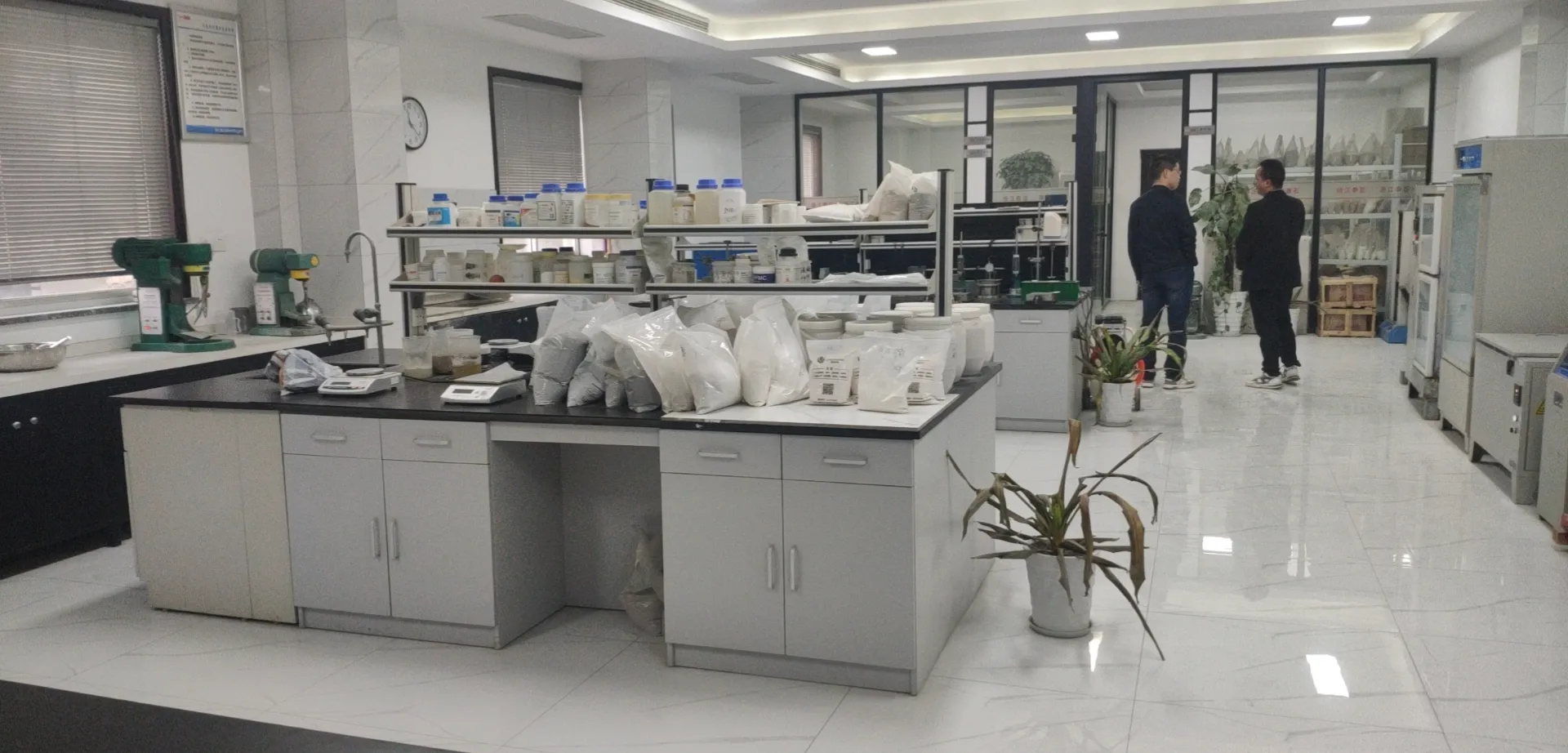
 Laboratory testing plays a critical role in evaluating admixture performance and optimizing concrete mix designs for different applications.
Conclusion
Fresh concrete problems are rarely the result of a single defective material. Instead, they usually develop from the combined effects of cement properties, aggregate quality, water content, supplementary cementitious materials, chemical admixtures, environmental conditions, and construction practices. Understanding how these factors interact makes troubleshooting more accurate and helps producers solve problems before they affect construction quality.
Many common issues—including poor aggregate coating, rapid slump loss, bleeding, segregation, honeycombing, and bugholes—can be minimized through proper raw material selection, optimized mix proportioning, cement–admixture compatibility testing, and careful control of batching, transportation, placement, and consolidation.
Rather than relying on field adjustments after problems occur, producers should establish a systematic quality-control process supported by laboratory trial mixes and routine fresh concrete testing. This approach not only improves workability and construction efficiency but also helps ensure that hardened concrete achieves its specified strength and long-term durability.
Most fresh concrete problems originate from the interaction between materials rather than from the failure of a single ingredient. Identifying the root cause through laboratory testing and systematic quality control is more effective than simply adjusting admixture dosage or adding water on site.
Frequently Asked Questions
Why does concrete lose slump quickly?
Rapid slump loss is usually caused by a combination of high concrete temperature, poor cement–admixture compatibility, insufficient slump-retaining admixture, excessive clay in aggregates, or accelerated cement hydration. In many cases, the problem is related to material compatibility rather than an insufficient superplasticizer dosage.
Why is my concrete bleeding?
Concrete bleeding occurs when solid particles settle while excess water rises to the surface before the concrete sets. Common causes include excessive mixing water, poor aggregate grading, low sand ratio, insufficient fine particles, excessive retarder dosage, or inadequate paste stability.
What causes segregation?
Segregation occurs when coarse aggregates separate from the mortar during transportation, pumping, placement, or vibration. It is commonly caused by excessive water, overly high slump, poor aggregate grading, insufficient fines, low paste viscosity, or improper placement and consolidation practices.
Why is my concrete sticky?
Sticky concrete is usually the result of excessive paste viscosity rather than insufficient slump. Common causes include a high sand ratio, excessive fine particles, very fine cement, silica fume, or poor aggregate grading. Sticky concrete is often difficult to pump, vibrate, and finish even though it may appear workable.
How can I improve aggregate coating?
Aggregate coating can usually be improved by increasing the mortar volume and paste stability rather than simply increasing slump. Practical methods include increasing the sand ratio, optimizing aggregate grading, increasing air content where appropriate, improving the amount of fine particles, and reducing excessive superplasticizer dosage when overdispersion is reducing paste cohesion.
Why do honeycombs occur?
Honeycombing is generally caused by insufficient mortar surrounding coarse aggregates or inadequate consolidation during placement. Poor workability, incorrect mix proportions, oversized aggregates, congested reinforcement, excessive placement height, and inadequate vibration are among the most common causes.
What causes bugholes?
Bugholes, also known as surface voids, are typically caused by air trapped against the formwork. Dirty forms, uneven application of form-release agents, leaking form joints, and insufficient vibration all increase the likelihood of bugholes appearing after form removal.
Should I add more superplasticizer?
Not necessarily. Increasing the dosage may temporarily improve workability, but it can also increase bleeding, segregation, excessive retardation, or compatibility problems. The root cause should always be identified before changing admixture dosage, and laboratory trial mixes are recommended whenever significant adjustments are required.
Can hot weather increase slump loss?
Yes. Higher temperatures accelerate cement hydration, increase moisture evaporation, and shorten the effective working time of fresh concrete. These conditions cause slump to decrease more rapidly during transportation and placement. Hot-weather concreting often requires temperature control measures together with suitable slump-retaining admixtures.
How do I prevent fresh concrete defects?
Most fresh concrete defects can be prevented through proper material selection, laboratory compatibility testing, optimized mix design, good aggregate grading, accurate batching, temperature control, and consistent quality control during production and placement. Preventive measures are generally more effective and less costly than correcting defects after concrete has been placed.
Why does adding water increase concrete slump?
Adding water improves the flowability of fresh concrete, so slump generally increases. As a practical field guideline, increasing the mixing water by about 1.2% may increase slump by approximately 10 mm (1 cm). However, extra water also raises the water-to-cementitious ratio, which can reduce strength and durability. Improving workability with a compatible water reducer is usually the better solution.
Why does air entrainment increase slump?
Entrained air reduces internal friction between aggregate particles, making fresh concrete easier to flow. In practice, increasing the air content by about 1% may increase slump by approximately 25 mm (2.5 cm). While moderate air entrainment improves workability, excessive air content can reduce compressive strength.
Why does temperature reduce concrete slump?
Higher temperatures accelerate cement hydration and increase moisture evaporation, causing concrete to lose workability more quickly. Under similar conditions, every 10°C (18°F) increase in concrete temperature may reduce slump by approximately 20–30 mm (2–3 cm) during transportation and placement. Proper temperature control and slump-retaining admixtures help maintain consistent workability.
Segregation is not a single visual defect. In aggregate segregation, coarse particles settle or separate from the mortar during transport, discharge, placement, or excessive vibration. In paste or water separation, the cementitious phase becomes non-uniform, often because the effective water-to-binder ratio is too high, mixing is inadequate, or the mixture lacks cohesion. The two conditions may occur together and can lead to voids, honeycombing, uneven surfaces, higher permeability, cracking, and localized loss of strength. Diagnosis should therefore follow the material flow. Check batch proportions and aggregate grading first, then mixing time, moisture correction, transport distance, discharge height, placement sequence, and vibration. Correct the cause instead of masking the symptom with more water or an uncontrolled increase in superplasticizer. Place concrete in manageable layers and consolidate sufficiently without allowing heavy aggregate to settle.How to Distinguish the Main Types of Concrete Segregation