July 30, 2026
Back to News

Quick Answer
Fresh concrete properties—including workability, consistency, air content, setting time, and slump retention—are controlled by the combined effects of cement, aggregates, water, supplementary cementitious materials (SCMs), chemical admixtures, and environmental conditions.
This is why two batches produced with the same mix design may perform differently on different job sites. Variations in cement chemistry, aggregate grading, moisture content, transportation time, or ambient temperature can all change the behavior of fresh concrete before placement.
For ready-mix producers and contractors, achieving consistent concrete performance depends on more than selecting a high-quality superplasticizer. It requires proper raw material selection, laboratory compatibility testing, accurate mix proportioning, and effective quality control throughout production and placement.
According to ASTM C143, the slump test is the standard field method for evaluating the consistency of fresh concrete. On most projects, slump is evaluated together with concrete temperature, air content, density, and compressive strength to verify that the delivered concrete meets specification requirements before placement.
In this guide, we’ll explain how fresh concrete is composed, what determines its workability, why fresh concrete properties are critical to construction quality, and the key factors that influence concrete performance throughout production and placement.
What Determines Fresh Concrete Performance
Fresh concrete performance is determined by the interaction of cement, aggregates, water, chemical admixtures, and supplementary cementitious materials (SCMs). Rather than acting independently, these ingredients work together to control workability, slump retention, setting time, strength development, and durability.
According to ACI 211.1, concrete mixture proportioning should consider the properties of every constituent material because changes in any single ingredient can alter the performance of the entire mixture.
Cement
Cement is the primary binding material in concrete and performs two essential functions.
First, after mixing with water, cement forms a cement paste that lubricates aggregate particles, allowing fresh concrete to flow during mixing, pumping, and placement. The amount of cement paste largely determines the mixture’s workability and cohesion.
Second, as hydration progresses, cement paste hardens and bonds coarse and fine aggregates into a single structural material capable of carrying loads.
Besides providing strength, cement also determines paste volume. Insufficient paste makes concrete harsh and difficult to compact, while excessive paste increases material cost, drying shrinkage, and heat generation. Therefore, modern concrete mix design aims to use only the amount of cement necessary to achieve the required performance rather than maximizing cement content.
Aggregates
Aggregates typically account for 60–75% of the total concrete volume, making them the largest component of fresh concrete. They consist of coarse aggregates (gravel or crushed stone) and fine aggregates (sand), both of which play critical roles in concrete performance.
Their primary functions include:
- Forming the structural skeleton of concrete.
- Transferring loads throughout the hardened concrete.
- Reducing drying shrinkage and thermal deformation.
- Lowering cement consumption and overall production cost.
- Improving abrasion resistance.
Aggregate quality has a direct influence on fresh concrete performance. Poor particle grading increases void content and paste demand, while excessive fines or clay contamination increase water demand and accelerate slump loss. Likewise, flaky or elongated particles reduce workability and make pumping more difficult compared with well-graded, cubical aggregates.
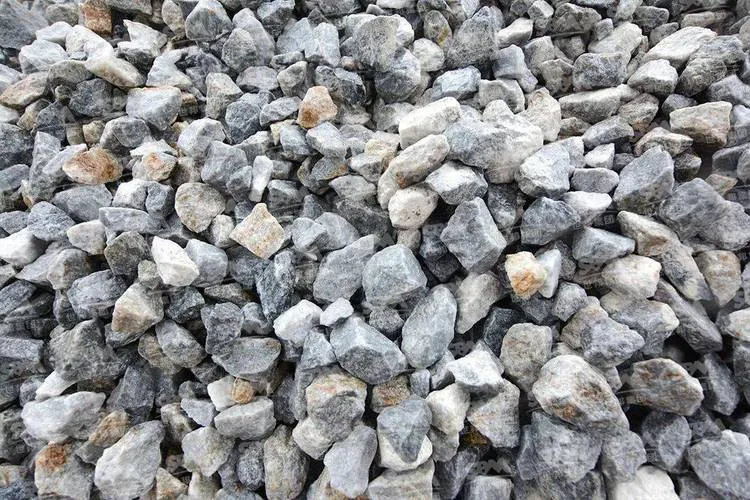 Coarse aggregate gravel used as structural skeleton in precast concrete production
Water
Water serves two fundamental purposes in concrete production.
The first is to initiate cement hydration. Without sufficient water, cement cannot react to develop strength.
The second is to provide the workability required for mixing, transporting, pumping, and placing fresh concrete.
However, not all mixing water becomes part of the hydration products. Excess water eventually evaporates, leaving behind capillary pores inside the hardened concrete. These pores increase permeability while reducing strength and durability.
For this reason, modern concrete design controls the water-to-cementitious materials ratio (w/cm) rather than simply increasing water to improve flow. ACI recommends maintaining a low w/cm ratio and using water-reducing admixtures when additional workability is required.
Chemical Admixtures
Chemical admixtures are added in relatively small quantities, yet they have a significant influence on fresh concrete properties. Under ASTM C494, chemical admixtures are classified into several categories according to their primary function.
The most common types include:
- Superplasticizers (High-Range Water Reducers) – Reduce mixing water while maintaining high workability.
- Retarders – Extend setting time in hot weather or during long transportation.
- Air-Entraining Admixtures – Introduce microscopic air bubbles to improve freeze–thaw durability and workability.
- Accelerators – Increase the rate of hydration and promote early-age strength development.
Selecting the correct admixture is only part of the solution. Consistent performance also depends on compatibility between the admixture and the cement, aggregate, and supplementary cementitious materials used in the mixture.
 Liquid and powder PCE samples used for concrete admixture and cement material applications.
Supplementary Cementitious Materials (SCMs)
Supplementary cementitious materials partially replace Portland cement while improving both fresh and hardened concrete properties.
The most widely used SCMs include:
- Fly Ash
- Ground Granulated Blast Furnace Slag (GGBFS)
- Silica Fume
Depending on the material and dosage, SCMs can:
- Reduce Portland cement consumption and carbon emissions.
- Improve workability and slump retention.
- Lower the heat of hydration in mass concrete.
- Increase long-term strength.
- Reduce permeability and improve durability.
For example, the spherical particles of fly ash often improve workability through a “ball-bearing effect,” while silica fume significantly densifies the cement matrix and reduces permeability. The selection and replacement ratio of SCMs should always be verified through laboratory testing because their performance depends on the cement chemistry and project requirements
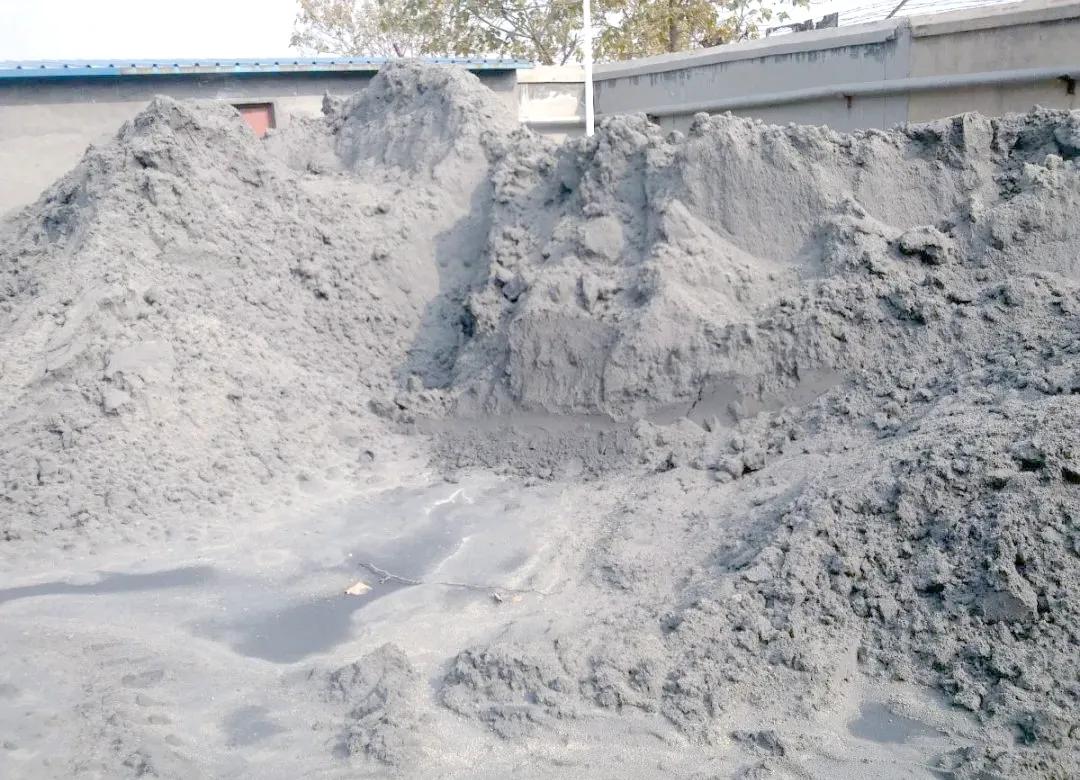 Fly ash used as supplementary cementitious material for precast concrete production
Fresh Concrete Properties
Fresh concrete is evaluated by several engineering properties before placement.
The most important include workability, consistency, air content, density, temperature, setting time, and slump retention. Together, these properties determine whether concrete can be transported, pumped, consolidated, and finished successfully while meeting the required strength and durability after hardening. ASTM C94 and ASTM C143 both require field testing of fresh concrete to verify compliance with project specifications before placement.
Understanding Concrete Workability
Concrete quality is generally evaluated using two primary criteria: compressive strength and workability. Strength determines whether hardened concrete can safely support the design loads, while workability determines whether fresh concrete can be properly mixed, transported, pumped, placed, compacted, and finished.
Although compressive strength is the final performance target of structural concrete, it cannot be achieved without adequate workability. Even a well-designed concrete mixture may fail to reach its specified strength if poor workability results in inadequate consolidation, segregation, honeycombing, or excessive bleeding during placement. For this reason, workability is one of the first properties evaluated in quality control before concrete is placed
Concrete workability refers to how easily fresh concrete can be mixed, transported, pumped, placed, compacted, and finished without segregation or excessive bleeding. It is one of the most important indicators of fresh concrete quality because it directly affects construction efficiency and the performance of hardened concrete.
Good workability is not simply “high flowability.” Instead, it is a balance of three essential properties:
- Flowability – The ability of fresh concrete to flow and fill formwork under its own weight or vibration.
- Cohesion – The ability of the mixture to remain uniform without coarse aggregates separating from the mortar.
- Water Retention – The ability of the cement paste to hold water and prevent excessive bleeding during transportation and placement.
These three properties must work together. For example, increasing water content may improve flowability but can also reduce cohesion and increase bleeding. Likewise, a mixture with excellent cohesion but insufficient flowability may be difficult to pump or compact. The objective of concrete mix design is to achieve the required workability while maintaining strength and durability.
According to ACI, workability depends on several interacting factors, including water content, aggregate grading, paste volume, air content, chemical admixtures, and temperature rather than any single material alone
 Concrete workability depends on three key properties: flowability for easy placement, cohesion to prevent segregation, and water retention to minimize bleeding during transportation and placement.
Slump Test
The slump test is the most widely used field method for evaluating the consistency and workability of fresh concrete. It provides a rapid quality-control check before concrete is placed and helps verify whether the delivered concrete matches the specified workability.
(Insert Image: Concrete Slump Test Procedure)
Under ASTM C143/C143M, fresh concrete is placed into a standard slump cone in three equal layers, with each layer rodded 25 times using a tamping rod. After the cone is lifted vertically, the reduction in height of the concrete is measured as the slump value.
Although slump is often associated with water content, it should not be interpreted as a direct measure of strength or the water-to-cement ratio. Aggregate grading, air content, admixtures, cement characteristics, and concrete temperature can all influence slump. Therefore, slump testing should be considered a consistency test rather than a standalone quality assessment
 The concrete slump test evaluates the consistency and workability of fresh concrete. After the slump cone is filled and rodded, the cone is lifted vertically and the decrease in concrete height is measured as the slump value according to ASTM C143/C143M.
Why Workability Matters
Maintaining proper workability is essential throughout concrete production and placement because it influences nearly every stage of construction.
Construction efficiency. Concrete with appropriate workability can be placed and finished more quickly, reducing labor requirements and minimizing construction delays.
Pumpability. Pumped concrete requires sufficient flowability and cohesion to move through pipelines without blockage or segregation. Poor workability increases pumping pressure and the risk of pipeline obstruction.
Compaction quality. Concrete that is too stiff is difficult to consolidate completely, leaving internal voids and honeycombing. Conversely, overly fluid concrete is more likely to segregate and bleed.
Strength development. Uniform consolidation reduces entrapped air and improves the bond between cement paste and aggregates, helping the concrete achieve its designed compressive strength.
Long-term durability. Properly compacted concrete has lower permeability and fewer internal defects, improving resistance to water penetration, freeze–thaw cycles, chloride ingress, and reinforcement corrosion.
For these reasons, workability is one of the first properties evaluated in quality control. A concrete mixture with suitable workability is easier to construct, more consistent during placement, and more likely to achieve its specified strength and service life.
Factors Affecting Concrete Performance
Fresh concrete performance is influenced by far more than the mix proportions shown on a batching sheet. Cement chemistry, aggregate quality, water content, supplementary cementitious materials (SCMs), temperature, and chemical admixtures all interact to determine workability, slump retention, setting behavior, and early-age strength. Understanding these factors allows producers to identify the root cause of performance problems instead of simply increasing admixture dosage.
Cement Properties
Cement compatibility is one of the most important factors affecting the performance of water reducers and superplasticizers. Even when the same admixture is used at the same dosage, changing the cement source or production batch can produce noticeably different results.
Several cement characteristics have the greatest influence on admixture performance:
- C₃A (Tricalcium Aluminate): Among the four major clinker phases, C₃A generally has the greatest influence on cement–admixture compatibility, followed by C₄AF, C₃S, and C₂S. C₃A rapidly adsorbs polycarboxylate and other water-reducing admixtures. When the C₃A content exceeds approximately 8%, admixture demand often increases and slump retention decreases because more admixture is consumed on the cement surface.
- Gypsum Type: Gypsum regulates cement hydration. Different forms—including dihydrate gypsum, hemihydrate gypsum, and anhydrite—dissolve at different rates, affecting setting time and the effectiveness of chemical admixtures. Anhydrite generally increases water demand and admixture adsorption more than other gypsum forms, while poor gypsum balance may result in rapid slump loss or abnormal setting behavior.
- Cement Fineness: Finer cement has a larger specific surface area and hydrates more rapidly. General-purpose Portland cement typically has a Blaine fineness of 320–380 m²/kg, while rapid-hardening cement may exceed 450 m²/kg. Higher fineness increases water demand, accelerates hydration, and provides more surface area for superplasticizer adsorption. Grinding temperatures may also convert part of the gypsum into anhydrite, further reducing cement–admixture compatibility.
- Alkali Content: Both excessively high and unusually low alkali contents can influence gypsum dissolution and accelerate C₃A hydration. These changes alter the interaction between cement and chemical admixtures, often leading to inconsistent slump retention and increased workability loss.
Because these variables vary between manufacturers and even production batches, laboratory compatibility testing should always be performed before large-scale concrete production.
Aggregate Quality
Aggregates occupy approximately 60–75% of the concrete volume, making their quality one of the largest influences on fresh concrete behavior. Aggregate grading and particle characteristics directly affect paste demand, workability, pumpability, segregation resistance, and ultimately hardened concrete strength.
Important factors include:
- Aggregate grading: Well-graded aggregates reduce voids and lower paste demand, while poorly graded or gap-graded aggregates increase water demand, reduce workability, and increase the risk of segregation and bleeding. Poor grading may also reduce compressive strength because additional paste is required to fill internal voids.
- Clay and mud content: Excessive clay absorbs water and chemical admixtures, reducing water-reducing efficiency and accelerating slump loss. High mud content can also lower compressive strength, increase drying shrinkage, and make hardened concrete more susceptible to cracking.
- Particle shape: Rounded aggregates flow more easily than flaky or elongated particles, reducing internal friction and improving pumpability. By contrast, flaky and elongated particles require more cement paste to achieve the same workability and generally produce lower concrete strength.
- Surface texture: Smooth particles require less paste for lubrication and improve fresh concrete flow. Rough-textured aggregates require more paste but usually develop a stronger interfacial transition zone (ITZ) with cement paste, improving the bond between aggregate and mortar after hardening.
- Maximum aggregate size: Larger aggregates generally reduce paste demand, but excessively large particles may reduce concrete uniformity and are not always beneficial for compressive strength, particularly in heavily reinforced structural members.
- Fine particles (<0.15 mm): Adequate fines improve cohesion and reduce segregation. Insufficient fines lower paste viscosity, increasing bleeding, poor aggregate coating, and instability during pumping.
Selecting clean, well-graded aggregates is often more effective than simply increasing admixture dosage.
 Aggregate quality directly influences fresh concrete performance. Proper grading, particle shape, surface texture, fines content, and low clay contamination improve workability, reduce segregation and bleeding, and help concrete achieve its designed strength and durability.
Water Content
The water-to-cementitious materials ratio (w/cm) is one of the most important parameters in concrete mix design because it controls both fresh and hardened concrete properties.
Adding water may temporarily increase slump, but excessive water also dilutes the cement paste and increases capillary porosity after hydration. As a result, bleeding increases while compressive strength, durability, and resistance to chloride penetration decrease.
Instead of adding extra water at the jobsite, producers typically maintain the specified w/cm ratio and improve workability using high-range water reducers. This approach preserves both workability and long-term concrete performance.
Fly Ash and Supplementary Cementitious Materials (SCMs)
Supplementary cementitious materials are widely used to improve concrete performance while reducing Portland cement consumption.
Common SCMs include:
- Fly Ash
- Ground Granulated Blast Furnace Slag (GGBFS)
- Silica Fume
Among these materials, fly ash has the greatest influence on fresh concrete workability. Its spherical particles create a ball-bearing effect, reducing internal friction and improving flowability with relatively low water demand.
However, fly ash quality is equally important. Fly ash with a high Loss on Ignition (LOI) contains more unburned carbon. These porous carbon particles readily adsorb superplasticizers and, in particular, air-entraining admixtures, increasing admixture demand and reducing dosage efficiency. Consequently, two fly ashes with the same replacement level may require significantly different admixture dosages.
Silica fume and slag can further improve durability and long-term strength, although they often require adjustments to the admixture system because of their different particle sizes and surface characteristics.
Temperature
Ambient temperature has a significant influence on fresh concrete performance, particularly during summer construction.
As concrete temperature increases:
- Cement hydration accelerates.
- Slump is lost more rapidly.
- Water evaporates faster from the concrete surface.
- Superplasticizers are consumed more quickly during hydration.
- The available working time becomes shorter.
These effects become increasingly noticeable during transportation and pumping. Hot-weather concreting often requires chilled mixing water, shaded aggregates, reduced transportation time, or slump-retaining admixtures to maintain consistent workability from batching to placement.
 High temperatures accelerate cement hydration and moisture evaporation, causing faster slump loss, increased superplasticizer consumption, and shorter working time. Temperature control is essential for maintaining consistent fresh concrete performance during hot-weather concreting.
Chemical Admixtures
Chemical admixtures are designed to improve specific properties of fresh concrete, but their effectiveness depends on compatibility with the entire concrete system rather than on dosage alone.
The most commonly used admixtures include:
- Superplasticizers – Reduce water demand while maintaining workability.
- Retarders – Extend setting time during hot weather or long transportation.
- Air-Entraining Agents – Introduce stable microscopic air bubbles to improve freeze–thaw resistance and workability.
- Accelerators – Increase early hydration and promote early-age strength.
No chemical admixture performs consistently with every cement. The interaction between cement chemistry, gypsum type, alkali content, SCMs, aggregate properties, and admixture formulation ultimately determines fresh concrete performance. Simply increasing the dosage of a superplasticizer rarely solves compatibility problems and may instead increase bleeding, segregation, or excessive retardation. Identifying the root cause through laboratory compatibility testing is generally far more effective than adjusting dosage alone.
Conclusion
Fresh concrete performance is determined by the interaction of every component in the concrete mixture rather than by any single material. Cement, aggregates, water, supplementary cementitious materials (SCMs), chemical admixtures, and environmental conditions all work together to influence workability, slump retention, setting behavior, strength development, and long-term durability.
Among these properties, workability is one of the most important because it directly affects transportation, pumping, placement, consolidation, and finishing. Even a well-designed concrete mix may fail to achieve its specified compressive strength if inadequate workability leads to segregation, honeycombing, excessive bleeding, or poor consolidation during construction.
Consistent concrete quality therefore depends on more than selecting a high-performance superplasticizer. It requires proper raw material selection, balanced mix proportioning, laboratory compatibility testing, temperature control, and routine quality verification throughout production.
Understanding how each constituent material influences fresh concrete properties enables producers and contractors to diagnose performance changes more accurately, optimize mix designs, and deliver concrete that meets both construction requirements and long-term durability expectations.
For practical guidance on preventing one of the most common causes of inconsistent workability, continue reading our guide to Cement–Admixture Compatibility in Concrete, which explains how cement chemistry influences superplasticizer performance and how laboratory compatibility testing can help avoid costly field problems.
Frequently Asked Questions
Why does concrete lose slump quickly?
Rapid slump loss is usually caused by a combination of high concrete temperature, rapid cement hydration, poor cement–admixture compatibility, high clay content in aggregates, or insufficient slump-retaining admixture. In hot weather, higher temperatures accelerate both hydration and moisture evaporation, causing concrete to stiffen more quickly during transportation.
What causes concrete bleeding?
Concrete bleeding occurs when solid particles settle while excess water rises to the surface before setting begins. Common causes include excessive mixing water, a high water-to-cementitious materials ratio, low sand content, insufficient fines, poor aggregate grading, or low paste viscosity. Proper mix proportioning and maintaining the specified water-to-cementitious ratio are the most effective ways to reduce bleeding.
Why is my concrete sticky?
Sticky concrete is usually caused by excessive paste viscosity rather than insufficient slump. Common reasons include overly fine aggregates, excessive fines, poorly graded sand, high cement fineness, silica fume, or excessive superplasticizer dosage. Sticky concrete is more difficult to pump, vibrate, and finish even though its slump may appear acceptable.
What causes honeycombing?
Honeycombing is typically caused by inadequate consolidation rather than concrete strength itself. Poor workability, insufficient vibration, oversized coarse aggregates, reinforcement congestion, or improper placement can prevent mortar from completely surrounding the aggregates, leaving large internal voids after form removal. Proper consolidation and an appropriate mix design are the best preventive measures.
How does aggregate grading affect workability?
Well-graded aggregates reduce void content and require less cement paste to fill the spaces between particles. This improves workability while reducing water demand. In contrast, poorly graded or gap-graded aggregates increase paste demand, reduce pumpability, and increase the risk of segregation and bleeding. Aggregate grading is one of the most important factors affecting fresh concrete performance.
Why does hot weather reduce slump?
High temperatures accelerate cement hydration and increase evaporation from the concrete surface. As a result, concrete loses workability more rapidly, the available placing time becomes shorter, and pumping pressure increases. ACI recommends controlling concrete temperature, reducing transportation time, and using appropriate retarders or slump-retaining admixtures during hot-weather concreting.
Can fly ash improve workability?
Yes. Fly ash generally improves workability because its smooth, spherical particles create a ball-bearing effect, reducing friction between aggregate particles. Replacing approximately 20% of the cement with fly ash can reduce water demand by about 10% while maintaining the same slump, although the actual improvement depends on the quality of the fly ash and the overall mix design. Fly ash with high loss on ignition (LOI) may increase admixture demand because unburned carbon adsorbs chemical admixtures.
Why is cement compatibility important?
Chemical admixtures do not perform independently—they interact directly with cement chemistry. Factors such as C₃A content, gypsum type, cement fineness, and alkali content influence how superplasticizers are adsorbed and how quickly hydration begins. Poor cement–admixture compatibility can result in rapid slump loss, abnormal setting, excessive admixture demand, or inconsistent concrete performance even when the same dosage is used.
Should I simply increase superplasticizer dosage?
Not necessarily. Increasing dosage may temporarily restore slump, but it can also increase setting time, bleeding, segregation, or incompatibility problems. Before adjusting dosage, producers should first determine whether the root cause is cement compatibility, aggregate quality, temperature, water content, or mix design. Laboratory trial mixes are generally more effective than simply adding more admixture.
What is the most important factor affecting fresh concrete performance?
There is no single factor that determines fresh concrete performance. Workability depends on the interaction of cement, aggregates, water, supplementary cementitious materials (SCMs), chemical admixtures, environmental conditions, and mix proportioning. Stable concrete performance is achieved through compatibility testing and quality control of the entire system rather than optimizing one material alone.