July 23, 2026
For the normal 24-hour, 7-day, and 28-day timeline, see our complete guide to how long concrete takes to cure.
Quick Answer – Concrete Does Get Hot During Curing
Concrete generates heat during curing due to the hydration of cement. This process is exothermic, meaning it releases energy in the form of heat as cement compounds react with water to form strength-giving hydration products.
In most normal construction applications such as thin slabs or typical residential pours, the temperature rise is usually moderate and only slightly above ambient conditions. However, in large-volume or thick-section concrete, heat can accumulate inside the mass, leading to significantly higher internal temperatures compared to the surface.
In mass concrete elements such as foundations, dams, or large bridge structures, internal temperatures can sometimes approach high-risk levels, potentially reaching around 158°F (70°C) under certain conditions. This is not typical for standard slabs, but it is a known engineering concern in large pours where heat dissipation is limited.
 A newly finished concrete floor immediately after placement, ready for proper curing to retain moisture and promote cement hydration.
Article Outline
- Why Concrete Gets Hot – Heat of Hydration Explained
- Concrete Heat of Hydration Curve
- How Hot Can Concrete Actually Get?
- Internal vs Surface Temperature Difference
- Thermal Cracking Risk from Curing Heat
- Safe Concrete Temperature Ranges During Curing
- What Affects How Hot Concrete Gets? (Key Control Factors)
- How to Control Concrete Temperature During Curing
- Heat of Hydration vs Strength Development (Key Insight Section)
- Summary – So How Hot Does Concrete Get When Curing?
Why Concrete Gets Hot – Heat of Hydration Explained
Cement hydration is an exothermic reaction
When cement is mixed with water, a chemical reaction starts immediately. This reaction is called hydration, and it is exothermic, meaning it releases heat as it forms new solid compounds inside the concrete matrix.
The main strength-forming product of this reaction is calcium silicate hydrate (C-S-H). C-S-H is the glue-like material that binds aggregates together and is responsible for most of the final strength of concrete. As C-S-H forms, heat is released continuously during the early curing stage.
In practical terms, this is why fresh concrete can feel warm after placement, especially in thick sections where heat cannot dissipate quickly.

Which cement compounds generate the most heat
Not all cement phases release heat at the same rate. The heat generation is mainly controlled by the composition of Portland cement.
- C3S (Tricalcium Silicate): Produces the majority of early heat and is responsible for early strength development within the first 1–3 days.
- C3A (Tricalcium Aluminate): Reacts very quickly with water and contributes to the initial heat spike immediately after mixing.
- C2S (Dicalcium Silicate): Reacts more slowly and contributes to long-term heat generation and strength gain over several days to weeks.
The balance of these compounds determines how fast heat is released and how high the internal temperature of concrete can rise during curing.

Concrete Heat of Hydration Curve
The temperature of concrete during curing is time-dependent, not a single fixed value. Heat is generated as cement hydrates, and the internal temperature changes continuously from the moment water is added until hydration slows down.
Early stage (0–6 hours)
In the first few hours after mixing, cement particles begin reacting with water and initial hydration products start forming. Heat generation is relatively low but measurable, typically causing a small temperature increase of a few degrees Celsius depending on ambient conditions and cement type.
At this stage, temperature is still strongly influenced by external conditions such as air temperature, wind, and subgrade temperature, because the heat has not yet accumulated inside the concrete mass.
Peak heat stage (6–24 hours)
This is the most critical phase of hydration. The rate of cement reaction increases significantly, and heat production reaches its maximum level. The internal temperature of concrete rises faster than it can dissipate heat to the environment.
Peak temperature is not a fixed value and depends on mix design, cement content, and element size. In thick sections or mass concrete, internal temperature can rise much higher than surface temperature due to heat retention, creating a strong thermal gradient.
Engineering studies show that the peak heat stage is the main period where thermal stress begins to develop, especially when the temperature difference between core and surface increases.
Cooling stage (1–7 days)
After the peak hydration period, the reaction rate slows down and heat production decreases. The concrete begins to cool gradually as heat dissipates into the surrounding environment.
In mass concrete, cooling can take several days because internal heat is released slowly. During this phase, differential cooling between the core and surface can still generate thermal stress if temperature gradients are not controlled.
| Stage | Typical Time | What Happens | Engineering Meaning |
|---|---|---|---|
| Early Stage | 0–6 hours | Initial hydration begins, small heat release | Temperature influenced mainly by ambient conditions |
| Peak Heat Stage | 6–24 hours | Rapid hydration, maximum heat generation | Highest risk period for thermal gradient development |
| Cooling Stage | 1–7 days | Hydration slows, heat dissipates gradually | Residual thermal stress may develop in mass concrete |
How Hot Can Concrete Actually Get?
Typical temperature range in normal pours
In standard concrete slabs such as residential floors, sidewalks, and pavements, the temperature rise during curing is usually modest. The internal temperature typically increases only slightly above ambient conditions, often within a range of 5–15°C (9–27°F), depending on cement content and weather conditions.
In these normal pours, heat is generated but dissipates relatively quickly because the section thickness is limited and the surface area exposed to air is large. As a result, there is usually no significant heat buildup inside the concrete mass.
 A newly finished concrete driveway provides a durable, smooth surface for residential vehicle access after proper curing.
Mass concrete temperature rise
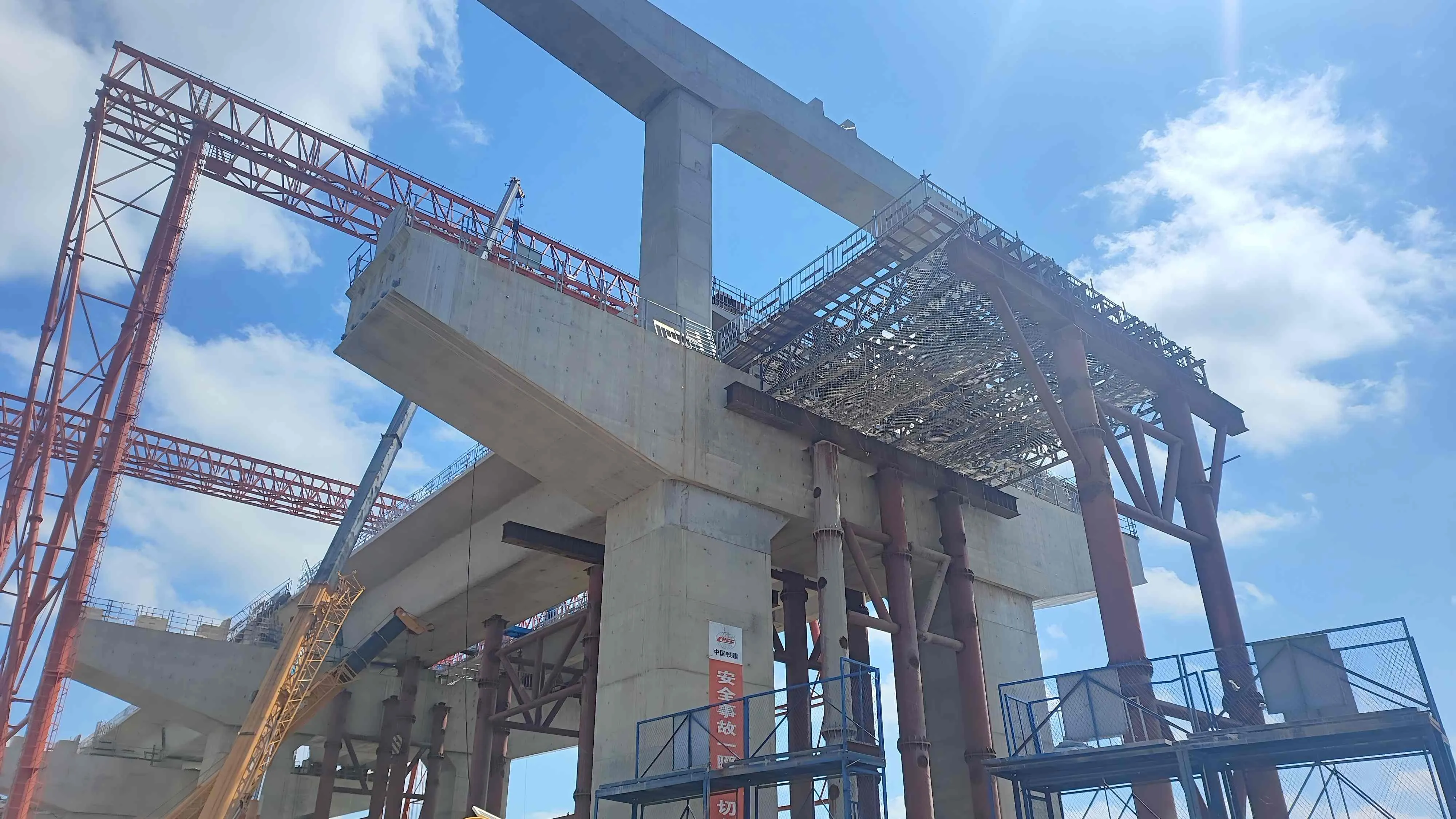
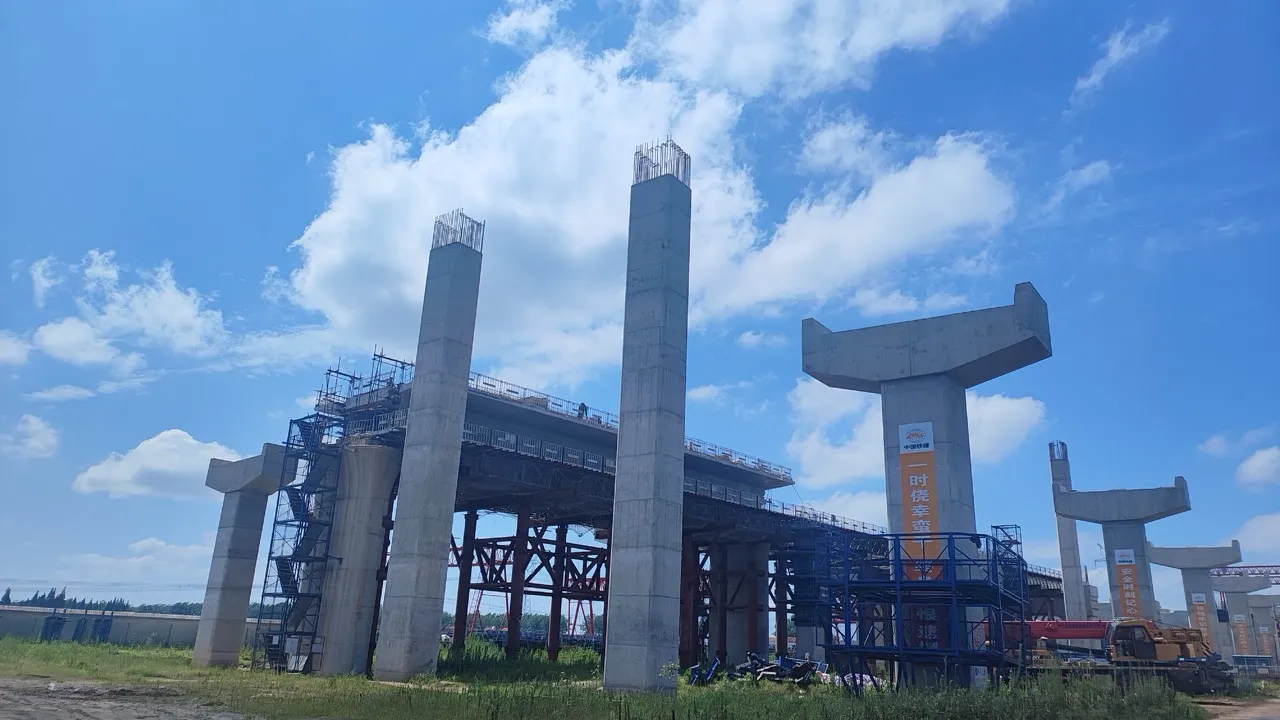
In thick structural elements such as foundations, bridge piers, dams, or large retaining walls, heat accumulation becomes much more significant. The internal temperature rises faster than it can dissipate, leading to a strong difference between the core and the surface.
In mass concrete, internal temperatures can commonly reach 50–70°C (122–158°F) depending on cement type, mix design, and placement conditions. This range is widely recognized as a potential engineering concern rather than a normal operating condition, especially because thermal gradients can build up within the structure.
Concrete bridge piers under construction at a transportation infrastructure project. Proper concrete placement, curing, and quality control are essential to achieve the required structural strength and long-term durability.Maximum temperature risk zone
The upper limit of concrete temperature during curing is not fixed, but engineering guidelines generally treat internal temperatures approaching ~70°C (158°F) as a risk zone for mass concrete. At this level, excessive heat can increase the likelihood of thermal cracking and may negatively affect long-term durability if not properly controlled.
It is important to note that this condition is not typical for standard slabs. It mainly applies to large-volume concrete where heat cannot escape efficiently and where temperature control measures are required to manage internal heat buildup.
Internal vs Surface Temperature Difference
Why is the core hotter than the surface
In curing concrete, heat is generated inside the material through cement hydration. The core of the concrete retains this heat because it is insulated by surrounding material and has limited exposure to air.
At the same time, the surface loses heat continuously to the environment through air contact, wind, and formwork. Heat transfer is much faster at the surface, especially under low humidity or high wind conditions.
As a result, the internal temperature of concrete is often significantly higher than the surface temperature, particularly in thick sections or mass concrete pours where heat dissipation is slow.
Thermal gradient stress mechanism
The difference between core and surface temperature creates what is known as a thermal gradient. When the core is hotter, it tends to expand more, while the cooler surface contracts or expands less.
This mismatch in expansion and contraction generates internal stress within the concrete structure. If the temperature difference becomes too large, the stress can exceed the early tensile strength of concrete, increasing the risk of cracking.
Thick structural elements and mass concrete are most sensitive to this effect because they retain heat for longer periods and cool unevenly across the section.
Thermal Cracking Risk from Curing Heat
How cracking develops
Thermal cracking in concrete develops when heat generated during curing causes expansion in the early stage, followed by contraction as the concrete cools. This cycle of heating and cooling creates internal movement within the material.
Because concrete at early ages has relatively low tensile strength, it cannot fully resist these movements. When the structure is restrained by its own mass, reinforcement, or surrounding elements, the internal stress begins to build up.
The combination of expansion during heating and contraction during cooling leads to restrained tensile stress. If this stress exceeds the early-age tensile capacity of concrete, cracking will occur.
 A close-up view of a concrete surface crack. Early-age shrinkage cracks are commonly associated with rapid moisture evaporation, high temperatures, wind exposure, or inadequate curing practices.
When thermal cracking becomes critical
Thermal cracking risk becomes significantly higher in large structural elements where heat is not able to dissipate quickly. This includes mass concrete foundations, bridge piers, dams, and thick slab systems.
High cement content mixes also increase risk, since they generate more heat during hydration. When internal heat is trapped, the temperature difference between core and surface becomes more pronounced, increasing thermal stress.
In mass concrete engineering practice, a thermal gradient of around 20°C (approximately 35°F) is often treated as a caution threshold, especially when combined with restrained conditions. However, actual cracking risk depends on mix design, geometry, and curing control.
Safe Concrete Temperature Ranges During Curing
Typical safe curing range
Concrete performance is most stable when curing temperatures remain within a moderate range. In general construction practice, a temperature window of 50–70°F (10–21°C) is commonly considered optimal for balanced hydration, predictable strength development, and reduced risk of thermal stress.
Within this range, cement hydration proceeds at a steady rate, and both early-age and long-term strength development are well controlled under normal curing conditions.
Minimum temperature risk
When concrete temperature drops below 40°F (4°C), hydration slows significantly. Below freezing (32°F / 0°C), mixing water can freeze, which may permanently damage the cement matrix if early strength has not developed.
In cold conditions, protection methods such as insulation or heated enclosures are typically required to maintain hydration and prevent early-age strength loss.
Maximum temperature risk
At elevated temperatures above 70–90°F (21–32°C), hydration accelerates, which can increase early strength but may reduce long-term strength and increase shrinkage and cracking risk due to rapid moisture loss.
In mass concrete, internal temperature rise can become significantly higher than ambient conditions. In some engineering cases, internal temperatures approaching ~70°C (158°F) are considered a risk zone where thermal control measures are necessary to prevent excessive heat buildup and thermal cracking.
| Temperature Range | Curing Behavior | Risk Level |
|---|---|---|
| Below 32°F (0°C) | Water may freeze, hydration stops or is severely disrupted | High risk – potential permanent damage |
| 32–40°F (0–4°C) | Very slow hydration, strength gain is minimal | Moderate to high risk |
| 50–70°F (10–21°C) | Stable hydration and predictable strength development | Low risk – ideal range |
| 70–90°F (21–32°C) | Faster hydration, higher evaporation rate | Moderate risk – shrinkage and cracking potential |
| Above 90°F (32°C) | Rapid setting, reduced long-term strength potential | High risk – durability concerns |
| Mass concrete (~158°F / 70°C internal) | Extreme internal heat buildup, strong thermal gradients | Critical risk – thermal cracking potential |
These ranges are provided as practical engineering guidance. Actual allowable limits depend on project specifications, cement type, structural size, and applicable standards such as ACI recommendations and local construction codes.
What Affects How Hot Concrete Gets? (Key Control Factors)
Mix design influence
The heat generated during concrete curing is strongly controlled by the mix design. Cement type and content are primary factors. High cement content generally increases total heat output, while low-heat cement blends reduce peak temperature development.
Supplementary cementitious materials (SCMs) such as fly ash, slag, and silica fume can significantly modify heat evolution. In many field applications, fly ash and slag replacements are commonly used to reduce early-age heat release and slow hydration rate, improving thermal control in large pours.
Water–cement ratio also affects heat behavior. Lower w/c ratios typically increase early hydration intensity due to higher cement concentration per unit volume, which can contribute to faster temperature rise in the early curing stage.
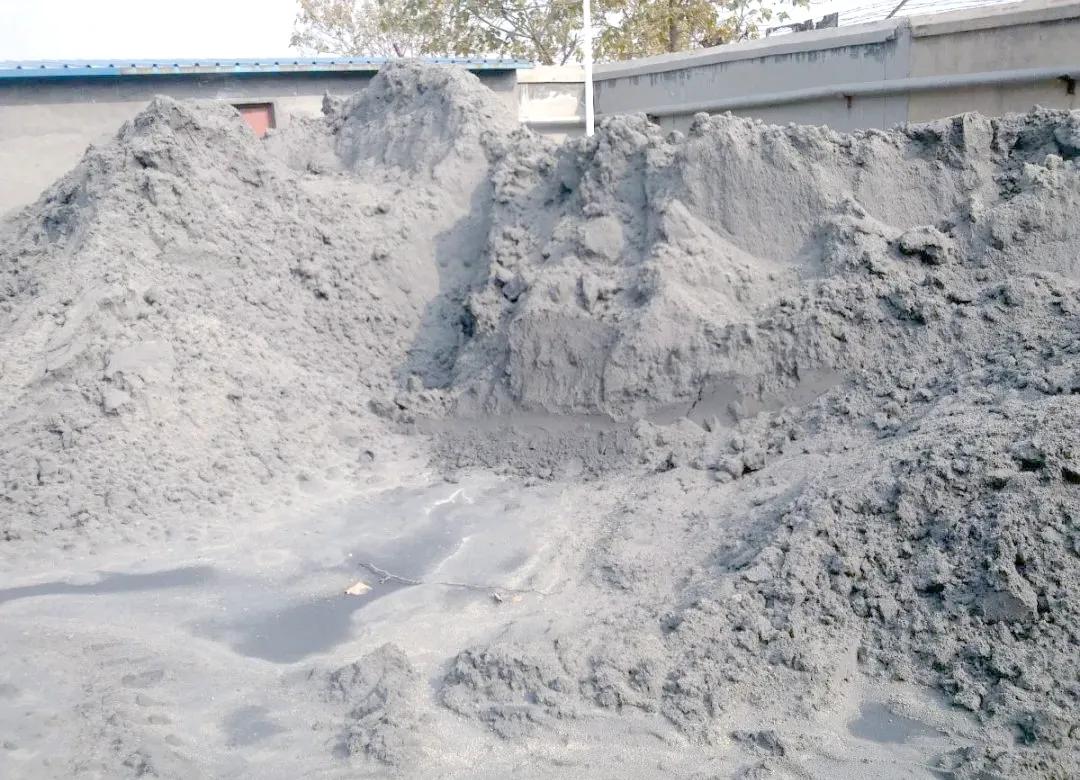 Fly ash used as supplementary cementitious material for precast concrete production
Admixture influence
Chemical admixtures also play a role in heat development. Retarders slow down the hydration process, delaying peak heat generation and reducing early temperature spikes in hot weather conditions.
Accelerators have the opposite effect, increasing early hydration rate and potentially increasing early heat release, which may be useful in cold weather applications but requires thermal monitoring in mass pours.
Polycarboxylate ether (PCE) superplasticizers primarily reduce water demand while improving workability. While they do not directly generate heat, they can indirectly influence hydration kinetics by improving particle dispersion and allowing optimized mix designs with lower water content.

Pour size and geometry
The size and shape of the concrete element have a major impact on temperature rise. The key factor is the surface-area-to-volume ratio. Thin sections lose heat quickly due to high surface exposure, while thick sections retain heat inside the core.
Mass concrete elements such as large foundations or thick slabs have low surface-area-to-volume ratios, which leads to heat accumulation and higher internal temperatures compared to smaller structural elements.

Environmental conditions
Ambient conditions directly affect how quickly concrete can dissipate heat. High air temperature reduces cooling efficiency, while wind can increase surface heat loss. Low humidity increases evaporation, which can also affect surface temperature behavior.
Subgrade temperature and formwork conditions also influence heat transfer. Cold base layers or steel forms can draw heat away from the concrete more quickly, while insulated or thick formwork can retain heat inside the structure for longer periods.

How to Control Concrete Temperature During Curing
Cold weather strategies
In cold weather conditions, the main goal is to maintain hydration and prevent the concrete temperature from dropping below critical levels where strength development slows or freezing damage may occur.
- Insulating blankets: Used to retain heat generated by hydration and reduce heat loss to the environment.
- Heated enclosures: Temporary shelters with controlled heating systems to maintain stable curing temperature.
- Warm mixing water: Increases initial concrete temperature at placement, improving early hydration activity.
- Controlled use of accelerators: Chemical accelerators may be used to increase early strength gain, but must be balanced to avoid excessive early heat concentration in thick sections.

Hot weather strategies
In hot weather, the main objective is to control excessive heat buildup and reduce rapid moisture loss, both of which can negatively affect strength and durability.
- Chilled water or ice: Reduces initial mix temperature and slows early hydration heat rise.
- Shaded aggregate storage: Prevents preheating of materials before mixing.
- Night or early morning pours: Helps avoid peak ambient temperatures during initial hydration.
- Immediate curing: Early application of curing methods reduces evaporation and surface temperature spikes.
- Retarders: Used to slow hydration rate and delay peak heat generation under high temperature conditions.
Temperature monitoring
Temperature monitoring is essential in large or critical concrete placements, especially in mass concrete where internal heat buildup can differ significantly from surface conditions.
- Internal temperature sensors: Embedded sensors measure real-time core temperature during hydration.
- Core vs surface monitoring: Helps identify thermal gradients that may lead to internal stress development.
- Mass concrete thermal control plans: Engineering plans are used to predict, monitor, and limit peak temperature and cooling rates to reduce cracking risk.
Effective temperature control requires combining material selection, placement strategy, and real-time monitoring rather than relying on a single method.
Heat of Hydration vs Strength Development
A higher rate of heat release during concrete curing does not always mean better concrete performance. While rapid heat generation is often associated with fast early strength gain, it can also introduce long-term risks depending on curing conditions and mix design.
Concrete strength development is controlled by both temperature and moisture availability during hydration. These two factors determine how cement particles form hydration products such as calcium silicate hydrate (C-S-H), which is the primary source of concrete strength.
When curing temperatures are high, hydration reactions accelerate. This typically leads to faster early strength gain within the first 24–72 hours. However, excessive heat can also increase evaporation and internal stress, which may negatively affect long-term durability.
In contrast, moderate curing temperatures allow hydration to proceed at a slower and more controlled rate. This supports a denser microstructure, improved particle packing, and reduced internal void formation. As a result, long-term strength and durability are often improved under controlled temperature conditions.
Porosity plays an important role in this balance. High curing temperatures combined with rapid moisture loss can increase capillary pores within the concrete matrix, reducing density and increasing permeability. Proper curing control is therefore essential to maintain both strength development and durability performance.
Overall, the relationship between heat generation and strength is not linear. The optimal condition is not maximum heat, but controlled heat evolution with sustained moisture availability throughout the curing process.
Conclusion
Concrete generates heat during curing because cement hydration is an exothermic process. In most normal construction, the temperature rise is moderate and depends on mix design, placement conditions, and ambient environment.
In thin slabs and standard structural elements, concrete typically only becomes slightly warmer than surrounding air. However, in large-volume or mass concrete, internal temperatures can rise significantly higher due to heat accumulation and slow dissipation.
The actual temperature is not a fixed value. It depends on mix design, cement content, water-cement ratio, element size, environmental conditions, and curing control methods.
From an engineering perspective, the main concern is not heat itself, but uncontrolled temperature development and thermal gradients between the core and surface. These conditions can lead to internal stress and increase the risk of thermal cracking if not properly managed.
Frequently Asked Questions
How hot does concrete get when curing?
Concrete can generate heat during curing due to cement hydration, which is an exothermic reaction. In normal slabs, the temperature rise is usually modest, often only a few degrees above ambient conditions. However, in mass concrete, internal temperatures can increase significantly depending on mix design and structural size.
When does concrete reach peak temperature during curing?
Peak temperature typically occurs within the first 6–24 hours after placement, when hydration reactions are most active. The exact timing depends on cement type, ambient conditions, and element thickness. After this period, heat generation gradually decreases as hydration slows.
Is it normal for curing concrete to feel warm?
Yes, it is normal for fresh concrete to feel warm during early curing stages. This warmth comes from heat released during hydration. In thicker sections, the heat may be more noticeable due to slower dissipation from the interior.
Can concrete get too hot while curing?
Concrete can reach temperatures that are considered high-risk in certain conditions, especially in mass concrete. Excessive internal heat may increase the risk of thermal cracking and long-term durability reduction. Temperature control is important in large pours to manage this risk.
Why is mass concrete hotter than a normal slab?
Mass concrete retains more heat because it has a low surface-area-to-volume ratio. Heat generated inside the structure cannot escape easily, causing the core temperature to rise higher than the surface. This effect is much less significant in thin slabs where heat dissipates quickly.
Does hot concrete cure faster?
Higher temperatures accelerate hydration, which leads to faster early strength development. However, overly high curing temperatures can reduce long-term strength and increase porosity. Controlled curing is necessary to balance early strength and durability.
How can admixtures help control curing heat?
Admixtures can influence the rate of hydration and heat development. Retarders slow down early reactions and reduce peak heat, while accelerators increase early strength gain but may increase early heat release. Superplasticizers help optimize water demand, indirectly affecting hydration efficiency and temperature development.