July 30, 2026
Back to News

What Is a Concrete Accelerator?
Concrete does not harden because water evaporates. It gains strength through cement hydration—a series of chemical reactions between cement and water that gradually form the hardened structure of concrete. Under normal conditions, hydration begins immediately after mixing but takes hours and days to develop enough strength for finishing, formwork removal, or structural loading.
A concrete accelerator is a chemical admixture that increases the rate of these early hydration reactions. By promoting faster hydration, it shortens setting time and helps concrete develop usable strength sooner, allowing construction activities to proceed more quickly.
Concrete accelerators are widely used in ready-mixed concrete, precast production, repair mortars, grouts, shotcrete, and other cement-based materials whenever early strength or faster construction is required. Their primary purpose is to improve early-age performance rather than increase the ultimate strength of concrete.
What Does a Concrete Accelerator Do? (Benefits)
Like any chemical admixture, concrete accelerators offer important advantages but also require careful selection and use.
Benefits
The most obvious benefit is faster construction.
By shortening setting time or increasing early strength development, accelerators allow construction activities to progress sooner than would otherwise be possible.
Earlier finishing operations reduce delays during cold weather. Earlier formwork removal improves productivity in precast and cast-in-place construction. Faster strength development allows repaired structures to reopen sooner and minimizes downtime for transportation and industrial facilities.

Accelerators also provide greater flexibility during seasonal construction.
Instead of suspending concrete work whenever temperatures fall, contractors can continue placing concrete while maintaining acceptable early-age performance, provided appropriate cold-weather practices are followed.

For manufacturers, accelerators increase production efficiency by shortening mould occupancy time and enabling more production cycles within the same facility.
In modern low-carbon concrete mixtures containing supplementary cementitious materials, accelerators can also compensate for slower early hydration, helping maintain construction schedules without abandoning more sustainable cementitious systems.
Limitations
Despite these advantages, accelerators should not be viewed as universal solutions.
One important consideration is that faster hydration usually means less working time. If placing, transporting, or finishing operations are delayed, concrete may begin stiffening before crews are ready.
Accelerators also require careful dosage control. Excessive dosage can cause overly rapid setting, increased heat generation, reduced workability, or other undesirable effects depending on the specific chemistry involved.
Compatibility is another important issue. Not every accelerator performs equally well with every cement type, supplementary cementitious material, or chemical admixture. Trial mixtures are therefore essential before large-scale production.
Material durability must also be considered. Chloride-based accelerators, while highly effective, may increase the risk of reinforcement corrosion and are therefore unsuitable for many reinforced concrete applications.
Finally, accelerators cannot compensate for poor construction practices.
They cannot correct an improper water-to-cement ratio, poor curing, inadequate consolidation, or poor-quality materials. Their purpose is to improve early performance within a properly designed concrete mixture—not to replace sound engineering practice.
Concrete Accelerator vs. Cement Accelerator
The terms concrete accelerator and cement accelerator are often used interchangeably because both refer to admixtures that accelerate the hydration of cement.
Strictly speaking, cement is only one ingredient in concrete. Concrete consists of cement, water, aggregates, and, when required, chemical admixtures. Since accelerators act directly on cement hydration, the same product may also be used in mortar, grout, screeds, renders, or repair materials.
For this reason, the same product may be described as:
- concrete accelerator
- cement accelerator
- accelerating admixture
- concrete accelerator admixture
- cement mix accelerator
The terminology usually reflects marketing or application context rather than differences in chemistry. In engineering standards, these products are generally classified as accelerating admixtures.
How Does a Concrete Accelerator Work?
Understanding how concrete accelerators work begins with understanding how ordinary concrete hardens.
Concrete strength develops through cement hydration, not by drying. When water is added to cement, several clinker minerals begin reacting almost immediately. These reactions produce new hydration products that bind aggregate particles together and gradually transform a plastic mixture into hardened concrete.
Without an accelerator, hydration follows a characteristic pattern. After mixing, there is an initial period of rapid chemical activity, followed by a relatively quiet dormant period during which concrete remains workable. As hydration continues, concrete begins to set, stiffness increases, and strength develops rapidly over the first several hours and days.
Accelerators modify this process by increasing the rate of early hydration reactions. Rather than changing the basic chemistry of Portland cement, they encourage hydration to proceed more rapidly during its earliest stages.
Cement Hydration in Simple Terms
Ordinary Portland cement contains several major clinker phases, each contributing differently to strength development.
Among these, tricalcium silicate (C₃S) is primarily responsible for early-age strength, while tricalcium aluminate (C₃A) contributes to the earliest hydration reactions and influences setting behavior.
As these minerals react with water, they form hydration products such as calcium silicate hydrate (C-S-H) and other crystalline phases that gradually fill the space between cement particles. C-S-H is the principal binding phase that gives hardened concrete most of its strength.
Because hydration is an exothermic reaction, heat is released continuously as these products form. Under cold conditions, however, hydration slows significantly, delaying both setting and strength development.
How Accelerators Increase the Rate of Hydration
Although different accelerator chemistries influence cement hydration in different ways, most work by speeding up the earliest stages of the hydration process.
For the broader definition, purposes, and working principles, see our guide to what a concrete admixture is.
They may increase the rate at which cement minerals dissolve, shorten the dormant period after mixing, promote the formation of early hydration products that serve as nucleation sites for crystal growth, or accelerate the development of hydration products such as C-S-H. Rather than changing the fundamental chemistry of Portland cement, accelerators help these reactions occur sooner and progress more rapidly.
As a result, concrete reaches its early hydration stages more quickly than an untreated mixture. Setting occurs sooner, stiffness develops earlier, and usable strength is achieved in less time. This allows finishing, formwork removal, or demoulding to begin earlier, although the actual improvement depends on factors such as temperature, cement type, mixture design, and accelerator dosage.
 Concrete accelerators promote faster hydration, allowing concrete to set and gain strength sooner.
Accelerators Affect Different Reactions Differently
One common misconception is that every concrete accelerator works in exactly the same way.
In reality, different accelerator chemistries influence different hydration reactions. Some products primarily accelerate the hydration of silicate phases responsible for early strength development, while others have a stronger influence on aluminate reactions that affect setting behavior.
This is one reason why two accelerators may produce noticeably different field performance even when used at similar dosages.
It also explains why industry organizations distinguish between setting accelerators, which mainly shorten setting time, and hardening accelerators, which primarily improve early strength development.
Selecting the appropriate accelerator therefore, depends not only on achieving faster construction but also on identifying which aspect of concrete performance needs to be improved.
Does a Concrete Accelerator Increase Long-Term Strength?
Not necessarily.
Accelerators are designed primarily to improve early-age performance, especially during the first few hours and first several days after placement.
In many cases, concrete containing an accelerator reaches handling strength, stripping strength, or opening strength significantly sooner than untreated concrete. However, this does not automatically mean the concrete will achieve a higher 28-day compressive strength.
The final strength of concrete is still governed primarily by factors such as:
- water-to-cement ratio,
- cement type,
- aggregate quality,
- curing conditions,
- overall mixture design.
Proper curing therefore, remains essential even when accelerators are used. An accelerator can help concrete begin gaining strength sooner, but it cannot replace good curing practices or compensate for poor mix design.
Types of Concrete Accelerators
Concrete accelerators can be classified according to their function, chemical composition, or application. Understanding these differences makes product selection much easier.
Classification by Function
The most common classification distinguishes between setting accelerators and hardening accelerators.
Setting Accelerators
Setting accelerators reduces the time required for fresh concrete to become rigid.
They are primarily used when earlier finishing operations are needed or when prolonged setting would delay construction.
Typical applications include floor slabs, pavement repairs, cold-weather concreting, and shotcrete.

Hardening Accelerators
Hardening accelerators focus on increasing the rate of early strength development.
They are widely used where concrete must reach a specified compressive strength as quickly as possible, such as precast production, structural repairs, bridge construction, and projects requiring early formwork removal.
The difference between the two can be summarized as follows.
| Characteristic | Setting Accelerators | Hardening Accelerators |
|---|---|---|
| Primary objective | Reduce setting time | Increase early strength |
| Main benefit | Earlier finishing | Earlier load-bearing capacity |
| Typical applications | Cold weather, slabs, repairs, shotcrete | Precast, structural concrete, rapid construction |
Classification by Chemical Composition
Accelerators are also grouped according to their chemical composition.
Calcium Chloride Accelerators
Calcium chloride has long been one of the most effective and economical accelerating admixtures. It provides rapid early hydration and excellent early strength development.
However, chloride ions can accelerate the corrosion of reinforcing steel. For this reason, calcium chloride is generally restricted to plain concrete and is prohibited or strictly limited in many reinforced concrete applications.

Non-Chloride Accelerators
To avoid corrosion risks, most structural concrete now uses non-chloride accelerators.
Common chemistries include:
- calcium nitrate,
- calcium nitrite,
- calcium formate,
- aluminum-based compounds,
- proprietary blended formulations.
These products promote early hydration without introducing chloride ions, making them the preferred choice for reinforced concrete, bridges, parking structures, marine construction, and other infrastructure projects.
Although they typically cost more than calcium chloride, the improved durability of reinforced concrete usually outweighs the additional material cost.
Blended Accelerator Systems
Many modern accelerators combine multiple active ingredients rather than relying on a single chemical compound.
These proprietary formulations are designed to balance setting behavior, strength development, workability, and compatibility with other admixtures. Because their formulations vary considerably, selection should always be based on verified performance rather than chemistry alone.
Classification by Application
Accelerators are also designed for different construction methods.
Accelerators for Cast Concrete
These are the products most commonly used in ready-mixed and precast concrete. Their objectives include earlier strength development, shorter formwork stripping times, improved cold-weather performance, and faster production cycles.
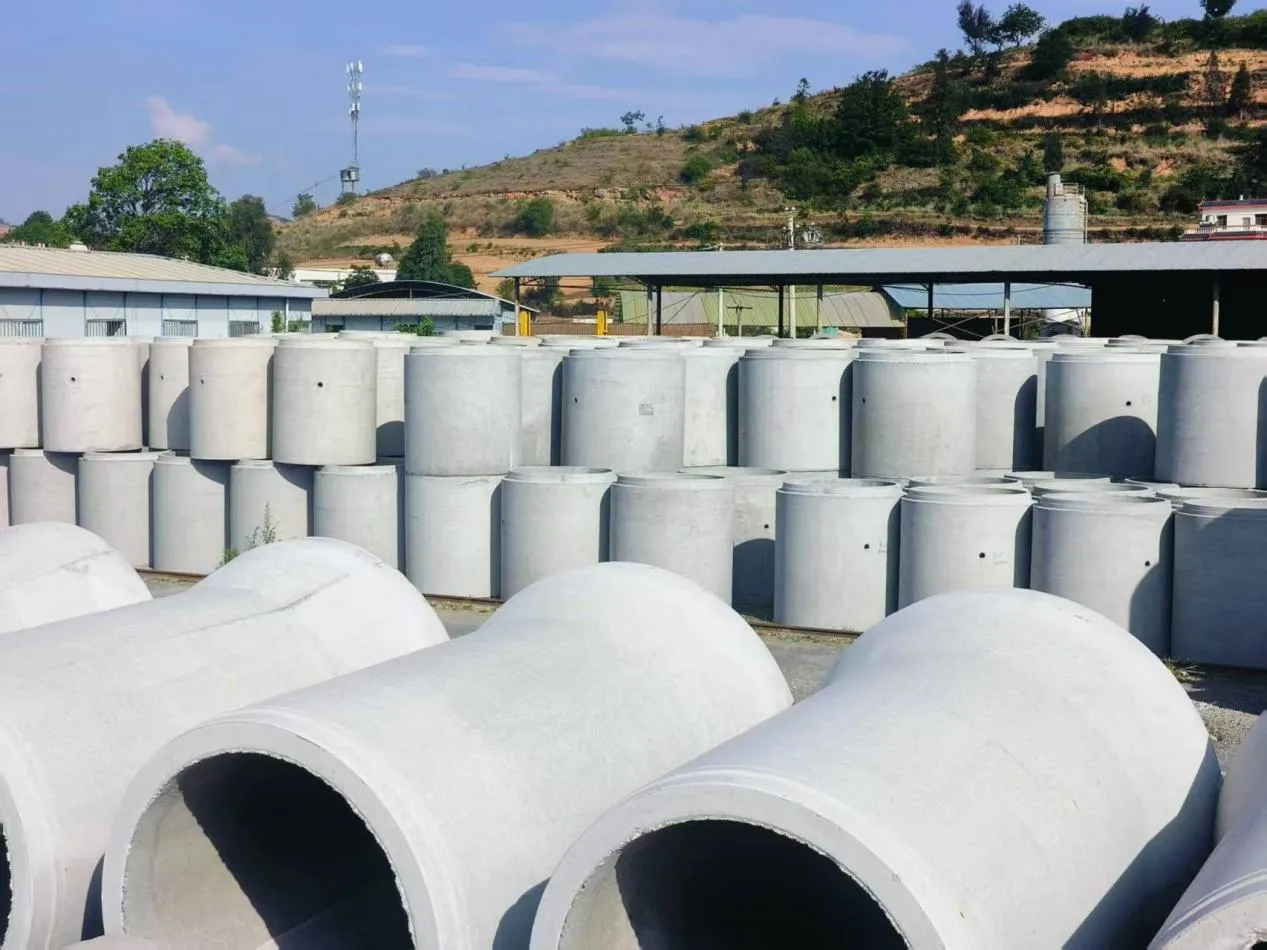 Precast concrete septic tanks and manholes for wastewater treatment and underground utility systems
Accelerators for Shotcrete
Shotcrete requires concrete to adhere to vertical or overhead surfaces almost immediately after spraying. Specialized shotcrete accelerators produce extremely rapid setting—often within only a few minutes—and are formulated specifically for tunnel construction, mining, slope stabilization, and underground engineering.
Because their performance requirements differ significantly from conventional cast concrete, shotcrete accelerators should not be considered interchangeable with standard concrete accelerating admixtures.
Which Type Should You Choose?
There is no universal concrete accelerator suitable for every project.
The right choice depends on several factors, including construction schedule, environmental conditions, structural requirements, cement type, and whether steel reinforcement is present.
In general:
- Projects requiring faster finishing operations usually benefit most from setting accelerators.
- Projects requiring earlier structural capacity generally benefit from hardening accelerators.
- Reinforced concrete normally requires non-chloride acceleratorsto minimize corrosion risk.
- Underground and sprayed concrete applications often require specialized shotcrete acceleratorsrather than conventional cast concrete admixtures.
Rather than asking which accelerator is “best,” it is more useful to ask which accelerator is most appropriate for the specific construction objective. Selecting the correct product is the first step toward achieving faster construction without compromising long-term concrete performance.
Common Applications of Concrete Accelerators
Concrete accelerators are used whenever early setting or rapid strength development improves construction efficiency. Although they are commonly associated with winter concreting, modern applications extend to precast manufacturing, infrastructure repair, industrial construction, and sustainable concrete mixtures containing supplementary cementitious materials (SCMs).
Selecting the right accelerator begins with understanding the objective of the project rather than simply choosing the fastest product.
Cold-Weather Concreting
Low temperatures significantly slow cement hydration. As hydration slows, concrete remains workable for longer, setting is delayed, and early strength develops much more slowly than under normal conditions.
Accelerators help concrete reach its initial set and early strength sooner, reducing the period during which fresh concrete is vulnerable to freezing damage.
However, accelerators are not antifreeze admixtures. They do not prevent mixing water from freezing. Instead, they help concrete develop sufficient strength before freezing becomes critical. Proper insulation, temperature control, and curing are still essential components of successful cold-weather concreting.

Precast Concrete Production
Productivity in precast plants depends heavily on production cycle time.
By increasing early compressive strength, hardening accelerators allow concrete elements to reach stripping strength sooner, enabling earlier demoulding and faster mould reuse. Shorter production cycles improve plant efficiency without increasing factory space or equipment.
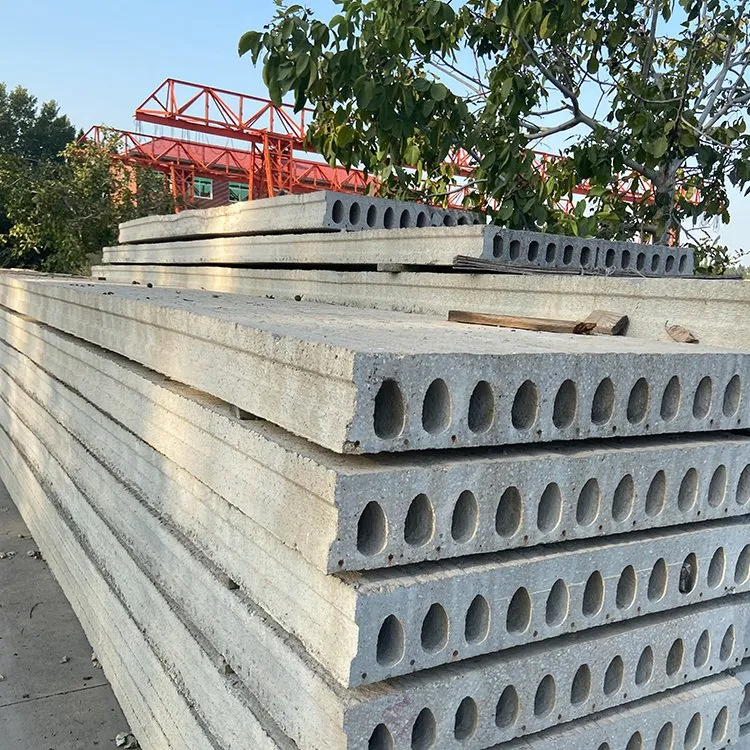 Precast concrete slabs and hollow core planks for fast floor and roof system installation
Repair and Maintenance Projects
Many repair projects must reopen to traffic or service within a limited time.
Accelerators are widely used in pavement repairs, bridge rehabilitation, airport runways, industrial floors, and utility installations where conventional concrete would require excessive waiting time before reaching service strength.
Fast-track repair materials frequently incorporate accelerating admixtures as part of their mixture design.

Fast-Track Construction
Large commercial and industrial projects often operate under compressed schedules. Earlier finishing, earlier formwork removal, and earlier loading all help reduce overall construction time.
In these situations, the greatest value of an accelerator is often improved project efficiency rather than higher concrete strength.
Concrete Containing SCMs
Modern concrete increasingly incorporates fly ash, ground granulated blast-furnace slag (GGBFS), calcined clay, limestone cement, and other supplementary cementitious materials to improve sustainability and durability.
Many of these materials slow early hydration, particularly in cool weather. Accelerators help offset this effect by promoting earlier hydration, allowing low-carbon concrete mixtures to achieve more consistent early-age performance while maintaining their long-term benefits.
Shotcrete
Shotcrete requires concrete to adhere immediately to vertical or overhead surfaces.
Specialized shotcrete accelerators provide extremely rapid setting, allowing sprayed concrete to build thickness quickly while minimizing rebound. Because these products are designed for a unique construction method, they should not be substituted with conventional cast-concrete accelerators.
How to Choose the Right Concrete Accelerator
Selecting a concrete accelerator is not simply a matter of choosing the product that produces the fastest set. The most suitable accelerator depends on the performance requirements of the project, environmental conditions, and the concrete mixture itself.
Step 1. Define the Construction Objective
Start by identifying why an accelerator is needed.
For example:
- Cold-weather concreting requires earlier hydration to reduce freezing risk.
- Precast production focuses on earlier stripping strength.
- Highway repairs require rapid reopening.
- Shotcrete requires immediate adhesion after spraying.
Choosing an accelerator before defining the construction objective often results in unnecessary cost or disappointing performance.
Step 2. Determine Whether Setting or Strength Is the Priority
Although related, setting time and strength development are not the same.
If the project requires earlier finishing or shorter waiting time before surface treatment, a setting accelerator is generally the better choice.
If the project depends on earlier demoulding, post-tensioning, structural loading, or traffic reopening, a hardening accelerator is usually more appropriate.
Step 3. Consider Reinforcement
The presence of reinforcing steel is one of the most important selection factors.
For reinforced or prestressed concrete, non-chloride accelerators are generally recommended because they minimize the risk of reinforcement corrosion.
Calcium chloride may still be suitable for certain non-reinforced applications where corrosion is not a concern.
Step 4. Evaluate Environmental Conditions
Temperature strongly influences accelerator performance.
Cold weather increases the benefits of accelerating admixtures because hydration naturally slows as temperature decreases.
In hot weather, however, hydration is already rapid. Additional acceleration may shorten working time excessively and make concrete more difficult to place or finish.
Step 5. Check Compatibility with the Concrete Mixture
Accelerators should always be evaluated as part of the complete mixture rather than as independent products.
Performance may vary depending on:
- cement type,
- supplementary cementitious materials,
- water-to-cement ratio,
- superplasticizers,
- air-entraining admixtures,
- retarders,
- other specialty admixtures.
Trial batches remain the most reliable way to verify compatibility before production.
Step 6. Confirm Performance Through Testing
Manufacturer recommendations provide a useful starting point, but field performance depends on the entire concrete mixture and construction conditions.
For important projects, accelerator selection should always be confirmed through laboratory testing or site trials before large-scale use.
Quick Selection Guide
| Construction Need | Recommended Accelerator |
|---|---|
| Cold-weather concreting | Hardening or non-chloride accelerator |
| Earlier slab finishing | Setting accelerator |
| Earlier formwork removal | Hardening accelerator |
| Precast production | Hardening accelerator |
| Reinforced concrete | Non-chloride accelerator |
| Rapid repair | Setting or hardening accelerator |
| Shotcrete | Specialized shotcrete accelerator |
| Concrete with SCMs | Accelerator verified through compatibility testing |
How to Use Concrete Accelerators Correctly
Proper application is just as important as selecting the right product.
Follow the manufacturer’s recommended addition sequence and dosage to ensure uniform distribution throughout the concrete mixture. Increasing dosage beyond the recommended range rarely produces proportional benefits and may reduce workability, shorten placing time excessively, or create undesirable setting behavior.
When accelerators are used together with water reducers, superplasticizers, air-entraining agents, or other admixtures, compatibility should be verified through trial batches before field application.
Finally, remember that accelerators do not replace curing. Even rapidly setting concrete still requires appropriate moisture and temperature control to achieve its intended long-term strength and durability.
Industry Standards and Specifications
Concrete accelerators are selected not only for their ability to improve early concrete performance but also for their compliance with recognized industry standards. These standards define performance requirements, testing methods, and practical guidance for using accelerating admixtures in different construction environments.
Although project specifications vary by country and industry, the following standards are among the most widely referenced.
ASTM C494
ASTM C494 is one of the most important specifications for chemical admixtures used in concrete.
For accelerating admixtures, two classifications are particularly relevant:
- Type C – Accelerating Admixtures
- Type E – Water-Reducing and Accelerating Admixtures
Type C products primarily accelerate setting or early strength development. Type E admixtures combine accelerating performance with water reduction, making them suitable for applications where both workability and early-age strength are required.
When comparing commercial products, understanding whether they comply with ASTM C494 Type C or Type E provides a useful indication of their intended performance.
ACI 212
ACI 212 – Chemical Admixtures for Concrete provides practical guidance on selecting and using chemical admixtures in concrete.
Rather than specifying individual products, ACI 212 explains how different categories of admixtures influence fresh and hardened concrete properties, discusses their advantages and limitations, and recommends appropriate evaluation methods during mixture design.
For engineers and concrete producers, it serves as an important reference for understanding how accelerating admixtures interact with other components of a concrete mixture.
ACI 306
Accelerators are closely associated with cold-weather concreting, making ACI 306 – Cold Weather Concreting one of the most frequently referenced guidance documents.
ACI 306 emphasizes that accelerating admixtures are only one part of a successful cold-weather concreting strategy. Temperature control, insulation, curing, and protection against early freezing remain equally important.
The document also highlights a key principle: concrete should develop sufficient early strength before freezing occurs. Accelerators help achieve this objective by promoting earlier hydration, but they cannot replace proper cold-weather construction practices.
EN 934
In Europe, concrete accelerators are commonly specified under the EN 934 series of standards.
These standards define classification methods, conformity assessment procedures, and performance requirements for concrete admixtures used throughout European construction projects.
For international projects, compliance with EN 934 is often specified alongside national or project-specific requirements.
Other Industry Guidance
In addition to formal standards, organizations such as The Concrete Society and the European Federation of Concrete Admixture Associations (EFCA) publish technical guidance on the selection and application of accelerating admixtures.
These publications consistently distinguish between setting accelerators and hardening accelerators, reinforcing the importance of selecting products according to their primary function rather than assuming all accelerators perform identically.
Early-Strength Performance in Real Projects
An early-strength accelerator is chosen when the project needs earlier finishing, form removal, handling, reopening, or loading—not simply a shorter nominal set time. Its effect depends on cement chemistry, concrete temperature, water-to-binder ratio, supplementary cementitious materials, and the complete admixture system. Inorganic salts, organic compounds such as calcium formate or triethanolamine, and blended accelerator systems can produce very different setting and early-strength profiles.
Before production, compare 1-day, 3-day, 7-day, and required long-term strength, and monitor workability and heat development as well as set time. The dosage must be established by testing with the actual cement and materials. Faster early strength does not remove the need for curing, and an accelerator that performs well in one mix can cause rapid slump loss, excessive set acceleration, corrosion risk, or later-strength trade-offs in another.
Frequently Asked Questions
How does a concrete accelerator work?
Accelerators promote earlier hydration of cement minerals by shortening the dormant period and accelerating the formation of hydration products. Depending on the product, they may primarily reduce setting time, increase early strength, or provide both effects.
Is a concrete accelerator the same as a cement accelerator?
In most practical situations, yes.
Both terms describe admixtures that accelerate cement hydration. The difference is mainly in terminology rather than chemistry, as the same products may be used in concrete, mortar, grout, and other cement-based materials.
Does a concrete accelerator increase 28-day strength?
Not necessarily.
The primary purpose of an accelerator is to improve early-age performance. The ultimate compressive strength of concrete is still governed by factors such as the water-to-cement ratio, cement type, aggregate quality, curing conditions, and overall mixture design.
Can accelerators be used in reinforced concrete?
Yes.
For reinforced and prestressed concrete, non-chloride accelerators are generally recommended because they minimize the risk of steel corrosion. Chloride-based accelerators should only be used where permitted by applicable specifications.
What is the difference between chloride and non-chloride accelerators?
Chloride accelerators, especially calcium chloride, provide excellent early hydration and are relatively inexpensive. However, they may promote reinforcement corrosion.
Non-chloride accelerators achieve similar early-age performance without introducing chloride ions, making them the preferred choice for structural concrete and infrastructure projects.
Can concrete accelerators be used with superplasticizers?
Yes.
Modern concrete mixtures often combine accelerators with superplasticizers or water reducers. Because compatibility varies among different products and cement systems, trial testing is recommended before production.
Are concrete accelerators suitable for concrete containing fly ash or slag?
Yes.
Accelerators are frequently used to compensate for the slower early hydration associated with supplementary cementitious materials. Compatibility should be verified through laboratory or field testing.
Are concrete accelerators antifreeze admixtures?
No.
Accelerators do not prevent water from freezing. Their role is to help concrete gain sufficient early strength more quickly, reducing the period during which freezing can damage fresh concrete.
Conclusion
Concrete accelerators play an important role in modern concrete construction by improving early-age performance and helping projects stay on schedule. Whether the objective is shortening setting time during cold weather, increasing productivity in precast manufacturing, or reopening repaired infrastructure more quickly, the right accelerating admixture can significantly reduce waiting time without changing the fundamental properties of concrete.
Successful selection, however, depends on matching the accelerator to the project requirements. Engineers and contractors should consider the desired performance, environmental conditions, reinforcement, mixture compatibility, and applicable standards before choosing a product.
When used together with proper mixture design, correct dosage, and appropriate curing practices, concrete accelerators provide a practical and reliable solution for achieving faster construction while maintaining long-term concrete performance.