July 30, 2026
Back to News

Quick Answer
NCA in concrete stands for non-chloride accelerator, a type of accelerating admixture that speeds up cement hydration to shorten setting time and increase early-age strength without introducing chloride ions into the concrete. A non chloride concrete accelerator is commonly specified for reinforced concrete, prestressed concrete, precast elements, bridge decks, and other structures where long-term durability and corrosion protection are important.
A calcium chloride concrete accelerator achieves the same primary goal—faster setting and earlier strength—but contains chloride ions that can increase the risk of reinforcing steel corrosion if used in applications where chloride content is restricted. For this reason, calcium chloride accelerators remain widely used in plain concrete, repair mortars, masonry, and other suitable applications, while non chloride accelerators for concrete have become the preferred choice for most reinforced structural concrete. The right accelerator depends on the project specifications, reinforcement, exposure conditions, and durability requirements rather than simply choosing the fastest product.
In This Article
What Is NCA in Concrete?
What Is a Calcium Chloride Concrete Accelerator?
How Do Both Accelerators Work?
Why Did the Industry Move from Calcium Chloride to NCA?
Non-Chloride vs. Calcium Chloride Accelerators
When Should You Choose a Non-Chloride Accelerator?
When Is a Calcium Chloride Accelerator Still the Right Choice?
How to Choose the Right Concrete Accelerator
Industry Standards and Specifications
Frequently Asked Questions
Final Thoughts
Why Did the Industry Move from Calcium Chloride to NCA?
For much of the twentieth century, calcium chloride was the standard accelerating admixture used in concrete construction. It was inexpensive, highly effective, and widely available, making it the preferred solution whenever faster setting and early strength were required. Today, calcium chloride continues to perform exceptionally well in many appropriate applications. However, as reinforced concrete became the dominant structural system and durability requirements became more demanding, the industry’s priorities gradually shifted. Modern concrete design now considers not only early-age performance, but also long-term service life, reinforcement protection, and compliance with construction standards. This shift explains why non-chloride accelerators have become the preferred choice for many structural concrete projects.
Calcium Chloride Was Once the Industry Standard
Before non-chloride accelerator technology became widely available, calcium chloride was the most commonly used accelerating admixture throughout the concrete industry. It was routinely added to concrete, mortar, and grout to reduce setting time, improve early strength development, and increase productivity during cold-weather construction.
Industry organizations, including the American Concrete Institute (ACI), have long recognized calcium chloride as one of the most effective accelerating admixtures. Historical guidance from organizations such as The Concrete Society also notes that calcium chloride was widely used in structural concrete until the 1970s, when durability considerations began receiving greater attention. At the time, its combination of fast hydration, reliable performance, and low cost made it the benchmark against which many modern accelerators are still compared.
Why Corrosion Became a Concern
The industry’s transition away from calcium chloride was not because it stopped accelerating concrete effectively. Instead, engineers became increasingly concerned about the long-term effects of chloride ions in reinforced concrete.
Steel reinforcement is normally protected by the highly alkaline environment inside hardened concrete. However, excessive chloride ions can disrupt this protective environment and increase the risk of localized corrosion, particularly when combined with unfavorable exposure conditions. As reinforcing steel corrodes, it expands, creating internal stresses that may eventually lead to cracking, delamination, spalling, and reduced structural durability.
These concerns are especially important in reinforced concrete, where embedded reinforcing bars provide tensile strength, and in prestressed concrete, where corrosion of high-strength prestressing steel can have particularly serious consequences. As infrastructure projects were increasingly designed for longer service lives and lower maintenance requirements, durability became just as important as rapid setting and early strength.
 Concrete segregation may create voids and honeycombing, allowing moisture to reach reinforcing steel and accelerate corrosion.
Modern Standards Focus on Chloride Limits
An important point that is often misunderstood is that modern standards generally do not prohibit calcium chloride simply because it is a specific product. Instead, they focus on limiting the total chloride ion content within concrete, particularly when steel reinforcement is present.
For example, ACI guidance recommends avoiding calcium chloride in reinforced and prestressed concrete because of its potential contribution to reinforcement corrosion. Likewise, standards such as BS 8500 establish maximum allowable chloride ion contents for different classes of concrete rather than banning individual admixtures outright. Historical guidance from The Concrete Society also explains that the industry’s shift resulted from increasing awareness of durability and corrosion performance, leading to progressively stricter chloride limits in structural concrete.
This distinction is important. The issue is not whether calcium chloride can accelerate concrete—it clearly can—but whether the resulting chloride content complies with the durability requirements and project specifications for a particular structure.
Why Non-Chloride Accelerators Became the Preferred Choice
As construction standards evolved, manufacturers developed non-chloride accelerating admixtures capable of delivering rapid setting and early strength without introducing chloride ions into the concrete. This allowed engineers to obtain many of the performance benefits traditionally associated with calcium chloride while meeting increasingly stringent durability requirements.
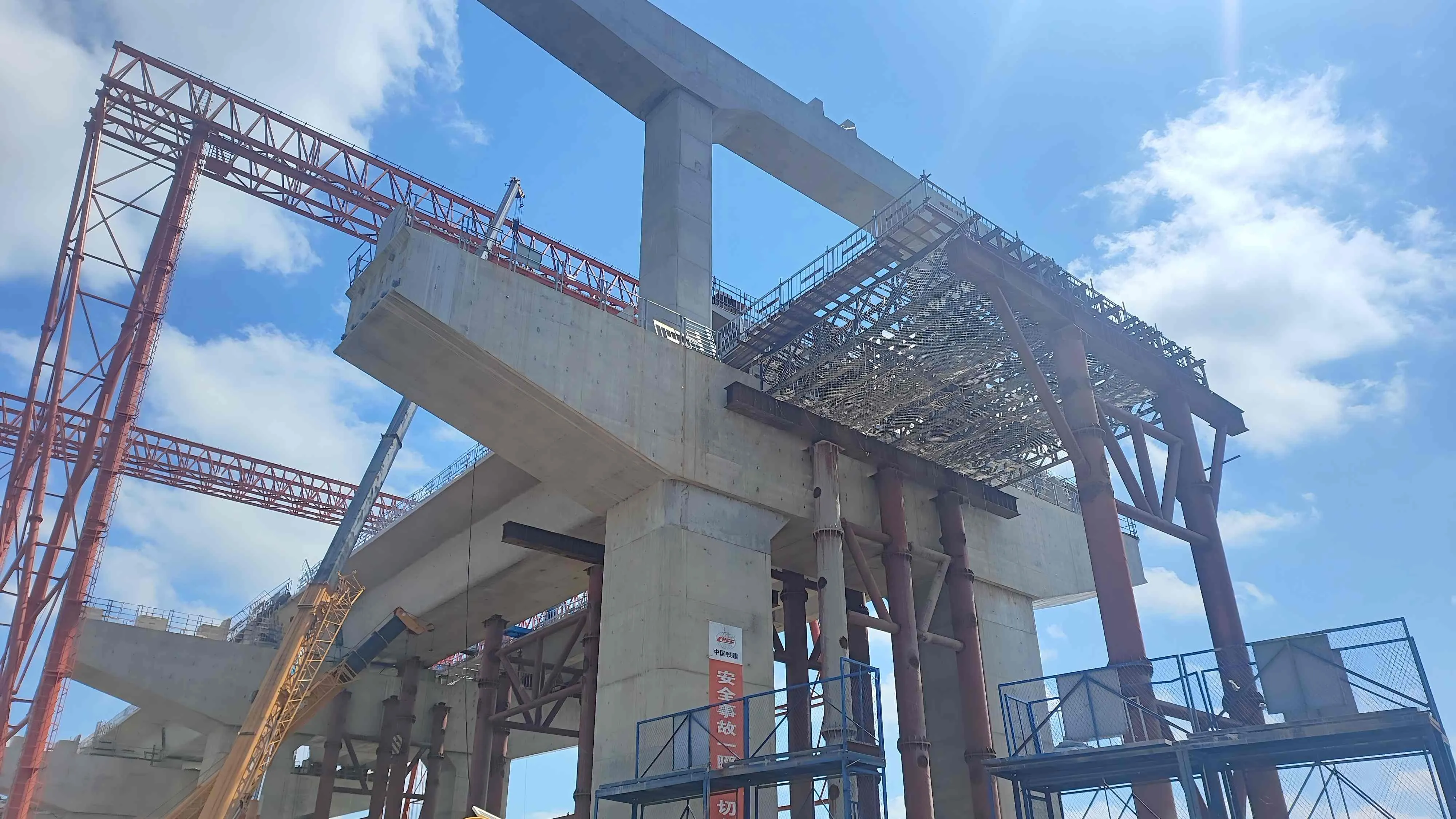
Today, non-chloride accelerators are widely specified for reinforced concrete, prestressed concrete, transportation infrastructure, bridge decks, parking structures, precast concrete, and ready-mix concrete where long-term durability and reinforcement protection are critical. Many transportation agencies, infrastructure owners, and project specifications now favor non-chloride accelerators because they align more readily with modern chloride limits and service-life expectations.
The industry’s transition therefore represents an evolution in engineering priorities rather than a rejection of calcium chloride technology. Calcium chloride remains an effective accelerating admixture for many suitable applications, while non-chloride accelerators have become the preferred solution whenever corrosion protection, durability, and specification compliance are primary design considerations.
Non-Chloride vs. Calcium Chloride Accelerators
Both non-chloride accelerators and calcium chloride accelerators are designed to reduce setting time and improve early-age strength. They share the same overall objective but differ in chemical composition, durability considerations, recommended applications, and specification requirements. Rather than asking which accelerator is universally better, engineers should evaluate which one best matches the structural requirements and exposure conditions of a particular project.
| Feature | Non-Chloride Accelerator | Calcium Chloride Accelerator |
| Primary Composition | Chloride-free accelerating compounds | Calcium chloride (CaCl₂) |
| Chloride Content | None | Contains chloride ions |
| Acceleration Mechanism | Accelerates cement hydration | Accelerates cement hydration |
| Setting Time | Fast | Fast |
| Early Strength Development | Excellent | Excellent |
| Cold-Weather Performance | Excellent | Excellent |
| Corrosion Risk | Very low | Higher in reinforced concrete due to chloride ions |
| Reinforced Concrete | Recommended | Usually restricted by project specifications |
| Prestressed Concrete | Recommended | Generally avoided |
| Plain Concrete | Suitable | Suitable |
| Repair Mortar & Masonry | Suitable | Commonly used |
| Precast & Ready-Mix Concrete | Widely specified | Application-dependent |
| Infrastructure Projects | Common choice | Often restricted by specifications |
| Typical Cost | Higher | Lower |
| Standards & Specifications | Widely accepted for structural applications | Depends on chloride limits and project specifications |
Although the comparison above highlights several differences, the two products also share important similarities. Both are classified as accelerating admixtures, both shorten setting time by increasing the rate of cement hydration, and both help concrete develop usable early strength sooner. In cold weather, either technology can improve construction efficiency by reducing delays caused by slow hydration.
The most significant difference is not how quickly they accelerate concrete, but where they are intended to be used. Non-chloride accelerators have become the preferred choice for reinforced structural concrete because they provide early strength development without introducing chloride ions. Calcium chloride accelerators remain highly effective and economical, but their use depends on the structural design, exposure conditions, and project specifications.
For most modern infrastructure and reinforced concrete projects, non-chloride accelerators are commonly specified to satisfy durability requirements and chloride limits. In contrast, calcium chloride accelerators continue to offer an effective solution for many plain concrete, masonry, grout, repair, and other applications where chloride restrictions do not apply. Ultimately, selecting between the two is an engineering decision based on performance requirements, durability expectations, and specification compliance rather than simply choosing the fastest or least expensive accelerator.
When Should You Choose a Non-Chloride Accelerator?
A non-chloride accelerator is generally the preferred choice whenever long-term durability and reinforcement protection are important design considerations. Because it does not introduce chloride ions into the concrete, it can provide rapid setting and early strength development while complying with the chloride restrictions found in many modern construction specifications.
Non-chloride accelerators are commonly recommended for reinforced concrete, where protecting embedded reinforcing steel is a primary concern. They are also widely specified for prestressed concrete, where corrosion of high-strength prestressing steel can have particularly serious structural consequences.
Infrastructure projects are another common application. Bridge decks, parking garages, highways, tunnels, airports, and other transportation structures are typically designed for long service lives while being exposed to deicing salts, moisture, and repeated environmental cycles. For these projects, engineers often select non-chloride accelerators to support durability objectives and specification compliance.
The same approach applies to many precast concrete operations and ready-mix concrete production. Faster early strength allows earlier demolding, improved production efficiency, and reduced turnaround times, while the absence of chloride ions makes non-chloride accelerators suitable for structural precast members.
In aggressive environments such as marine structures, ports, coastal construction, and wastewater facilities, non-chloride accelerators are frequently specified because minimizing chloride exposure is an important part of improving long-term durability. Likewise, many DOT (Department of Transportation) specifications and public infrastructure projects either recommend or require chloride-free accelerating admixtures for structural concrete.
In general, if a project involves structural reinforcement, demanding durability requirements, public infrastructure, or an expected service life measured in decades, a non-chloride accelerator is typically the preferred solution.
When Is a Calcium Chloride Accelerator Still the Right Choice?
Although non-chloride accelerators have become the preferred option for many structural applications, calcium chloride has not been replaced or eliminated from the concrete industry. It remains one of the most effective, economical, and widely used accelerating admixtures when selected for appropriate applications.
Calcium chloride accelerators are commonly used in plain concrete, where there is no embedded reinforcing steel requiring corrosion protection. They also remain a practical solution for many masonry mortars, cement grouts, and water-plugging materials, where rapid setting is essential and chloride restrictions may not apply.
Fast-track patch repairs and maintenance work are another area where calcium chloride continues to perform well. Contractors often need concrete or mortar to reach usable strength as quickly as possible in order to reopen roads, floors, or equipment to service. In these situations, calcium chloride provides reliable acceleration and excellent early-age performance.
Cold-weather construction is another traditional application. As temperatures decrease, cement hydration slows significantly. Calcium chloride accelerates hydration, helping concrete reach initial set and early strength more quickly, improving productivity and reducing delays caused by slow strength development.
Cost is also an important consideration. Because calcium chloride remains one of the most economical accelerating admixtures available, it continues to be selected for many cost-sensitive projects where rapid setting is required and project specifications permit its use.
Ultimately, the question is not whether calcium chloride is effective—it unquestionably is. The key is determining whether it is appropriate for the specific application. Always verify the project specifications, applicable standards, and the engineer’s requirements before selecting a calcium chloride accelerator, particularly for reinforced or prestressed concrete where chloride limits may apply.
How to Choose the Right Concrete Accelerator
How to Choose the Right Concrete Accelerator
Selecting a concrete accelerator is not simply a matter of choosing the fastest-setting product. The correct choice depends on reinforcement, durability requirements, project specifications, environmental exposure, and construction priorities. The following decision guide provides a practical starting point for selecting between a non-chloride accelerator and a calcium chloride accelerator.

Although this guide covers the most common scenarios, every project should ultimately be evaluated according to its structural design and specification requirements. Exposure conditions, reinforcement type, service life expectations, and compatibility with other admixtures should all be considered before selecting an accelerating admixture.
Conclusion
Both non-chloride accelerators and calcium chloride accelerators are effective tools for accelerating cement hydration, reducing setting time, and improving early-age concrete performance. Their differences lie not in their ability to accelerate concrete, but in the applications for which they are best suited.
Modern construction increasingly favors non-chloride accelerators for reinforced concrete and long-service-life structures because they help satisfy durability objectives and chloride restrictions found in many specifications. At the same time, calcium chloride continues to provide reliable, economical acceleration for many plain concrete, masonry, repair, and cold-weather applications where its use is appropriate.
Rather than asking which accelerator is better, engineers and contractors should evaluate reinforcement, durability requirements, project specifications, environmental conditions, and construction objectives. Understanding these factors makes it possible to select the most appropriate accelerating admixture for each project—not simply the fastest or the least expensive one.
Frequently Asked Questions
What is NCA in concrete?
NCA stands for Non-Chloride Accelerator, an accelerating admixture that speeds up cement hydration, shortens setting time, and improves early-age strength without introducing chloride ions into concrete.
What does NCA stand for?
NCA is short for Non-Chloride Accelerator. It is commonly used in reinforced and prestressed concrete where chloride-containing admixtures may be restricted by project specifications.
Is a non-chloride accelerator better than calcium chloride?
Neither is universally better. Non-chloride accelerators are generally preferred for reinforced concrete and structures requiring long-term durability, while calcium chloride accelerators remain highly effective for many suitable applications where chloride restrictions do not apply.
Why is calcium chloride restricted in reinforced concrete?
Calcium chloride introduces chloride ions into concrete. Excessive chloride ions can increase the risk of reinforcing steel corrosion, which may reduce the long-term durability of reinforced and prestressed concrete.
Can calcium chloride be used in plain concrete?
Yes. Calcium chloride is still widely used in many plain concrete applications where embedded reinforcing steel is not present and project specifications permit its use.
Does a non-chloride accelerator improve early strength?
Yes. Like calcium chloride accelerators, non-chloride accelerators promote faster cement hydration, allowing concrete to gain early compressive strength more quickly.
Can NCA be used in cold weather?
Yes. Non-chloride accelerators are commonly used for cold-weather concreting because they shorten setting time and improve early strength development when low temperatures slow cement hydration.
Is calcium chloride still used today?
Yes. Although many structural projects now specify non-chloride accelerators, calcium chloride remains one of the most widely used accelerating admixtures for plain concrete, masonry mortar, grout, repair materials, and other appropriate applications.
Does an accelerator replace concrete curing?
No. Accelerators shorten setting time and promote early strength development, but they do not eliminate the need for proper curing. Adequate curing is still essential for long-term strength and durability.
Can accelerators be used with superplasticizers?
In many cases, yes. Accelerators are frequently used together with water reducers or superplasticizers, particularly in precast and cold-weather concrete. However, compatibility testing should always be performed before combining admixtures.
Does every ASTM C494 Type C accelerator contain calcium chloride?
No. ASTM C494 Type C is a performance classification for accelerating admixtures. Both calcium chloride-based products and many non-chloride accelerators can meet the requirements of ASTM C494 Type C.
How do I choose the right concrete accelerator?
Begin by determining whether the concrete is reinforced or prestressed. Then review the project specifications, applicable standards, environmental exposure, durability requirements, and construction schedule. The best accelerator is the one that satisfies both the engineering requirements and the project’s performance objectives.