July 30, 2026
Back to News

What is Melamine Superplasticizer?
Melamine superplasticizer, also known as sulfonated melamine formaldehyde (SMF), is a high-range water reducer (HRWR) that improves the workability of cementitious materials while reducing the amount of mixing water required.
It functions primarily through electrostatic repulsion, dispersing cement particles, minimizing flocculation, and releasing water trapped within cement agglomerates. This enables the production of highly flowable concrete and mortar with lower water-cement ratios, which may contribute to improved strength and durability.

Melamine-based superplasticizers are particularly valued in applications that require excellent early strength development, low air entrainment, and superior surface quality.
Although newer technologies such as polycarboxylate ether (PCE) superplasticizers dominate many modern ready-mix concrete applications, SMF continues to play an important role in precast concrete, dry-mix mortars, repair materials, self-leveling compounds, grouts, gypsum-based products, and other specialty construction materials.
 Melamine-based superplasticizers (SMF) provide excellent early strength development, low air entrainment, and superior surface quality, making them suitable for precast concrete, architectural concrete, dry-mix mortars, gypsum products, and repair materials.
Also Known As Sulfonated Melamine Formaldehyde (SMF)
Melamine superplasticizer is more formally known as sulfonated melamine formaldehyde (SMF) or sulfonated melamine formaldehyde condensate.
It is produced through the chemical reaction of melamine, formaldehyde, and sulfonating agents, resulting in a water-soluble polymer containing negatively charged sulfonate groups.
In technical literature and commercial specifications, the terms SMF superplasticizer, melamine-based superplasticizer, and melamine sulfonate superplasticizer are often used interchangeably to describe the same family of admixtures.
These products have been used in the construction industry for decades and are recognized for their reliable performance in both concrete and dry-mix formulations.
Classification of SMF Superplasticizers
According to concrete admixture classifications, SMF belongs to the category of high-range water reducers, commonly referred to as superplasticizers. Depending on dosage and formulation, SMF can typically achieve water reduction levels significantly higher than those of conventional plasticizers.
From the perspective of the dispersion mechanism, SMF is considered a traditional electrostatic repulsion-type superplasticizer.
The negatively charged sulfonate groups adsorb onto the surface of cement particles, causing the particles to repel one another.
This electrostatic repulsion breaks down cement agglomerates, releases trapped water, and improves the flowability of the mix.
In contrast, modern polycarboxylate ether (PCE) superplasticizers rely primarily on steric hindrance combined with electrostatic repulsion to maintain particle dispersion and provide superior slump retention. Despite this technological evolution, electrostatic-type superplasticizers such as SMF remain highly effective in many specialized applications.
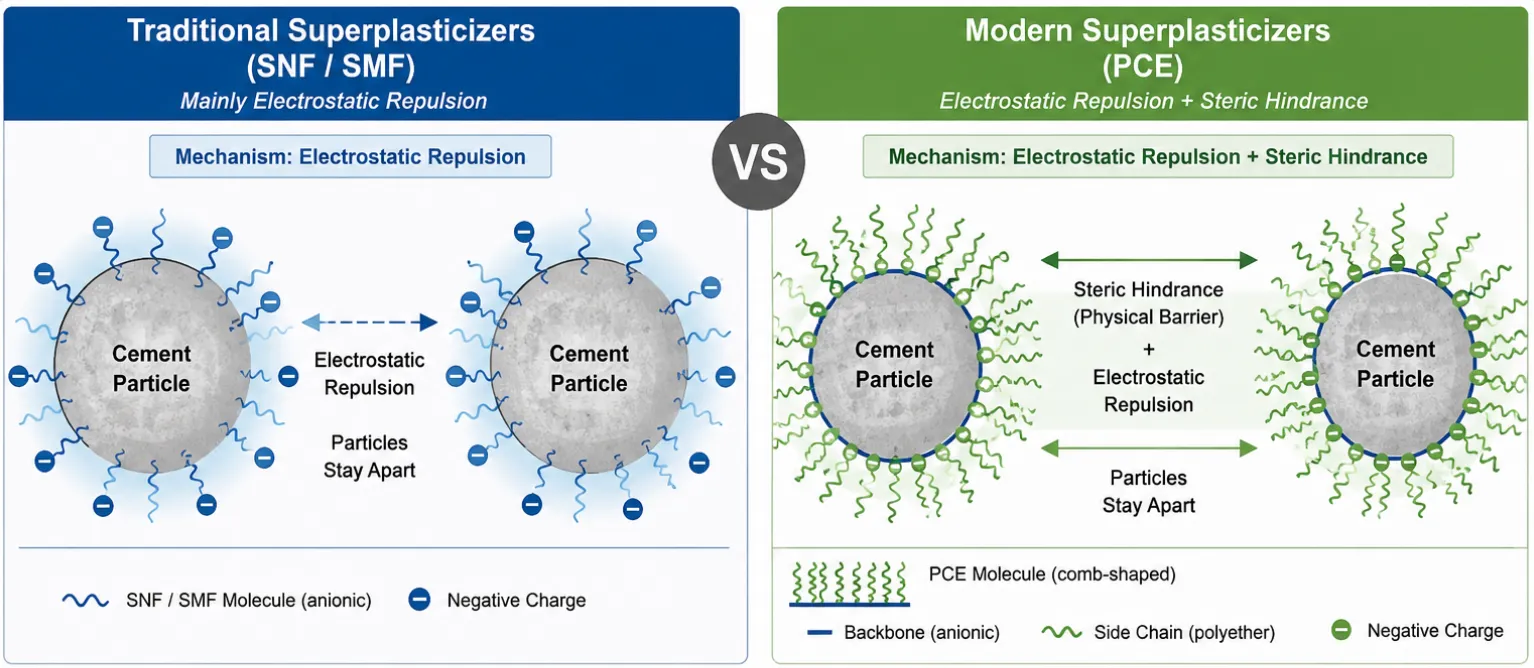 Traditional SNF/SMF superplasticizers mainly rely on electrostatic repulsion, while modern PCE superplasticizers combine electrostatic effects with steric hindrance to achieve stronger dispersion, lower dosage, and better slump retention in concrete.
Typical Forms of SMF
SMF superplasticizers are available in both powder and liquid forms, allowing them to meet the requirements of different production systems and construction environments.
Powder SMF is the most common commercial form. It offers excellent storage stability, convenient transportation, and easy incorporation into dry-blended products. As a result, powder SMF is widely used in dry-mix mortars, repair materials, self-leveling compounds, grouts, tile adhesives, and gypsum-based products.
Liquid SMF formulations are also available in certain regional markets and specialized applications. They are sometimes used in concrete batching operations where liquid admixture dosing systems are already established. However, compared with powder products, liquid SMF generally occupies a smaller share of the modern market.
 Comparison of liquid and powder polycarboxylate superplasticizer used in concrete admixture and dry mortar applications.
Key Properties of Melamine-Based Superplasticizers
The physical and performance characteristics of melamine-based superplasticizers may vary depending on the manufacturing process, degree of modification, and intended application. The following table summarizes the typical properties reported for commercial SMF products used in concrete and dry-mix systems.
Property | Typical Range |
|---|---|
Appearance | White powder |
Bulk density | 400–700 kg/m³ |
pH (20% solution) | 7–9 |
Moisture | ≤5% |
Chloride content | ≤0.05% |
Air entrainment | ≤3% |
Water reduction | 14–30% |
Recommended dosage | 0.1–1.5% by weight of cementitious materials* |
*Depends on formulation, cement compatibility, application requirements, and desired performance characteristics. Trial mixes are recommended to determine the optimum dosage under actual production conditions.
These properties contribute to the continued use of SMF superplasticizers in precast concrete, dry-mix mortars, self-leveling compounds, repair materials, and gypsum-based products.
In particular, their combination of effective water reduction, low chloride content, and limited air entrainment makes them suitable for applications where early strength development and high-quality surface finishes are important.
Advantages of Melamine Superplasticizer
Despite the growing popularity of polycarboxylate-based admixtures, melamine superplasticizers continue to offer several advantages that make them valuable in specific construction applications. Their combination of strong water reduction, low air entrainment, and reliable performance has ensured their continued use in precast concrete, dry-mix mortars, gypsum products, and architectural materials.
Excellent Water Reduction
Melamine superplasticizers are classified as high-range water reducers and can typically achieve water reduction rates of approximately 14–30%, depending on the product formulation, dosage, and cement system involved.
By effectively dispersing cement particles, SMF helps release water trapped within cement agglomerates, allowing the desired workability to be maintained with less mixing water. Lower water demand can contribute to higher strength, reduced permeability, and improved overall concrete performance.
Improved Early Strength Development
One of the most recognized advantages of SMF is its ability to support higher early compressive strength. This benefit is primarily associated with the reduction in the water-cement ratio rather than any direct acceleration of the cement hydration process.
With less excess water present in the mixture, the hardened cement matrix may develop a denser microstructure, enabling earlier strength gain.
This characteristic is particularly valuable in precast concrete production, where faster demolding and shorter production cycles can improve manufacturing efficiency.
Low Air Entrainment
Compared with some other admixture systems, melamine superplasticizers generally exhibit low air-entraining tendencies. Typical entrained air levels remain relatively limited when appropriate dosages are used.
Lower unintended air incorporation can help reduce the occurrence of surface voids, bugholes, and other aesthetic imperfections. This characteristic contributes to improved appearance and consistency in finished concrete elements.
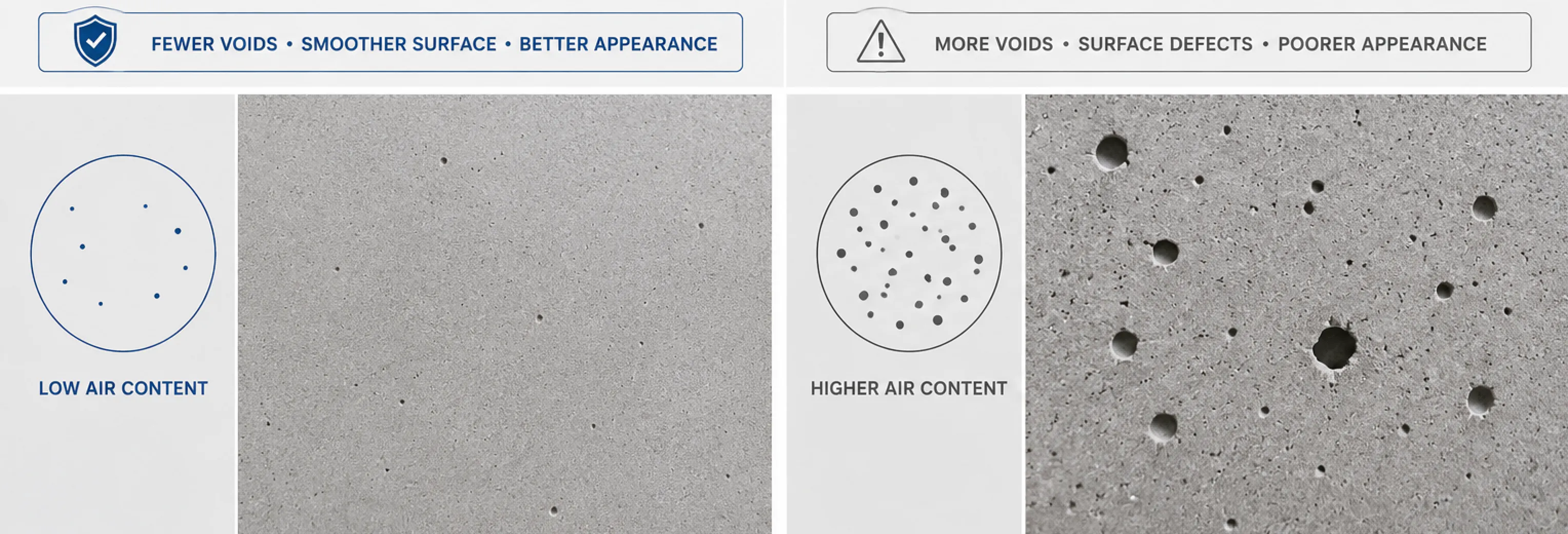 Lower unintended air entrainment can help minimize bugholes and surface voids, resulting in smoother and more uniform concrete finishes.
Low Chloride Content
Commercial SMF products are typically manufactured with very low chloride content, making them suitable for use in reinforced concrete applications where corrosion risk must be carefully controlled.
Minimizing the introduction of chlorides is particularly important in structural concrete, infrastructure projects, and precast elements containing embedded steel reinforcement. The use of low-chloride admixtures helps support compliance with applicable specifications and durability requirements.
Enhanced Surface Finish
Melamine superplasticizers are widely recognized for their ability to produce smooth and visually appealing concrete surfaces. Their strong dispersing action, combined with low air entrainment characteristics, can contribute to improved mold filling and reduced surface defects.
For this reason, SMF is frequently used in fair-faced concrete, architectural concrete, decorative precast elements, and exposed concrete applications where appearance is an important design consideration. Improved surface quality may reduce the need for remedial work and enhance the overall aesthetic value of the finished structure.
Improved Durability
The durability benefits associated with SMF should be understood as an indirect effect rather than a direct chemical enhancement.
By enabling lower water-cement ratios while maintaining workability, SMF can contribute to the formation of a denser cement matrix with reduced permeability. Lower permeability may help limit the ingress of water and aggressive substances, potentially improving resistance to environmental deterioration over the service life of the structure.
However, overall durability performance depends on multiple factors, including mix design, curing conditions, material selection, construction practices, and exposure environment. Therefore, SMF should be viewed as one component within a comprehensive durability strategy rather than a standalone durability solution.
How Is Melamine Superplasticizer Manufactured?
The production of melamine superplasticizer involves a series of controlled chemical reactions that transform melamine, formaldehyde, and sulfonating agents into a water-soluble polymer capable of dispersing cement particles. Although specific process conditions vary among manufacturers, the fundamental synthesis route generally includes hydroxymethylation, sulfonation, and polycondensation.
Advances in manufacturing technology have also led to the development of modified SMF products with improved stability and application-specific performance characteristics.
Hydroxymethylation
The first stage of SMF production is hydroxymethylation (also referred to as methylolation). During this step, melamine reacts with formaldehyde under alkaline conditions to form hydroxymethyl melamine intermediates, such as trimethylol melamine.
These hydroxymethyl groups serve as reactive sites for subsequent chemical reactions and play an important role in determining the final molecular structure of the polymer. Careful control of factors such as temperature, pH, and the formaldehyde-to-melamine ratio is essential to achieve consistent product quality.
Sulfonation
In the sulfonation stage, the hydroxymethyl melamine intermediates react with sulfonating agents, typically sulfite- or bisulfite-based compounds, to introduce sulfonate groups (-SO₃⁻) into the molecular structure.
The incorporation of sulfonate groups is critical because it provides the anionic charge responsible for the superplasticizer’s dispersing ability. When used in cementitious systems, these negatively charged groups adsorb onto cement particles and generate electrostatic repulsion, helping to separate agglomerated particles and improve workability.
The degree of sulfonation can significantly influence product performance, including water reduction efficiency, solubility, and storage stability.
Polycondensation
Following sulfonation, the modified intermediates undergo polycondensation under carefully controlled conditions. During this process, smaller molecules link together to form higher molecular weight sulfonated melamine formaldehyde polymers.
The extent of polycondensation affects important performance characteristics such as dispersion capability, compatibility with different cement systems, and stability during storage. Excessive condensation may reduce solubility, while insufficient polymerization can limit water-reducing effectiveness.
Achieving the appropriate balance between molecular size and stability is therefore an important aspect of SMF manufacturing.
Modification Technologies
Modern SMF products are not always identical to traditional formulations. Many manufacturers employ modification technologies to tailor product performance for specific applications.
These modifications may involve adjustments to reaction conditions, optimization of reactant ratios, incorporation of stabilizing treatments, or the development of blended systems designed to enhance particular properties. As a result, different commercial grades of SMF can exhibit variations in water reduction efficiency, setting behavior, compatibility with cementitious materials, and overall application performance.
For this reason, the performance of one SMF product should not automatically be assumed to represent all melamine-based superplasticizers available on the market. Selecting an appropriate grade often requires consideration of the intended application, local raw materials, and desired performance targets.
 Simplified diagram of the melamine superplasticizer (SMF) manufacturing process, showing the four key stages: hydroxymethylation, sulfonation, polycondensation, and modification technologies.
Limitations of Melamine Superplasticizers
Although melamine superplasticizers offer valuable benefits in many cementitious systems, they are not universally suitable for every application. Understanding their limitations is important when selecting the most appropriate admixture technology for a specific project. In practice, the performance of SMF depends on multiple factors, including formulation design, dosage, cement compatibility, and construction requirements.
Performance Depends on Formulation
Not all melamine superplasticizers perform identically.
Traditional SMF products and modified SMF formulations may exhibit noticeable differences in water reduction efficiency, compatibility with cementitious materials, air entrainment characteristics, and workability retention.
Manufacturers often employ proprietary modification technologies to tailor products for specific applications, such as precast concrete, gypsum systems, or dry-mix mortars.
As a result, performance data obtained from one SMF product should not automatically be generalized to all melamine-based superplasticizers available on the market.
For critical applications, laboratory testing and trial mixes remain essential to verify compatibility and optimize performance under actual production conditions.
 Different SMF formulations can deliver different performance outcomes. Water reduction efficiency, workability retention, air entrainment characteristics, and application suitability depend on the specific formulation used.
May Influence Setting Behavior
The effect of SMF on the setting characteristics of cementitious systems can vary depending on dosage, product formulation, cement composition, supplementary cementitious materials, and environmental conditions.
For this reason, it would be inaccurate to describe melamine superplasticizers as either “setting retarders” or “setting accelerators” in all situations. Some formulations may have minimal influence on setting behavior, while others may alter initial or final setting times to varying degrees.
Careful dosage control and preliminary testing are therefore recommended, particularly in applications where setting time requirements are critical.
Higher Dosage Than Modern PCE Systems
Compared with many modern polycarboxylate ether (PCE) superplasticizers, SMF products may require relatively higher dosage levels to achieve comparable water reduction or workability performance.
This difference does not necessarily make SMF uneconomical. In certain applications, the advantages of SMF—such as low air entrainment, excellent surface finish, and suitability for powder-based systems—may outweigh the impact of a higher dosage requirement.
However, when evaluating overall cost-effectiveness, both admixture dosage and the specific performance objectives of the project should be taken into consideration.
Limited Use in Modern Ready-Mix Applications
Although SMF continues to be used successfully in many sectors of the construction industry, its role in modern ready-mix concrete has become more limited.
Today’s ready-mix operations often require extended slump retention, compatibility with a wide variety of cement systems, and flexibility under changing transportation and placement conditions.
In many of these situations, PCE-based superplasticizers have become the preferred solution due to their enhanced workability retention capabilities.
Nevertheless, this shift does not imply that SMF has become obsolete. Melamine superplasticizers remain highly relevant in specialized applications such as precast concrete, architectural concrete, dry-mix mortars, repair materials, and gypsum-based products, where their unique performance characteristics continue to provide practical advantages.
Common Applications of Melamine Superplasticizers
Melamine superplasticizers continue to be used in a variety of cementitious systems where strong water reduction, low air entrainment, excellent surface quality, and reliable early strength development are required. While their use in conventional ready-mix concrete has declined with the rise of PCE technology, SMF remains highly relevant in numerous specialized applications.
Precast Concrete
Precast concrete is one of the most important application areas for melamine superplasticizers.
The ability of SMF to significantly reduce water demand while supporting higher early compressive strength makes it particularly suitable for factory-controlled production environments.
In precast plants, improved early strength development can facilitate earlier demolding, accelerate production turnover, and enhance manufacturing efficiency. SMF is commonly used in products such as precast panels, pipe piles, railway sleepers, segments, decorative components, and other prefabricated concrete elements.
 Precast hollow core slabs manufactured in a factory-controlled environment. Melamine superplasticizers help improve workability, support early strength development, and accelerate production turnover in precast concrete applications.
High-Strength Concrete
Melamine superplasticizers are frequently incorporated into high-strength concrete formulations designed for demanding structural applications.
By enabling lower water-cement ratios without sacrificing workability, SMF contributes to the production of dense, high-performance concrete mixtures. Such concretes are often used in high-rise buildings, bridge structures, industrial facilities, and infrastructure projects requiring enhanced mechanical performance.
Self-Consolidating Concrete (SCC)
Certain self-consolidating concrete (SCC) formulations may utilize modified SMF systems to achieve the flowability necessary for placement without vibration.
However, it is important to recognize that modern SCC technology is predominantly associated with PCE-based admixtures due to their superior slump retention characteristics.
Therefore, SMF should be regarded as a solution for specific SCC applications rather than the dominant technology within this segment.
Shotcrete
Melamine superplasticizers have also been used in shotcrete applications where high fluidity combined with controlled water content is desirable.
Improved workability may facilitate pumping and spraying operations, while reduced water demand can contribute to higher hardened strength. Shotcrete incorporating SMF may be employed in tunnel linings, slope stabilization projects, mining operations, and repair works requiring rapid placement techniques.
 Shotcrete is a concrete placement method in which concrete is pneumatically projected onto a surface at high velocity. It is widely used in tunnel linings, slope stabilization, mining projects, and structural repair applications.
Fair-Faced Concrete
Architectural projects frequently demand concrete surfaces with minimal defects and an attractive appearance. Due to their low air-entraining tendency and strong dispersing capability, melamine superplasticizers are often selected for fair-faced concrete applications.
The use of SMF can help improve mold filling and reduce the occurrence of surface imperfections such as bugholes and voids, resulting in cleaner and more uniform exposed concrete finishes.
 Fair-faced concrete, also known as exposed architectural concrete, emphasizes surface quality, uniform appearance, and minimal imperfections without the need for additional finishing materials.
Gypsum Products
Beyond cement-based materials, SMF has become an important additive in various gypsum systems.
Melamine superplasticizers are commonly incorporated into gypsum plasters, gypsum-based self-leveling compounds, and specialty gypsum formulations to improve flowability while maintaining relatively low water demand.
Reduced mixing water may contribute to improved strength and dimensional stability in hardened gypsum products.

Cement-Based Self-Leveling Mortars
One of the most common dry-mix applications for SMF is cement-based self-leveling mortar.
The excellent dispersing ability of melamine superplasticizers helps create highly flowable mixtures capable of spreading smoothly under their own weight. At the same time, reduced water demand may support improved strength development and minimize shrinkage-related issues.
Because many self-leveling products are supplied as dry-blended powders, the powder form of SMF provides practical advantages in terms of manufacturing, transportation, and storage.

Repair Mortars and Non-Shrink Grouts
SMF is widely used in repair mortars and non-shrink grouts designed for structural rehabilitation and precision filling applications.
Enhanced workability enables better placement in confined areas and around congested reinforcement, while lower water demand can contribute to improved mechanical properties. Typical applications include equipment foundation grouting, bridge repairs, concrete rehabilitation, and industrial maintenance projects.
 Repair mortars are cementitious materials used to restore and protect damaged concrete structures.
Tile Adhesives and Tile Grouts
In the dry-mix industry, melamine superplasticizers are also incorporated into tile adhesives and tile grouts.
Improved workability can facilitate mixing and application, while efficient water reduction supports the development of adequate mechanical performance after curing. The powder form of SMF is particularly well suited to factory-produced dry-blended tile installation products.
GRG and Decorative Building Materials
Melamine superplasticizers have found increasing use in glass fiber reinforced gypsum (GRG) and other decorative building materials.
These applications often require highly fluid mixtures capable of reproducing intricate mold details while maintaining dimensional stability and surface quality. The combination of strong dispersion and low air entrainment offered by SMF can help manufacturers produce decorative elements with improved appearance and consistency.
Examples include architectural moldings, ornamental panels, ceiling components, and customized decorative products used in both residential and commercial construction.
Why Is Melamine Superplasticizer Still Used Today?
Given the widespread adoption of polycarboxylate ether (PCE) superplasticizers, it is reasonable to ask why melamine superplasticizers remain part of the modern construction chemical industry. The answer lies in a fundamental principle of admixture technology: different applications require different performance profiles.
While PCE has become the dominant choice for many ready-mix concrete applications, SMF continues to offer advantages that make it highly relevant in a range of specialized cementitious systems.
Unique Advantages in Dry-Mix Systems
One of the strongest positions held by melamine superplasticizers today is in the dry-mix mortar industry.
SMF is commonly supplied as a stable powder that can be easily incorporated into factory-produced dry blends. Its excellent dispersing ability allows manufacturers to improve flowability while controlling water demand in products such as self-leveling mortars, repair mortars, grouts, tile adhesives, and gypsum-based materials.
Unlike ready-mix concrete, dry-mix products place greater emphasis on storage stability, powder compatibility, and predictable performance after reconstitution with water on-site. In these systems, SMF continues to provide practical advantages that align closely with production requirements.
 SMF remains widely used in dry-mix systems due to its stable powder form, excellent dispersing ability, predictable performance, and compatibility with various mortar formulations.
Strong Performance in Precast Applications
Precast concrete production prioritizes efficiency, consistency, and early strength development. In this environment, melamine superplasticizers remain a valuable solution.
By enabling lower water-cement ratios while maintaining workability, SMF can contribute to higher early compressive strength, potentially supporting earlier demolding and shorter production cycles. In addition, the controlled conditions typically found in precast plants reduce the need for extended slump retention, an area where PCE systems often demonstrate superior performance.
As a result, SMF continues to be used in various precast products, including architectural panels, decorative elements, pipe components, and other factory-manufactured concrete units.
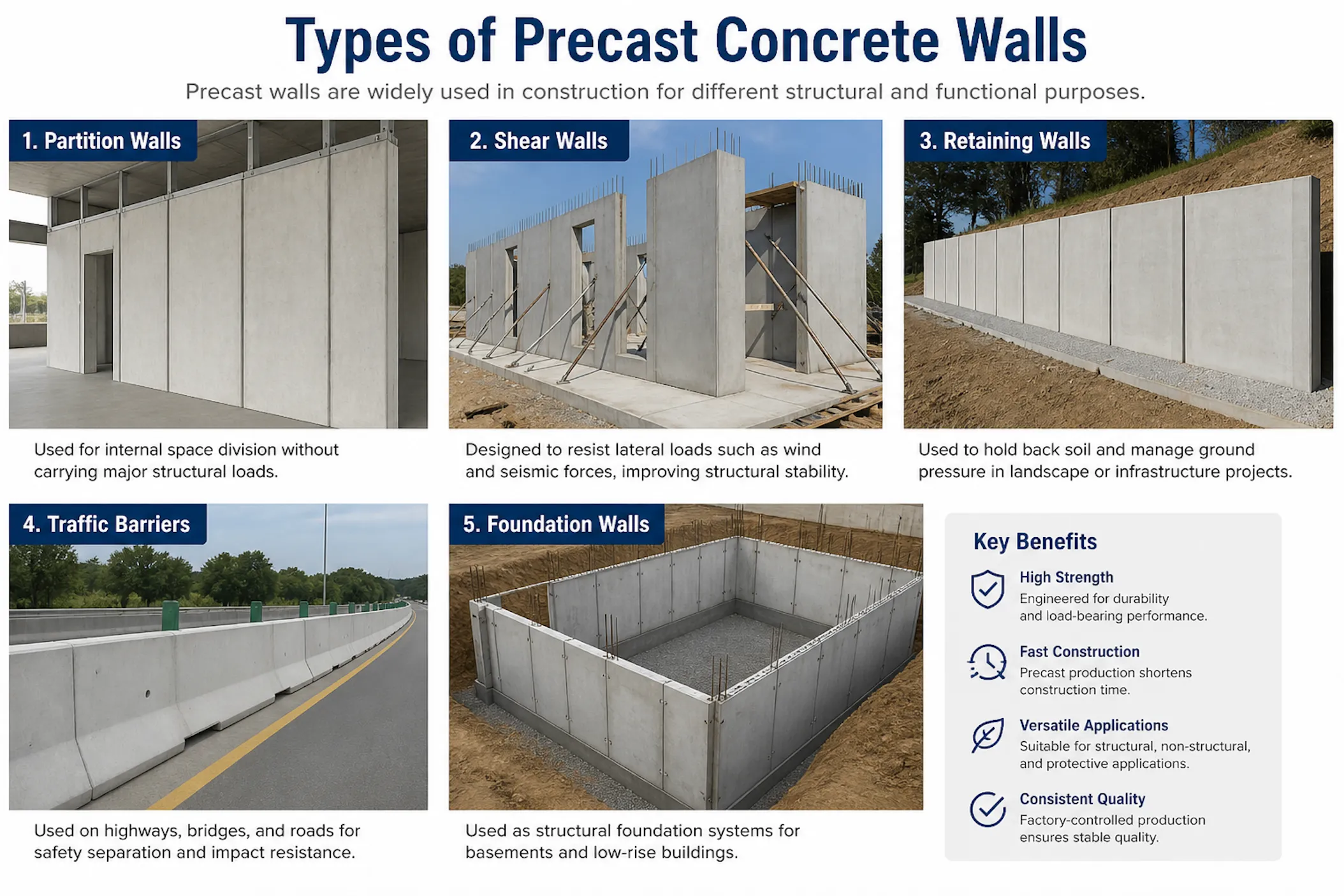 Different types of precast concrete wall systems for structural and infrastructure applications
Excellent Surface Quality for Architectural Concrete
Concrete appearance has become increasingly important in contemporary construction. Exposed concrete surfaces are frequently used as intentional architectural features rather than hidden structural elements.
Melamine superplasticizers are well known for their low air-entraining tendency and effective particle dispersion, characteristics that can help minimize surface defects such as bugholes and voids. These properties contribute to improved mold filling and more uniform finishes.
Consequently, SMF remains a preferred option for fair-faced concrete, exposed concrete, and architectural precast applications where surface quality is a critical design consideration.
Fair-faced concrete, also known as exposed architectural concrete, emphasizes surface quality, uniform appearance, and minimal imperfections without the need for additional finishing materials.Powder Form Advantages
The availability of SMF in powder form offers several logistical and manufacturing benefits.
Powder products generally provide excellent storage stability and are easier to transport over long distances without concerns related to freezing, separation, or liquid handling infrastructure. They can also be conveniently integrated into automated dry-blending processes.
For manufacturers of dry-mix products and specialty construction materials, these practical advantages can simplify inventory management and improve production efficiency.
Cost-Effectiveness in Specific Applications
Although PCE technology often delivers higher water reduction and superior slump retention, it is not necessarily the most economical choice in every situation.
In applications where extended workability retention is not the primary requirement, the specific performance characteristics of SMF may provide a more appropriate balance between technical performance and overall cost. Factors such as early strength development, surface quality requirements, dry-mix compatibility, and existing production processes should all be considered when evaluating admixture selection.
Therefore, the question is not whether one technology has universally replaced another, but rather which technology is best suited to the demands of a particular application.
In summary, PCE dominates many modern ready-mix concrete applications, particularly those requiring long slump retention and highly flexible performance. However, melamine superplasticizers remain highly relevant in specialized sectors, including dry-mix mortars, precast concrete, gypsum products, and architectural materials. Their continued use reflects the reality that established technologies can still offer unique advantages when applied in the right context.
Conclusion
Melamine superplasticizer, also known as sulfonated melamine formaldehyde (SMF), has been used in the construction industry for decades as an effective high-range water reducer. While newer admixture technologies have emerged, SMF continues to demonstrate reliable performance in applications where early strength development, low air entrainment, excellent surface quality, and powder compatibility are important considerations.
SMF is not an outdated technology. Rather, it represents a specialized solution that remains highly effective when applied in the appropriate context. Although modern PCE superplasticizers dominate many ready-mix concrete applications, melamine-based superplasticizers continue to offer unique benefits in precast concrete, dry-mix mortars, gypsum products, and architectural materials.
Their combination of strong water reduction capability, low chloride content, excellent surface finish, and dependable performance ensures that SMF remains an important part of the modern construction chemical industry. Ultimately, selecting the right superplasticizer is not about choosing the newest technology—it is about choosing the technology that best meets the technical and economic requirements of the intended application.
Frequently Asked Questions
What is melamine superplasticizer?
Melamine superplasticizer is a high-range water reducer used to improve the workability of cementitious materials while reducing water demand. It is commonly used in precast concrete, dry-mix mortars, gypsum products, and architectural concrete applications.
Is melamine superplasticizer the same as SMF?
Yes. Melamine superplasticizer is commonly referred to as sulfonated melamine formaldehyde (SMF) or sulfonated melamine formaldehyde condensate. These terms generally describe the same family of melamine-based superplasticizers used in the construction industry.
How does SMF work?
SMF works primarily through electrostatic repulsion. Negatively charged sulfonate groups adsorb onto cement particles, causing them to repel one another. This disperses cement agglomerates, releases trapped water, and improves workability while reducing the amount of mixing water required.
What is the water reduction rate of SMF?
Depending on the formulation, dosage, and cement system involved, melamine superplasticizers typically provide a water reduction rate of approximately 14–30%. Trial mixes are recommended to determine actual performance under specific production conditions.
Does SMF delay setting time?
Not necessarily. The influence of SMF on setting behavior depends on dosage, product formulation, cement chemistry, supplementary materials, and environmental conditions. Some formulations may have minimal impact on setting time, while others may slightly alter initial or final set.
Is SMF better than PCE?
Neither product is universally superior. PCE superplasticizers generally provide higher water reduction and better slump retention, making them the dominant choice for many ready-mix concrete applications. However, SMF remains highly effective in precast concrete, dry-mix systems, gypsum products, and applications requiring excellent surface quality and low air entrainment.
Can SMF be used in gypsum products?
Yes. Melamine superplasticizers are widely used in gypsum-based systems, including gypsum plasters, gypsum self-leveling compounds, and decorative gypsum products. They improve flowability while helping maintain lower water demand.
What is the recommended dosage of SMF?
The recommended dosage generally ranges from 0.1% to 1.5% by weight of cementitious materials, although the optimum dosage depends on the specific product formulation, cement compatibility, and performance requirements. Laboratory evaluation and field trials are recommended before large-scale application.
Why is SMF still used today?
Although PCE dominates many modern ready-mix concrete applications, SMF continues to provide unique advantages in dry-mix mortars, precast concrete, gypsum products, and architectural materials. Its powder form, low air entrainment characteristics, excellent surface quality, and reliable early strength performance ensure its continued relevance in specialized applications.
Related Reading
For a broader overview of definitions, density, chemistry, product forms and selection, read What Is a Superplasticizer? Definition, Density, Types and Concrete Use.
To learn more about this topic, read What Is Naphthalene Superplasticizer?.
To learn more about this topic, read PCE vs Naphthalene Superplasticizer.