July 30, 2026
Quick Answer
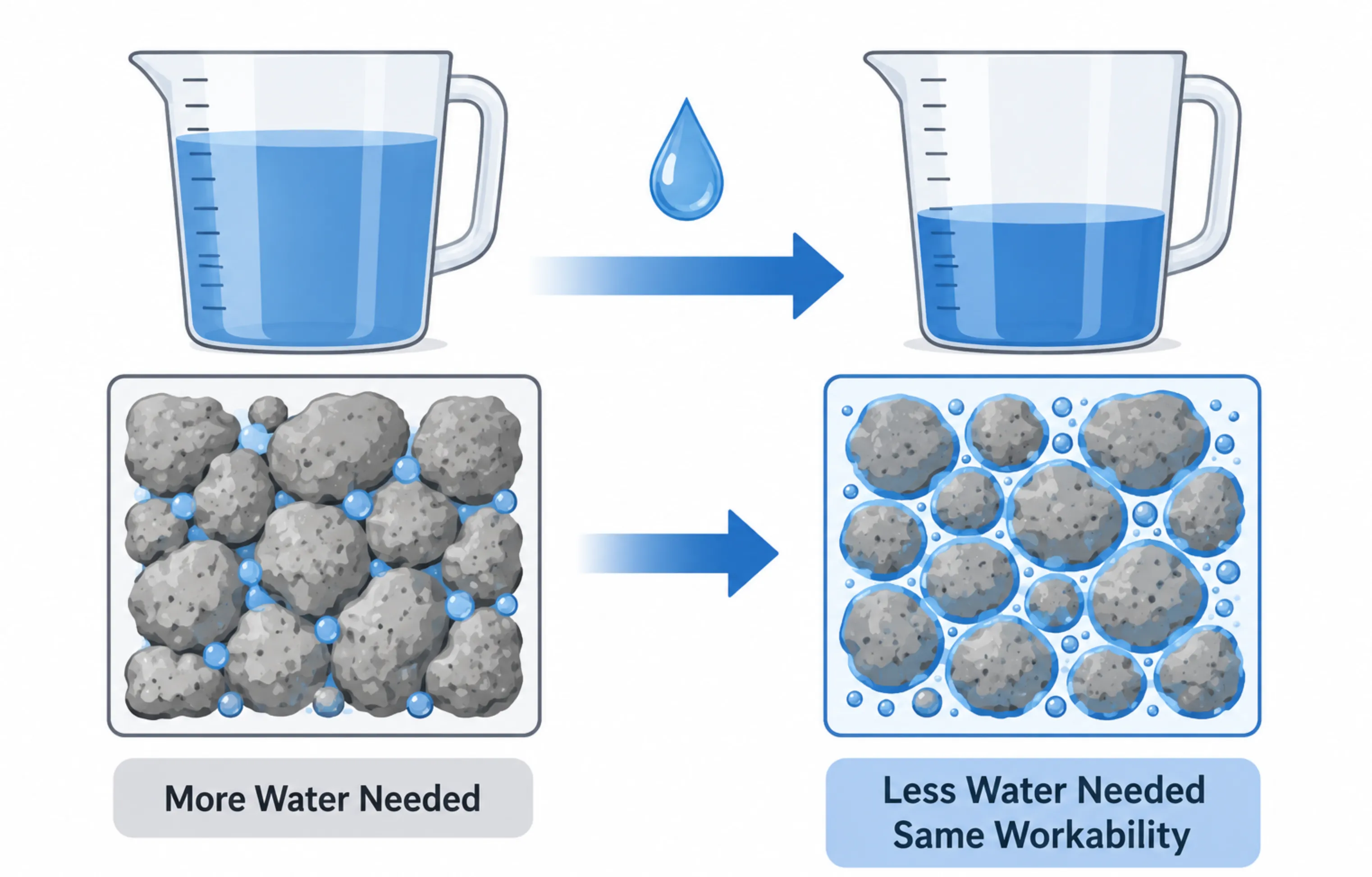
A water reducer is a concrete admixture that lowers the amount of mixing water needed while maintaining the same workability.
It works by dispersing cement particles and reducing flocculation, allowing water trapped within cement clusters to be released and used more efficiently. As a result, concrete can achieve the same slump with less water, leading to a lower water-cement ratio, higher strength, lower permeability, and improved durability.
Key benefits of water reducers in concrete:
- Reduce water demand
- Maintain workability and slump
- Increase compressive strength
- Improve durability and reduce permeability
- Enhance pumpability and placement efficiency
- Support high-strength concrete production
Why We Use Water Reducer in Concrete?
A water reducer is a chemical admixture added to concrete to reduce the amount of mixing water required while maintaining the same workability.
According to ASTM C494, water-reducing admixtures are designed to improve concrete performance by lowering water demand.
Water reducers help concrete achieve a lower water-cement ratio (w/c ratio)—the ratio of water to cement by weight.
Since the water-cement ratio is one of the primary factors affecting concrete strength and durability, reducing excess water can produce stronger, denser, and less permeable concrete without sacrificing workability.
 Water improves concrete workability, but excessive water weakens concrete. Water-reducing admixtures such as plasticizers and superplasticizers help achieve good flowability with lower water–cement ratios.
What Does Water Reducer Do in Concrete?
Water reducers improve concrete performance by lowering the amount of mixing water needed to achieve a target slump.
By reducing water content while maintaining workability, they help produce concrete with higher strength, lower permeability, and improved durability. Depending on the product type, water reduction can range from about 5–10% for conventional water reducers to more than 30% for high-range water reducers.
Reduces Water Content Without Making Concrete Stiff
Concrete mixtures often contain additional water beyond what is required for cement hydration to make the mix easier to place, pump, and finish. However, excess water can reduce strength and increase porosity.
Water reducers disperse cement particles and break up cement flocculation, allowing trapped water to be used more efficiently. As a result, the same slump can be achieved with less mixing water, so concrete remains workable without becoming excessively stiff.
 PC-based superplasticizers help concrete achieve high flowability, longer workability retention, and lower water demand in modern construction systems.
Improves Concrete Workability
Water reducers help fresh concrete flow more easily during construction operations. Improved particle dispersion creates a more uniform mix and reduces internal friction between cement and aggregate particles.
This can improve:
- Placement in congested reinforcement
- Pumping efficiency over long distances
- Consolidation during vibration
- Surface finishing quality
The result is concrete that is easier to handle while maintaining the required performance specifications.
 Flowing concrete fills dense reinforcement zones more effectively, supporting complex placement conditions without adding excess water.
Increases Concrete Strength
One of the primary benefits of water reducers is increased compressive strength.
The mechanism is straightforward:
Less water
↓
Lower water-cement ratio
↓
Denser cement matrix
↓
Higher compressive strength
When excess water evaporates from hardened concrete, it leaves behind capillary pores. By reducing water content, water reducers decrease pore volume and produce a denser microstructure capable of carrying higher loads.
 Reduced water demand helps create a lower porosity concrete structure with higher density, fewer voids, and improved strength performance.
Improves Durability
Lower water content generally produces concrete with fewer interconnected pores, making it more difficult for water and aggressive chemicals to penetrate the structure.
This can improve:
- Resistance to water penetration
- Chloride resistance
- Weathering resistance
- Sulfate resistance
- Freeze-thaw durability
These durability improvements are particularly important for bridges, marine structures, parking facilities, and other infrastructure exposed to harsh environments.
 Lower water–cement ratios produce denser concrete microstructures with reduced pore connectivity, lower water ingress, and improved permeability resistance.
Reduces Bleeding and Shrinkage
Water reducers can also help improve dimensional stability in concrete.
Because less mixing water is used, there is typically less excess water rising to the surface during placement, which helps reduce bleeding.
Lower water content can also reduce drying shrinkage, which decreases internal tensile stresses as concrete hardens. This helps lower the risk of shrinkage-related cracking, especially in slabs, pavements, and large concrete elements.
 PCE improves concrete compactness, reduces shrinkage, and enhances long-term volume stability.
Why Is Water Reducer Important in Modern Concrete?
Modern concrete construction increasingly requires concrete that is strong, durable, easy to place, and consistent across large projects. Water reducers help meet these requirements by lowering water demand while maintaining workability, making them essential in many types of concrete production.
Ready-Mix Concrete
Ready-mix concrete often needs to remain workable during transportation from the batching plant to the jobsite. Water reducers help maintain target slump without adding excess water, allowing producers to achieve consistent performance while controlling the water-cement ratio.
PC-based superplasticizers help concrete achieve high flowability, longer workability retention, and lower water demand in modern construction systems.
Precast Concrete
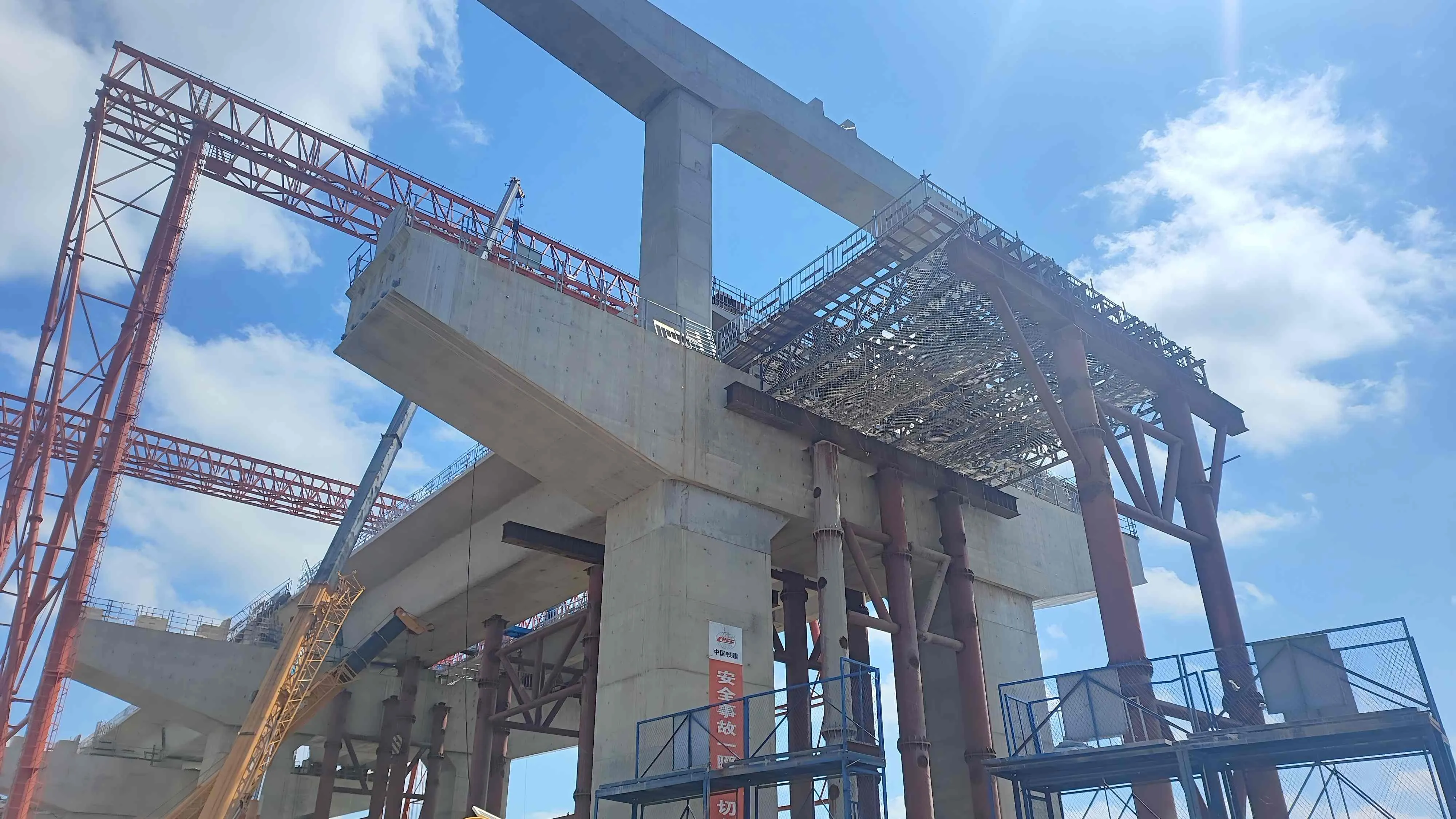
Precast manufacturers typically aim for high early strength and rapid mold turnover. Water reducers help lower the water-cement ratio, enabling faster strength development and improved dimensional stability. This makes them widely used in precast elements such as pipe piles, bridge segments, wall panels, and concrete blocks.
 Transportation of large precast concrete bridge components for infrastructure construction projects.
Pumped Concrete
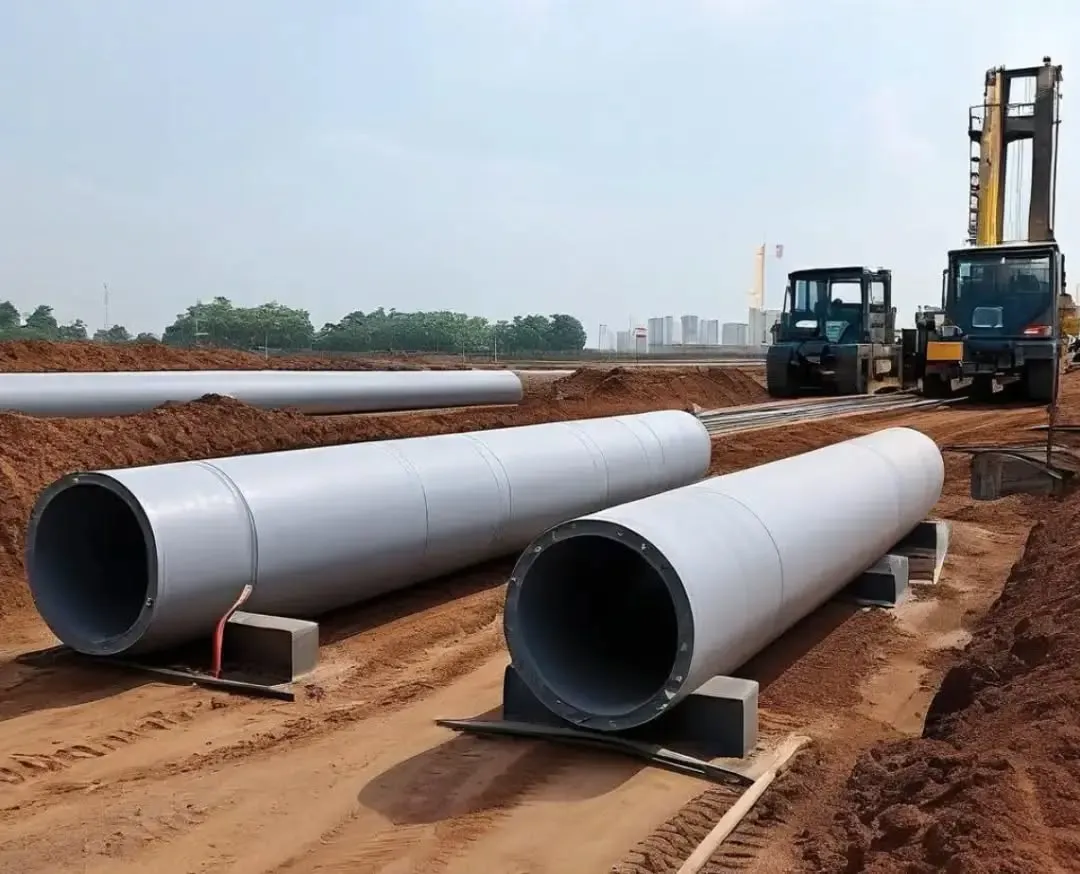
Concrete pumped through long pipelines requires sufficient flowability while remaining stable during transport. Water reducers improve pumpability by enhancing particle dispersion and reducing internal friction within the mix. This helps reduce pumping pressure and improves placement efficiency on large construction projects.
 Concrete pumping process using water reducers to improve lubrication and reduce pumping resistance.
Self-Consolidating Concrete (SCC)
Self-consolidating concrete must flow under its own weight and fill complex formwork without vibration. Water reducers, particularly high-range water reducers, provide the high fluidity required for SCC while maintaining mixture stability and minimizing segregation.
 Superplasticizers improve concrete placement by increasing flowability, enabling easier filling around reinforcement, narrow formwork, and complex structures.
High-Strength Concrete
High-strength concrete typically relies on very low water-cement ratios, often below 0.40 and sometimes below 0.30. Without water reducers, such low-water mixtures would be difficult to place and consolidate. Water reducers make these low water-cement ratios practical, allowing concrete to achieve higher compressive strength while maintaining workable consistency.
For these reasons, water reducers have become one of the most widely used chemical admixtures in modern concrete production, supporting applications ranging from residential construction to large-scale infrastructure projects.
Can Too Much Water Reducer Cause Problems?
Yes. Although water reducers improve concrete performance when properly dosed, excessive dosage can create workability and setting issues. The exact effects depend on the admixture type, dosage rate, cement composition, and environmental conditions.
Segregation
Overdosing a water reducer can make concrete excessively fluid. When the mixture becomes too loose, coarse aggregates may separate from the cement paste, causing segregation.
Segregated concrete often shows:
- Uneven aggregate distribution
- Reduced uniformity
- Poor surface appearance
- Lower structural quality in localized areas
 Excessive water reducer dosage can make concrete overly fluid, causing coarse aggregates to separate from the cement paste and resulting in segregation.
Delayed Setting
Some water reducers, particularly those containing retardation components, can significantly extend setting time when used at excessive dosages.
This may result in:
- Slower finishing operations
- Delayed formwork removal
- Reduced early-age strength development
- Construction schedule delays
The risk is often greater in cold weather or when water reducers are combined with other retarding admixtures.
 Excessive water reducer dosage can significantly delay concrete setting, slowing finishing operations, extending formwork removal time, and reducing early-age strength development.
Sticky Concrete
While water reducers generally improve flowability, excessive dosage can sometimes create an overly cohesive or sticky mixture.
Sticky concrete may:
- Adhere to tools and equipment
- Become difficult to finish
- Increase labor requirements during placement
- Reduce construction efficiency
This issue is occasionally observed in highly optimized mixes containing fine supplementary cementitious materials such as silica fume or fly ash.
 Excessive water reducer dosage can create an overly cohesive concrete mix that sticks to tools and equipment, making placement and finishing more difficult.
Compatibility Issues
Not all water reducers perform identically with every cement system.
An excessive dosage may amplify compatibility problems between the admixture and:
- Cement chemistry
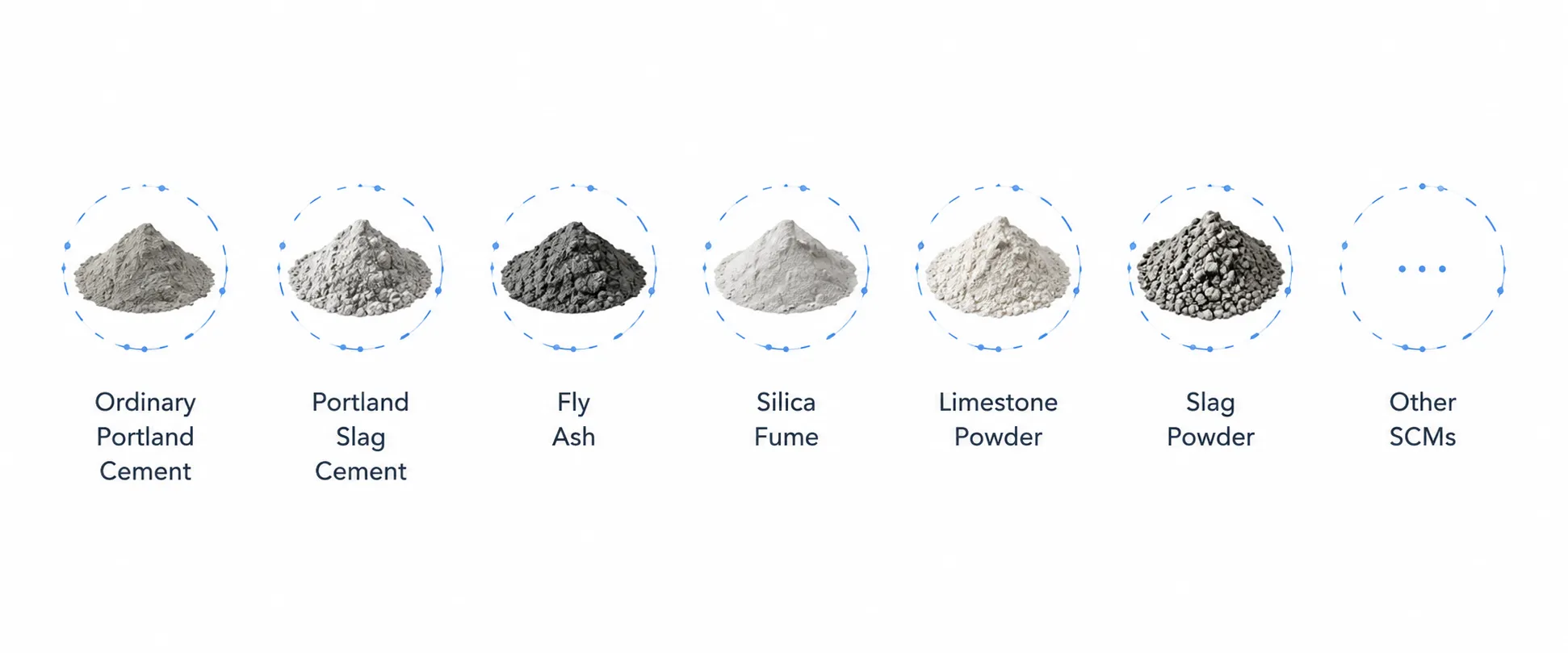
- Supplementary cementitious materials (Customized PCE formulations compatible with different global cement systems and supplementary cementitious materials.)
- Other admixtures
- Aggregate characteristics
Potential symptoms include rapid slump loss, abnormal air entrainment, excessive retardation, unstable rheology, or inconsistent concrete performance.
For this reason, water reducers should always be used within the manufacturer’s recommended dosage range and verified through laboratory and field trial mixes before large-scale production.
Conclusion
Water reducers are among the most important admixtures used in modern concrete production. By dispersing cement particles, they reduce water demand while maintaining workability, allowing concrete to achieve lower water-cement ratios, higher strength, and improved durability.
From ready-mix and precast concrete to pumped concrete, self-consolidating concrete (SCC), and high-strength concrete, water reducers help improve both fresh and hardened concrete performance. However, proper dosage is essential, as excessive use may lead to segregation, delayed setting, sticky concrete, or compatibility issues.
When correctly selected and dosed, water reducers provide a practical way to improve concrete quality, construction efficiency, and long-term durability.
Frequently Asked Questions
What does a water reducer do in concrete?
A water reducer lowers the amount of mixing water required while maintaining the same workability. This helps reduce the water-cement ratio, increase strength, improve durability, and enhance concrete placement and finishing.
Does water reducer increase concrete strength?
Yes. By reducing water content, a water reducer lowers the water-cement ratio and creates a denser cement matrix with fewer capillary pores. This typically results in higher compressive strength and improved long-term performance.
How does a water reducer improve workability?
Water reducers disperse cement particles and release water trapped inside cement flocs. This improves particle distribution and reduces internal friction, making concrete easier to place, pump, consolidate, and finish.
Can too much water reducer be harmful?
Yes. Excessive dosage can cause segregation, delayed setting, sticky concrete, excessive air entrainment, abnormal slump behavior, or compatibility issues with certain cement systems. Water reducers should always be used within the manufacturer’s recommended dosage range.
Does a water reducer reduce cracking?
A water reducer can help reduce cracking by lowering water content and reducing drying shrinkage. Less shrinkage means lower tensile stresses during curing, which may reduce the risk of shrinkage-related cracks.
Why is water reducer used in ready-mix concrete?
Ready-mix concrete often requires good workability during transportation and placement. Water reducers help maintain target slump without adding extra water, allowing producers to achieve consistent performance while preserving strength and durability.
Related Reading
For a broader overview of definitions, density, chemistry, product forms and selection, read What Is a Superplasticizer? Definition, Density, Types and Concrete Use.
To learn more about this topic, read What Is Naphthalene Superplasticizer?.
To learn more about this topic, read PCE vs Naphthalene Superplasticizer.