July 30, 2026
Back to News
1. Introduction
Polycarboxylate Ether Superplasticizer (PCE) is the third generation of high-performance concrete superplasticizers and is widely used as a high-range water reducer in modern concrete.
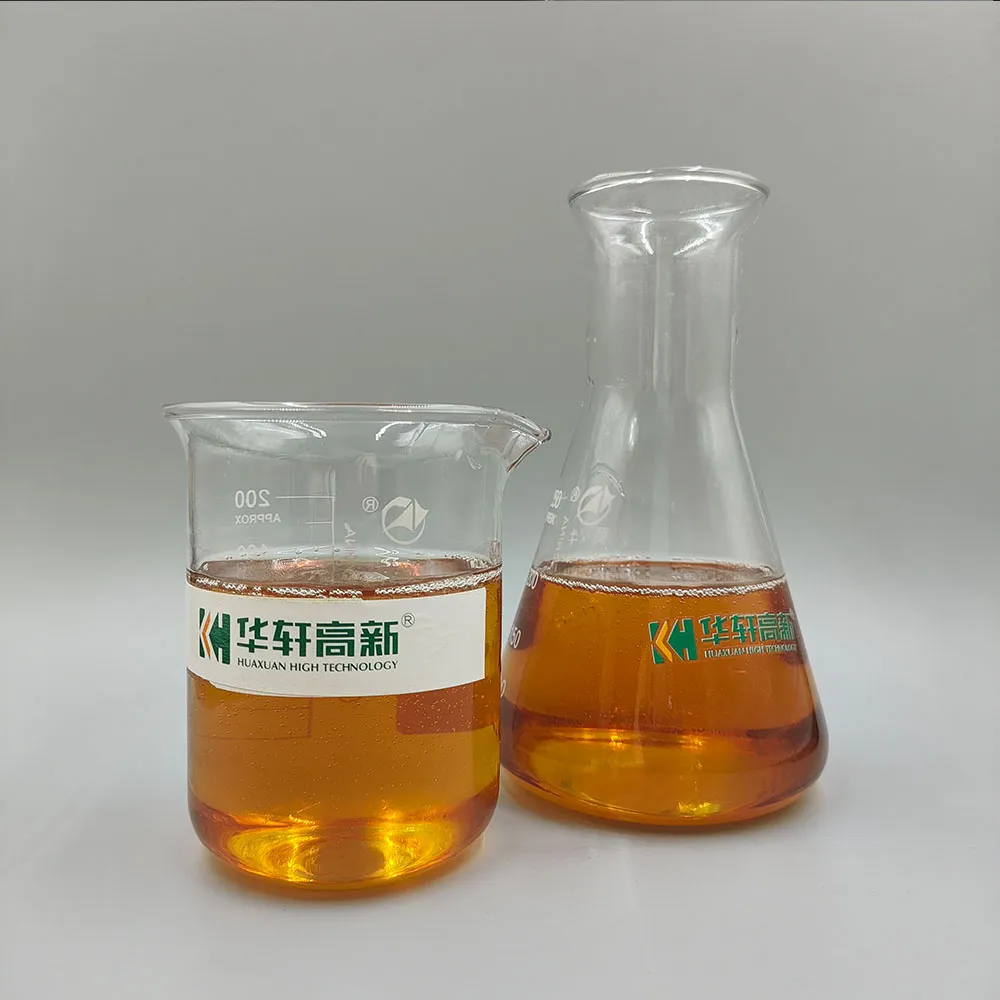
 KH-204 PCE liquid water reducer designed for ready-mix concrete, precast concrete, and high-strength concrete applications.
Understanding the properties of PCE is important because they directly affect concrete workability, strength development, durability, and cement compatibility in different construction applications.
2. Basic Molecular Structure of PCE
The molecular structure of Polycarboxylate Ether Superplasticizer mainly consists of an anionic backbone and polyether side chains, forming a typical comb-shaped polymer structure.
 Comb-shaped polymer molecular structure of polycarboxylate ether superplasticizer (PCE).
The anionic backbone contains carboxyl functional groups (–COO⁻), which act as anchoring points and adsorb onto cement particle surfaces through ionic interaction with calcium ions. This adsorption behavior is the foundation of the dispersing effect.
The polyether side chains extend outward into the cement paste and generate steric hindrance, preventing cement particles from re-agglomerating. At the same time, the anionic charge on the backbone creates electrostatic repulsion, further improving particle separation.
The combination of adsorption, electrostatic repulsion, and steric hindrance gives PCE its excellent water reduction, dispersion, and slump retention properties.
Research shows that molecular structure parameters such as side chain length, acid-ether ratio, and charge density directly affect PCE performance in cement systems.
If you want to know the difference between PCE and Other Superplasticizers, you can read
Complete Guide to Different Types of Superplasticizers in Concrete
3. Physical Properties of Polycarboxylate Ether Superplasticizer
The physical properties of Polycarboxylate Ether Superplasticizer directly affect its storage stability, transportation efficiency, dosage calculation, and practical application performance in concrete.
3.1 Appearance
PCE is commonly supplied in liquid, powder, and flake forms.
Liquid PCE usually appears as a colorless to light yellow transparent or slightly viscous liquid.
Powder PCE is generally supplied as a white or light yellow free-flowing powder.
Flake PCE is typically supplied as white to light yellow flakes or thin solid chips and is normally dissolved in water before use to prepare the desired solution concentration.
The physical form affects packaging, storage conditions, transportation efficiency, and application methods in concrete production. Liquid products are ready for direct use, while powder and flake products require dissolution before dosing into the concrete mix
 Comparison of liquid and powder polycarboxylate superplasticizer used in concrete admixture and dry mortar applications.
3.2 Solid Content
Solid content is one of the most important physical indicators of PCE, especially for liquid products. It determines the effective polymer concentration in the product.
Higher solid content means higher active ingredient concentration, lower transportation cost, and better dosage efficiency. Commercial liquid PCE products commonly have solid contents ranging from 20% to 50%.
3.3 Density
Density is an important parameter for liquid PCE because it affects dosage conversion between volume and weight.
Stable density also reflects stable formulation quality and consistent polymer concentration.
For more density information, you can read
What Is Polycarboxylate Superplasticizer (PCE)? Role, Advantages and Applications in Concrete
3.4 pH Value
The pH value affects the chemical stability and storage performance of PCE. Most PCE products maintain a weakly acidic to neutral pH range.
An abnormal pH value may affect polymer stability and compatibility with cementitious systems.
 Comparison of polymer stability and performance of PCE under acidic, neutral, and alkaline pH conditions.
3.5 Water Solubility
PCE has excellent water solubility due to its polyether molecular structure. Fast and complete dissolution ensures uniform distribution in mixing water and improves cement particle dispersion efficiency.
Poor solubility may reduce workability performance and increase local concentration instability.
 Comparison of water solubility, dispersion behavior, and mixing stability of PCE and conventional admixtures in concrete systems.
3.6 Storage Stability
Storage stability refers to PCE’s ability to maintain consistent physical and chemical properties during long-term storage.
Factors such as temperature fluctuation, contamination, evaporation, or long storage periods may cause stratification, viscosity changes, or precipitation.
Proper storage conditions are important to maintain product consistency.
 Bulk storage warehouse for PCE powder and concrete admixture materials at Huaxuan High-Tech.
4. Chemical Properties of Polycarboxylate Ether Superplasticizer
The chemical properties of Polycarboxylate Ether Superplasticizer determine its adsorption capacity, dispersion mechanism, and compatibility with cement systems.
4.1 Molecular Structure Characteristics
PCE is a graft copolymer with a comb-shaped molecular architecture.
Its molecular topology directly affects adsorption behavior, steric hindrance strength, and slump retention capacity.
Research shows that optimized molecular architecture significantly improves performance stability.
4.2 Carboxyl Functional Groups
Carboxyl groups are the primary adsorption functional groups of PCE.
They react with calcium ions in cement pore solution and form adsorption sites on cement particle surfaces, allowing the polymer to anchor effectively.
Higher carboxyl density usually increases adsorption efficiency
4.3 Polyether Side Chains
Polyether side chains are the main source of steric hindrance.
Longer or denser side chains usually improve dispersion and fluidity retention by increasing particle separation distance.
However, excessive side chain length may reduce adsorption efficiency.
4.4 Anionic Charge Density
Charge density determines the electrostatic interaction strength between PCE and cement particles.
Higher anionic charge density generally improves adsorption and dispersion performance, but excessive charge density may increase compatibility sensitivity in low water-cement ratio systems.
4.5 Molecular Weight
Molecular weight affects polymer chain length, adsorption thickness, and flow retention behavior.
Low molecular weight may weaken steric hindrance, while excessively high molecular weight may increase viscosity and reduce workability efficiency.
A balanced molecular weight is important for stable overall performance.
5. Performance Properties of Polycarboxylate Ether Superplasticizer
The performance properties of Polycarboxylate Ether Superplasticizer directly determine its effectiveness in fresh and hardened concrete.
5.1 High Water Reduction Property
Water reduction is the most important performance property of PCE.
PCE can significantly reduce water demand while maintaining concrete flowability, usually achieving water reduction rates of 25%–40% depending on formulation and dosage.
Lower water-cement ratio leads to improved strength and durability.
 PCE reduces water demand while maintaining concrete workability and flowability.
5.2 Dispersion Property
PCE effectively disperses cement particles through adsorption and steric hindrance.
Better dispersion improves cement hydration efficiency and reduces particle agglomeration.
 PCE improves cement particle dispersion and hydration efficiency through steric hindrance and adsorption effects.
5.3 Slump Retention Property
Slump retention is one of the biggest advantages of PCE compared with traditional superplasticizers.
Its molecular side chains help maintain particle separation over time, reducing slump loss during transportation and placement.

5.4 Workability Improvement
PCE improves concrete fluidity, cohesiveness, and finishing performance.
This makes concrete easier to mix, transport, pump, and place.
5.5 Pumpability Improvement
By improving particle lubrication and reducing internal friction, PCE enhances concrete pumpability and lowers the risk of pipe blockage.
This property is especially important for pumped concrete systems.
 PCE improves concrete pumpability by reducing internal friction and enhancing particle lubrication.
5.6 Strength Development Property
By reducing excess mixing water and improving cement dispersion, PCE improves hydration efficiency and increases compressive strength at both early and later ages.
Higher compactness leads to stronger concrete structure.
5.7 Durability Enhancement Property
PCE reduces internal pore structure by lowering water demand, resulting in lower permeability and better long-term durability.
This helps improve crack resistance, freeze-thaw resistance, and chemical resistance.
5.8 Low Dosage and High Efficiency
Polycarboxylate Ether Superplasticizer provides high water reduction and excellent workability even at low dosage levels.
Typical dosage is usually between 0.2%–1.0% of cementitious materials depending on mix design and project requirements. Low dosage helps reduce material consumption while maintaining stable concrete performance.
5.9 Segregation and Bleeding Control
PCE helps improve concrete cohesiveness and reduces segregation and bleeding under high slump conditions.
It maintains uniform particle distribution and stable workability, making it suitable for self-compacting concrete, pumped concrete, and high-flow concrete applications.
 PCE improves concrete cohesiveness and reduces segregation and bleeding under high slump conditions.
5.10 Shrinkage Reduction and Volume Stability
By reducing water demand and improving concrete compactness, PCE helps reduce shrinkage and improve volume stability.
This contributes to better crack resistance, durability, and long-term structural performance.
 PCE improves concrete compactness, reduces shrinkage, and enhances long-term volume stability.
6. Rheological Properties of PCE in Cement Systems
The rheological properties of Polycarboxylate Ether Superplasticizer are important for evaluating fresh concrete flow behavior.
PCE can significantly improve the rheology of cement systems by reducing internal particle friction and improving particle dispersion.
The rheological behavior of cement paste is usually described by two key parameters: yield stress and plastic viscosity. These properties directly affect concrete flowability, pumpability, and workability.
6.1 Yield Stress Reduction
Yield stress refers to the minimum stress required to make cement paste start flowing.
PCE reduces yield stress by dispersing cement particle agglomerates and weakening particle-to-particle attraction. Lower yield stress makes fresh concrete easier to mix, pump, and place, especially in low water-cement ratio systems.
Studies show that PCE can significantly reduce the yield stress of cement paste and improve fresh concrete workability.
 PCE lowers yield stress by dispersing cement particles and weakening particle-to-particle attraction.
6.2 Plastic Viscosity Control
Plastic viscosity refers to the resistance of cement paste during continuous flow after the yield stress is exceeded.
PCE helps reduce plastic viscosity by improving particle dispersion and releasing trapped mixing water inside flocculated cement structures. Proper viscosity control improves pumping efficiency and reduces segregation risk.
Research confirms that PCE can effectively lower plastic viscosity and optimize cement paste rheological behavior.
 PCE reduces plastic viscosity by improving particle dispersion and releasing trapped mixing water.
6.3 Flowability Improvement
Flowability describes how easily fresh concrete can spread and deform under its own weight or external force.
By reducing yield stress and controlling plastic viscosity, PCE significantly improves cement paste flowability and helps achieve better workability without increasing water content.
Improved flowability is especially important for pumped concrete, self-compacting concrete, and high-performance concrete applications.
7. Adsorption Properties and Cement Interaction
The performance of Polycarboxylate Ether Superplasticizer in concrete mainly depends on its interaction with cement particles. Its adsorption behavior directly affects dispersion efficiency, slump retention, and workability.
After being added to the cement system, PCE molecules adsorb onto the cement particle surface and form a polymer adsorption layer, which creates both steric hindrance and electrostatic repulsion to improve particle dispersion and maintain flowability.
7.1 Adsorption on Cement Particles
The carboxyl functional groups in PCE act as anchoring sites and adsorb onto cement particles through interaction with calcium ions in the cement pore solution.
This adsorption process forms a stable polymer layer on the particle surface and is the basis for the water-reducing and dispersing effect of PCE.
Studies show that adsorption behavior directly affects PCE dosage efficiency and cement compatibility.
 PCE molecules adsorb onto cement particle surfaces and form an adsorption layer that improves particle dispersion.
7.2 Steric Hindrance Effect
After adsorption, the polyether side chains of PCE extend into the cement paste and create steric hindrance between cement particles.
This steric barrier prevents particles from coming into close contact and reduces re-agglomeration, helping maintain fluidity over time.
Steric hindrance is considered the main dispersion mechanism of PCE-based superplasticizers.
 PCE polyether side chains create steric hindrance that prevents cement particle re-agglomeration and maintains concrete fluidity.
7.3 Electrostatic Repulsion Effect
In addition to steric hindrance, PCE also provides electrostatic repulsion due to its anionic charge on the polymer backbone.
After adsorption, the negative charges increase the repulsive force between cement particles, helping improve particle separation and reduce flocculation.
The combination of steric hindrance and electrostatic repulsion gives PCE higher efficiency than traditional water reducers.
7.4 Adsorption Layer Thickness
Adsorption layer thickness refers to the thickness of the polymer layer formed on the cement particle surface after PCE adsorption.
A thicker and more stable adsorption layer usually provides stronger steric hindrance and better slump retention performance.
The thickness of this layer is mainly affected by molecular weight, side chain length, and molecular structure design of PCE. (sciencedirect.com)
8. Factors Affecting Polycarboxylate Ether Superplasticizer Properties
The properties of Polycarboxylate Ether Superplasticizer are not only determined by its molecular structure but also strongly influenced by the cement system and mixing conditions.
Different materials and environmental factors can significantly affect its adsorption behavior, water reduction efficiency, slump retention, and overall concrete performance.
8.1 Cement Composition
Cement composition has a direct influence on the performance of PCE, especially the content of active mineral phases such as C₃A and C₃S.
Higher C₃A content usually increases the adsorption demand of PCE and may accelerate slump loss due to faster hydration reactions. Different cement types may show different compatibility with the same PCE formulation.
8.2 Cement Fineness
Cement fineness affects the total surface area available for PCE adsorption.
Finer cement particles require higher PCE dosage because of their larger surface area. At the same time, finer cement may increase water demand and accelerate hydration, affecting slump retention.
8.3 Water-Cement Ratio
The water-cement ratio directly affects the dispersion environment of PCE.
At lower water-cement ratios, cement particles are closer together, requiring stronger dispersion performance. PCE is especially effective in low water-cement ratio concrete because it improves flowability without increasing water content.
8.4 Fly Ash and Mineral Admixtures
Supplementary cementitious materials such as fly ash(https://en.wikipedia.org/wiki/Fly_ash) and slag powder affect the adsorption and performance of PCE.
Fly ash can improve flowability because of its particle shape, while mineral admixtures with high surface area may increase PCE demand and influence slump retention.
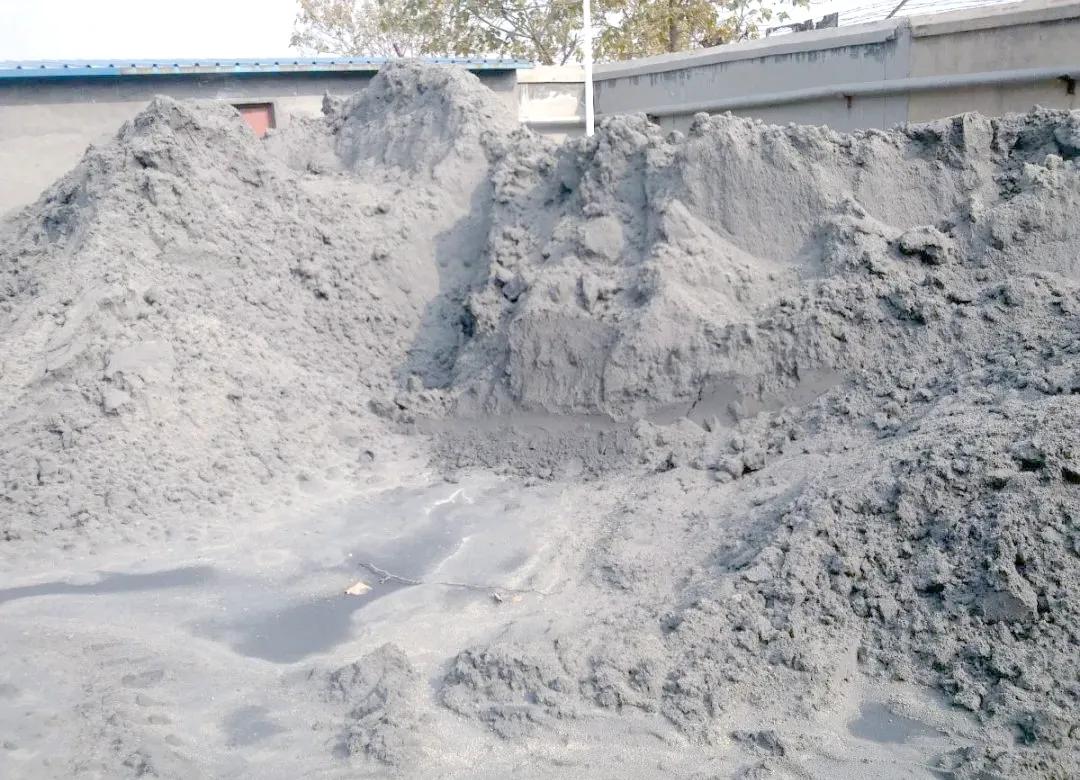 Fly ash used as supplementary cementitious material for precast concrete production
8.5 Aggregate Quality
 Comparison between flocculated cement particles and uniformly dispersed cement particles after admixture action.
Aggregate properties such as grading, water absorption, and mud content affect PCE performance.
High mud content can adsorb part of the PCE molecules and reduce effective dosage, leading to lower workability and faster slump loss.
8.6 Temperature
Temperature significantly affects the hydration rate of cement and the performance stability of PCE.
High temperatures accelerate cement hydration and usually increase slump loss, while low temperatures may slow hydration and affect strength development.
8.7 Dosage Level
The dosage level directly determines the effectiveness of PCE in concrete.
Insufficient dosage may not provide enough dispersion, while excessive dosage may cause bleeding, segregation, or delayed setting. Therefore, an optimized dosage is necessary to achieve stable concrete performance.
9. How Polycarboxylate Ether Superplasticizer Properties Are Tested
The properties of Polycarboxylate Ether Superplasticizer are usually evaluated through a series of laboratory tests to measure its water reduction efficiency, dispersion behavior, adsorption capacity, and influence on cement hydration.
These testing methods help determine the practical performance of PCE in different cement systems and provide important data for dosage optimization and compatibility evaluation.
9.1 Water Reduction Rate Test
The water reduction rate test is used to measure the ability of PCE to reduce mixing water while maintaining the same workability of concrete.
It is one of the most important indicators for evaluating PCE performance. A higher water reduction rate usually means better dispersion efficiency and stronger strength improvement potential.
The water reduction rate of high-performance PCE can usually reach 25%–40%, depending on formulation and dosage.
 Concrete mixing and testing equipment used for construction material and concrete admixture performance evaluation.
9.2 Slump Test
The slump test is the most common method used to evaluate the flowability and slump retention performance of concrete after adding PCE.
It measures the workability of fresh concrete and helps determine whether the PCE provides sufficient fluidity and stability during transportation and placement.
Slump loss over time is also an important indicator of retention performance.
9.3 Adsorption Test
The adsorption test is used to determine how much PCE is adsorbed onto the cement particle surface.
This test helps evaluate the adsorption efficiency and compatibility between PCE and cement.
Higher adsorption usually means better dispersion performance, but excessive adsorption may affect dosage efficiency.
9.4 Zeta Potential Test
The zeta potential test is used to analyze the surface charge changes of cement particles after adding PCE.
It helps explain the electrostatic repulsion effect and the dispersion mechanism of PCE in cement systems.
Higher absolute zeta potential values usually indicate stronger particle repulsion and better dispersion stability.
9.5 Isothermal Calorimetry
Isothermal calorimetry is used to measure the heat release of cement hydration after adding PCE.
This test helps evaluate whether PCE affects hydration rate, hydration heat, and setting behavior.
It is especially useful for studying slump retention mechanisms and hydration delay effects in cement systems.
10. Conclusion
The properties of Polycarboxylate Ether Superplasticizer are mainly determined by its molecular structure, including carboxyl groups, polyether side chains, molecular weight, and charge density. These structural characteristics directly affect its physical properties, chemical behavior, and performance in concrete.
From water reduction and dispersion to slump retention and strength development, PCE plays an important role in improving concrete quality and construction efficiency. However, its actual performance can vary depending on cement systems, mix designs, and application conditions.
As a professional concrete admixture manufacturer with over 19 years of industry experience, Huaxuan High-Tech provides high-performance PCE solutions, customized formulations, and technical support for ready-mix concrete, precast concrete, and special construction applications. If you are looking for reliable Polycarboxylate Ether Superplasticizer products or formulation support, contact Huaxuan High-Tech for sample testing and professional technical solutions.
 Liquid and powder PCE samples used for concrete admixture and cement material applications.
How Molecular Design Variables Change PCE Performance
PCE performance is controlled by the balance between anchoring groups on the backbone and polyether side chains extending into the pore solution. Increasing carboxyl density may improve initial adsorption, but excessive or very rapid adsorption can reduce retention. Longer or denser side chains can strengthen steric separation, yet the optimum architecture depends on cement surface area, sulfate balance, clay contamination, temperature, and the required rheology.
Molecular weight and its distribution influence adsorption, solution behavior, and robustness. Functional groups or slow-release designs can delay the availability of anchoring sites and extend workability, but may also change set behavior. These variables interact; a single property such as charge density cannot predict concrete performance by itself.
Interpreting Mechanism Tests
Adsorption measurements, zeta potential, paste flow, rheology, isothermal calorimetry, and slump-retention testing describe different parts of the system. Zeta potential alone can understate the importance of steric hindrance, while a strong paste-flow result may not survive real aggregates or supplementary cementitious materials. Use several tests and confirm the final conclusion in mortar or concrete under the intended mixing sequence and temperature.
Related Reading
For a broader overview of definitions, density, chemistry, product forms and selection, read What Is a Superplasticizer? Definition, Density, Types and Concrete Use.
How Does Superplasticizer Work in Concrete?
Polycarboxylate Superplasticizer Powder: Uses, Dosage, Storage and Compatibility
Polycarboxylate Superplasticizer Flake: Applications, Advantages and Solution Preparation
PCE vs Naphthalene Superplasticizer: Key Differences
Types of Superplasticizers in Concrete
How Much Superplasticizer Should Be Added to Concrete?
Concrete Superplasticizer Market: Size, Trends, Segmentation, Key Players & Future Outlook