July 30, 2026
Introduction
Superplasticizers play a critical role in modern concrete technology by improving workability, reducing water demand, and enhancing concrete strength and durability.
As construction projects continue to demand higher-performance concrete, different superplasticizer types have been developed to meet specific engineering requirements such as high strength, long slump retention, pumpability, early strength development, and compatibility with modern cement systems.
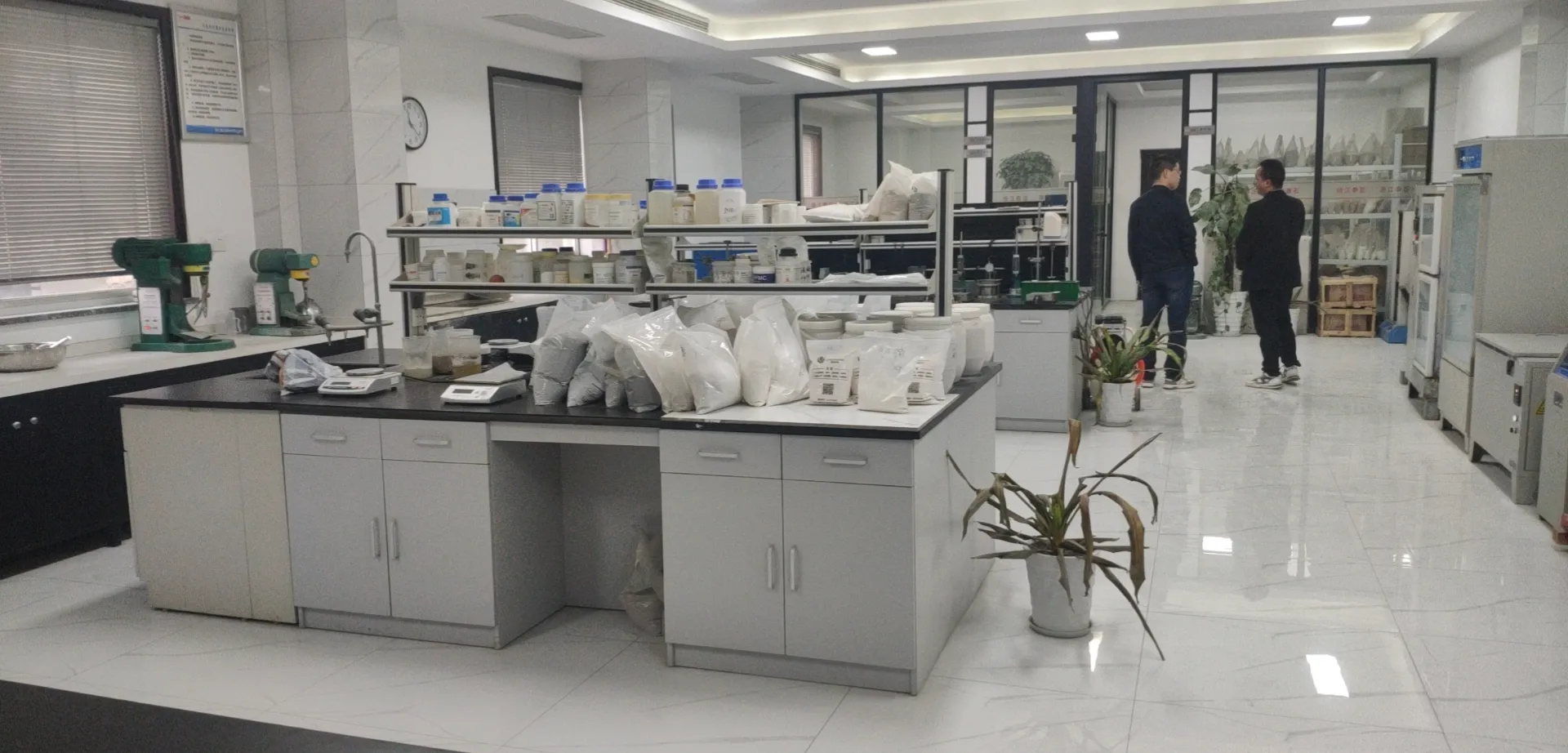
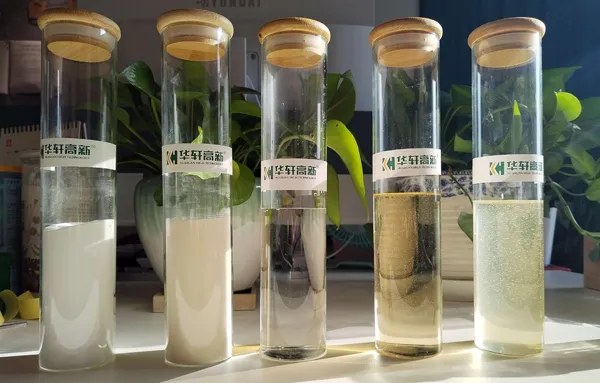
Different PCE superplasticizer formulations and admixture samples used for concrete performance and compatibility testing.In this guide, we will explain:
- The different generations and types of superplasticizers
- The characteristics, advantages, and limitations of each type
- Water reduction performance and dosage ranges
- The differences between SNF, SMF, and PCE systems
- Different functional PCE types, such as slump retention, early strength, anti-clay, and UHPC PCE
- How superplasticizers work through electrostatic repulsion and steric hindrance
- How to choose the right superplasticizer for different concrete applications
- Common compatibility, slump loss, and pumping issues
- Frequently asked questions about superplasticizer types
Whether you are producing ready-mix concrete, precast concrete, SCC, UHPC, or dry-mix mortar, understanding different superplasticizer types is essential for optimizing concrete performance, construction efficiency, and long-term durability.
How Many Types of Superplasticizers Are There?
Superplasticizers can generally be divided into three generations based on their chemical composition, water reduction performance, and development history.
Different superplasticizer types offer different advantages in terms of workability, strength development, slump retention, compatibility, and cost.
The most common superplasticizer types used in the concrete industry today include lignosulfonate-based, naphthalene-based, melamine-based, and polycarboxylate-based superplasticizers.
As concrete technology continues to develop, polycarboxylate superplasticizers (PCE) have gradually become the mainstream choice for high-performance concrete and modern construction projects.
 Evolution of superplasticizer technology in concrete from first-generation water reducers to modern PCE admixtures.
First Generation Superplasticizer Types: Lignosulfonate-Based Superplasticizers
First-generation superplasticizers mainly refer to lignosulfonate-based water reducers. These were among the earliest chemical admixtures used in concrete and are still applied in some general-purpose and low-cost concrete applications today.
Compared with modern superplasticizer types, first-generation superplasticizers have lower water reduction performance and require higher dosage. However, they remain cost-effective for certain construction projects.
Main Features
Typical water reduction rate: 5%–10%
Typical dosage: 0.2%–0.5% by weight of cement
Mild air-entraining effect
Often delays initial setting time by 1–3 hours, depending on dosage and cement type
Mainly based on calcium, sodium, or magnesium lignosulfonate
Advantages
Lower material cost than SNF and PCE
Improves concrete workability under low-performance concrete systems
Suitable for mass concrete where slower hydration is acceptable
Can reduce cement consumption in ordinary concrete application
Disadvantages
Water reduction performance is significantly lower than SNF and PCE
Higher dosage requirement compared with modern superplasticizers
Poor slump retention performance
Excessive dosage may increase air content and reduce compressive strength
Limited suitability for SCC, UHPC, and high-strength concrete
Typical Applications
Mass concrete
Ordinary ready-mix concrete
Low-cost construction projects
Non-structural precast concrete
General civil construction
 Typical applications of water reducers in general concrete construction projects.
For More information about this type of superplasticizer, you can read
Lignosulfonate Water Reducer: Benefits, Mechanism, Applications
Second Generation Superplasticizer Types
Second-generation superplasticizers provide significantly higher water reduction performance than first-generation water reducers.
Common second-generation superplasticizer types include
naphthalene-based
melamine-based
sulfamic acid-based
and aliphatic superplasticizers.
These superplasticizers were widely used in high-strength concrete, precast concrete, and pumped concrete before the rapid adoption of polycarboxylate superplasticizers (PCE).
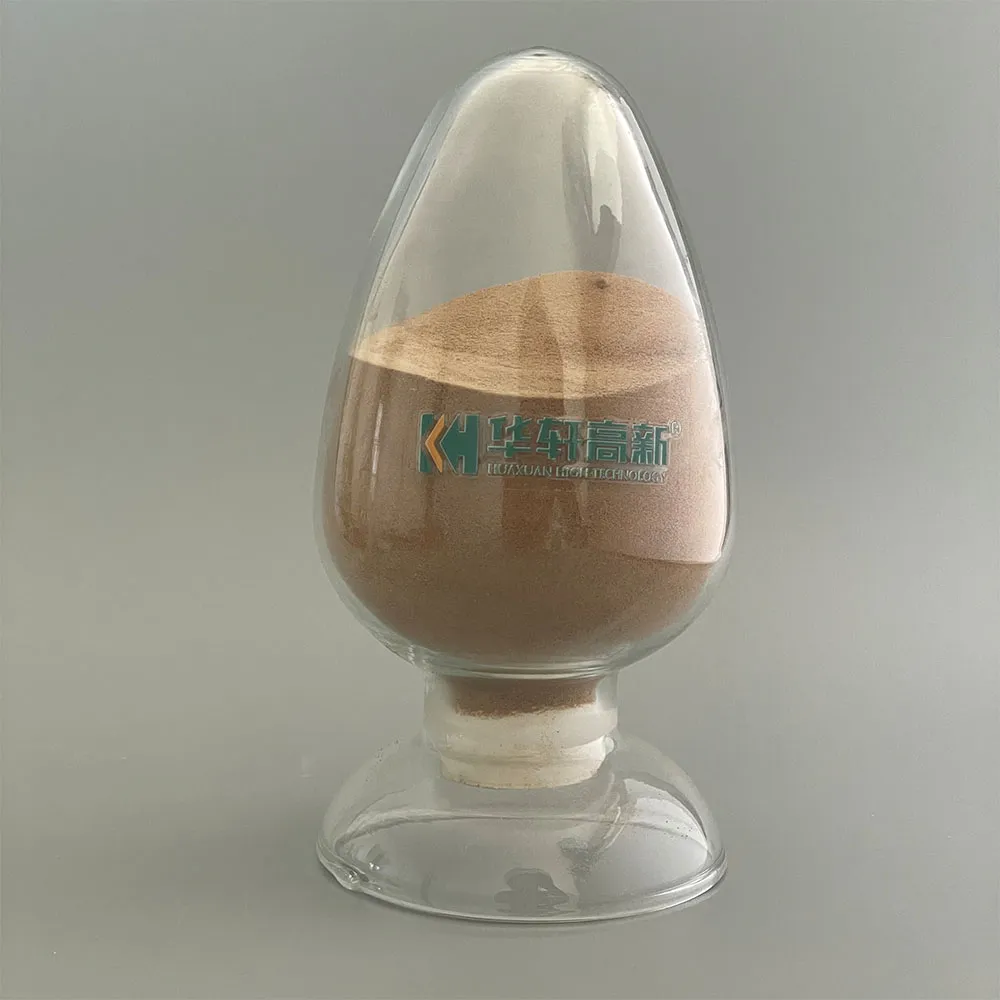 KH-SNFC naphthalene sulfonate superplasticizer powder display bottle.
Naphthalene-Based Superplasticizers (SNF/NSF)
Naphthalene-based superplasticizers are produced from sulfonated naphthalene formaldehyde condensates (SNF/NSF). They are one of the most widely used second-generation superplasticizers in the concrete industry.
Main Features
Typical water reduction rate: 15%–25%
Typical dosage: 0.5%–1.5% by weight of cement
Strong electrostatic dispersion mechanism
Low air entrainment
Widely used in ready-mix and pumped concrete
Cost-effective for large-scale applications
Advantages
Higher water reduction than lignosulfonates
Stable performance in large-scale concrete production
Better cement compatibility and consistency than some PCE systems
Lower cost than polycarboxylate superplasticizers in many markets
Disadvantages
Faster slump loss compared with PCE
Higher dosage requirement than PCE
Limited long slump retention performance
Residual formaldehyde and potential environmental concerns during production and application
Typical Applications
Ready-mix concrete
Pumped concrete
Precast concrete
Cement grouting materials
High-strength concrete
 Main application areas of PCE polycarboxylate superplasticizer in modern concrete construction.
Melamine-Based Superplasticizers (SMF)
Melamine-based superplasticizers are produced from sulfonated melamine formaldehyde condensates (SMF). They are known for their excellent early strength development and good flowability.
Main Features
Typical water reduction rate: 18%–25%
Typical dosage: 0.5%–1.5% by weight of cement
Fast dispersion and low air entrainment
Excellent early strength performance
Advantages
Faster early compressive strength development than many SNF systems
Suitable for precast concrete and rapid demolding
Good surface finish and low air content
Effective in self-leveling and grouting systems
Disadvantages
Higher material cost than SNF
Faster slump loss than PCE
Lower long-term slump retention performance
Typical Applications
Precast concrete
High-strength concrete
Self-leveling compounds
Cement grouting materials
Rapid repair materials
 Main application areas of PCE polycarboxylate superplasticizer in concrete and cement-based construction materials.
Sulfamic Acid-Based Superplasticizers
Sulfamic acid-based superplasticizers are second-generation high-range water reducers produced through sulfonation and condensation reactions involving aromatic compounds.
Main Features
Typical water reduction rate: 20%–30%
Moderate to good slump retention
Low air entrainment
Good dispersion performance
Advantages
Higher water reduction than many traditional SNF systems
Better slump retention than ordinary naphthalene systems
Good fluidity for high-workability concrete
Limitations
Higher production cost than SNF
More complex synthesis process
Limited commercial availability
Higher environmental pressure compared with modern PCE systems
Typical Applications
High-fluidity concrete
Pumped concrete
Certain high-strength concrete applications
Specialized regional admixture systems
Aliphatic Superplasticizers
Aliphatic superplasticizers are early-generation synthetic high-range water reducers known for their relatively simple synthesis process and good early strength performance.
Main Features
Typical water reduction rate: 15%–25%
Moderate dispersion performance
Good early strength development
Moderate slump retention performance
Advantages
Relatively simple manufacturing process
Good early strength improvement
Low chloride content
Reasonable cement adaptability in some systems
Limitations
Limited slump retention performance
Less stable appearance and long-term consistency
Lower compatibility with modern high-performance concrete systems
Gradually replaced by PCE superplasticizers
Typical Applications
Ordinary concrete
Some pumped concrete systems
Regional construction applications
Certain early-strength concrete systems
Third Generation Superplasticizer Types-Polycarboxylate Superplasticizers (PCE)
Third-generation superplasticizers mainly refer to polycarboxylate ether superplasticizers (PCE).
Compared with first-generation and second-generation superplasticizers, PCE provides significantly higher water reduction, better slump retention, lower dosage, and improved compatibility with modern concrete systems.
Based on comb-shaped polycarboxylate ether polymers with carboxyl functional groups and polyether side chains,
Unlike traditional SNF and SMF superplasticizers that mainly rely on electrostatic repulsion,
PCE works through both electrostatic repulsion and steric hindrance, allowing for more efficient cement particle dispersion
 PCE polyether side chains create steric hindrance that prevents cement particle re-agglomeration and maintains concrete fluidity.
Main Features
Typical water reduction rate: 25%–40%
Typical dosage: 0.1% to 0.5% by weight of cementitious materials
Excellent slump retention performance
High cement particle dispersion efficiency
Lower dosage requirement than SNF and SMF
Strong adaptability for modern concrete systems
Suitable for low water-to-cement ratio concrete
Advantages
Highest water reduction performance among common superplasticizer types
Excellent workability and flowability
Better slump retention than SNF and SMF
Lower shrinkage and cracking risk
Suitable for SCC, UHPC, and pumped concrete
Improved concrete strength and durability
Lower water demand under the same slump conditions
Better pumpability for long-distance transportation
Disadvantages
Higher material cost than traditional superplasticizers in some markets
Performance may vary depending on cement compatibility
Sensitive to clay and mud content in aggregates
Improper dosage may cause segregation or excessive retardation
Requires more precise mix design control
Typical Applications
Ready-mix concrete
Pumped concrete
Self-compacting concrete (SCC)
High-strength concrete (HSC)
Ultra-high performance concrete (UHPC)
Precast concrete
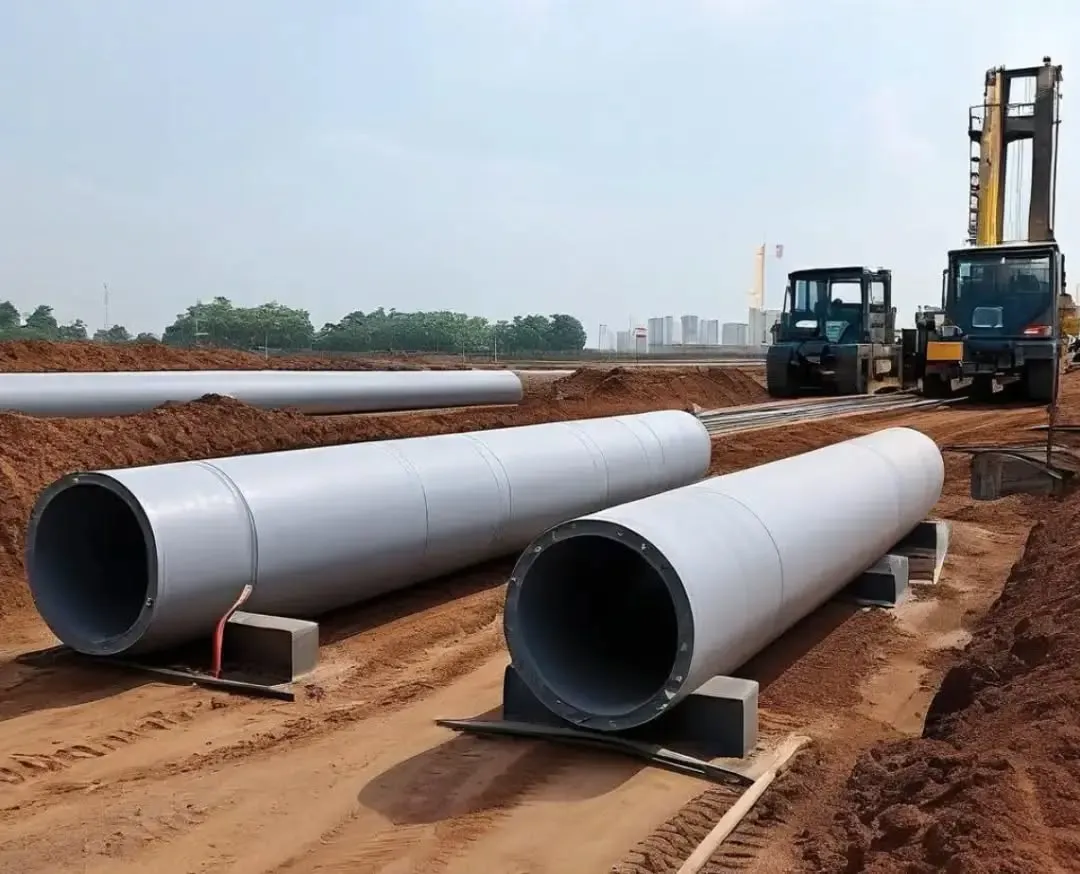
Pipe pile concrete
Self-leveling mortar
Dry-mix mortar
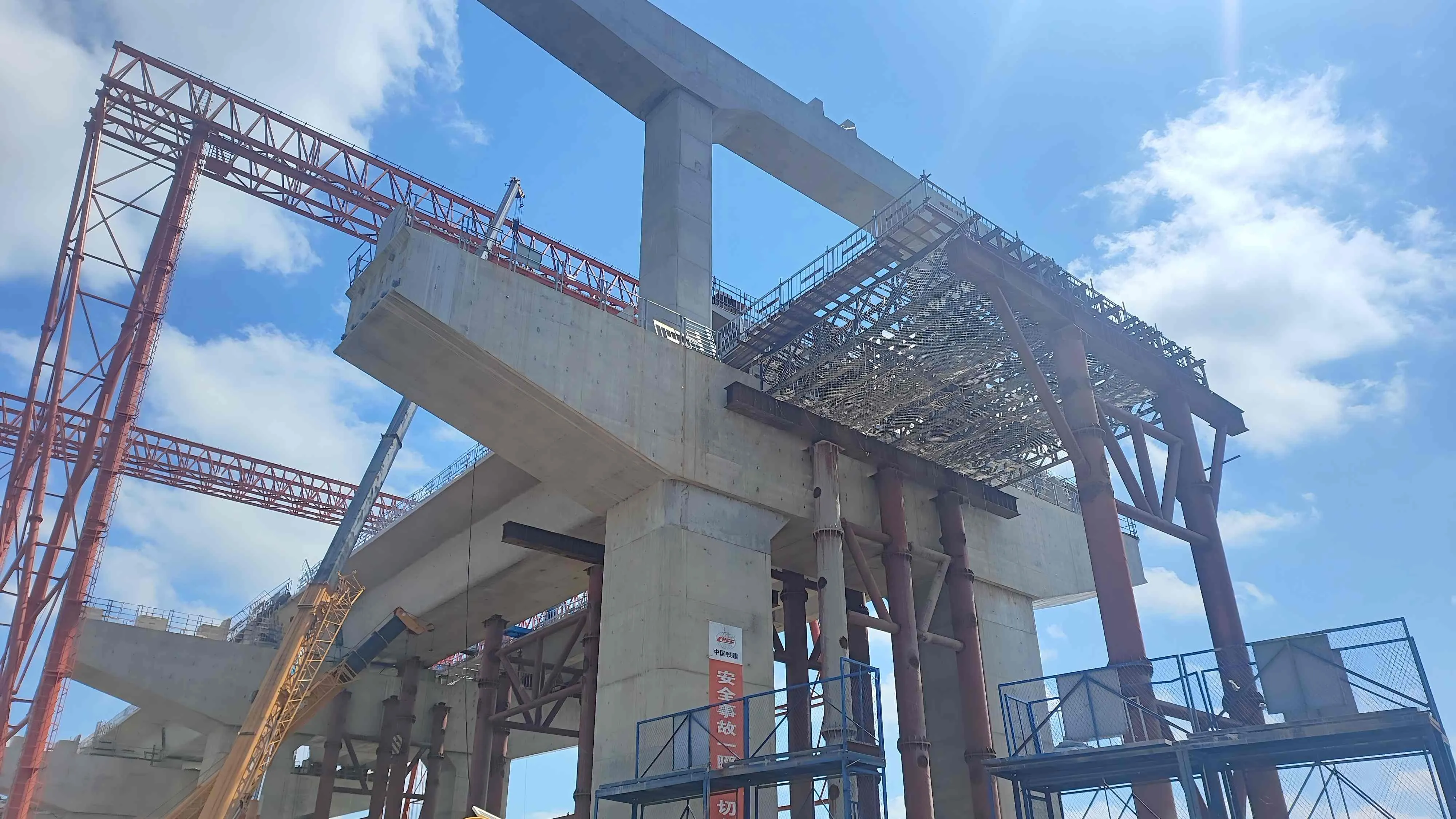
Bridge and tunnel construction
High-rise buildings
High-speed railway projects
Why PCE Has Higher Water Reduction Efficiency
Traditional superplasticizers such as SNF and SMF mainly disperse cement particles through electrostatic repulsion.
PCE superplasticizers combine electrostatic repulsion with steric hindrance created by their polyether side chains. This dual dispersion mechanism allows cement particles to separate more efficiently, significantly reducing water demand while maintaining high flowability.
As a result, PCE can achieve water reduction rates of up to 40%, much higher than lignosulfonate and most second-generation superplasticizers
Want to know more about the comparison between PCE and Naphthalene Superplasticizer, you can read:
PCE vs Naphthalene Superplasticizer: The Ultimate Comparison Guide for Concrete Engineers
Why PCE Has Better Slump Retention
PCE molecules contain long polyether side chains that continuously provide steric hindrance between cement particles, helping maintain particle dispersion over time.
This makes PCE especially suitable for long-distance transportation, pumped concrete, and hot weather construction conditions.
Environmental Advantages of PCE
Compared with traditional formaldehyde-based superplasticizers, PCE systems generally have lower environmental impact and lower dosage requirements.
Because PCE can significantly reduce water consumption and lower cement demand, it also helps reduce CO₂ emissions in concrete production.
PCE superplasticizers are widely used in green concrete, sustainable construction, and modern low-carbon infrastructure projects.
| Property | Lignosulfonate-Based | Naphthalene-Based (SNF/NSF) | Melamine-Based (SMF) | Sulfamic Acid-Based | Aliphatic Superplasticizers | Polycarboxylate Superplasticizers (PCE) |
|---|---|---|---|---|---|---|
| Generation | First Generation | Second Generation | Second Generation | Second Generation | Second Generation | Third Generation |
| Main Chemical Base | Calcium / Sodium / Magnesium Lignosulfonate | Sulfonated Naphthalene Formaldehyde Condensate | Sulfonated Melamine Formaldehyde Condensate | Sulfonated Aromatic Compounds | Aliphatic Sulfonate Compounds | Polycarboxylate Ether Polymer |
| Typical Water Reduction Rate | 5%–12% | 15%–25% | 18%–25% | 20%–30% | 15%–25% | 25%–40% |
| Typical Dosage | 0.2%–0.5% | 0.2%–1.5% | 0.5%–2.0% | 0.3%–0.8% | 0.3%–1.0% | 0.1%–0.5% |
| Slump Retention | Poor | Moderate | Moderate | Moderate to Good | Moderate | Excellent |
| Early Strength Performance | Low to Moderate | Moderate | Excellent | Moderate | Moderate | Excellent |
| Main Dispersion Mechanism | Electrostatic Repulsion | Electrostatic Repulsion | Electrostatic Repulsion | Electrostatic Repulsion | Electrostatic Repulsion | Electrostatic Repulsion + Steric Hindrance |
| Main Advantages | Low cost Widely available | Cost-effective Mature technology | Excellent early strength | High water reduction | Simple production process | Highest water reduction Best slump retention |
| Main Disadvantages | Low water reduction Higher dosage requirement | Faster slump loss | Higher cost than SNF | High production cost | Limited practical applications | Sensitive to cement compatibility Sensitive to clay content |
| Typical Applications | Mass concrete Ordinary ready-mix concrete | Pumped concrete Precast concrete | Precast concrete Repair materials | High-strength concrete | Ordinary concrete | SCC UHPC HSC Self-leveling mortar |
| Environmental Performance | Moderate | Moderate | Moderate | Moderate to Low | Moderate | Excellent |
| Typical Slump Retention Time | 20–40 min | 30–60 min | 30–60 min | 45–90 min | 30–60 min | 60–120+ min |
| Compatibility With Modern Concrete Systems | Low | Moderate | Moderate | Moderate | Moderate | High |
| Suitability for SCC/UHPC | Poor | Limited | Limited | Moderate | Poor | Excellent |
| Cost Level | Low | Medium | Medium to High | High | Medium | Medium to High |
Different Types of Polycarboxylate Superplasticizers
Water Reducing PCE
Water-reducing PCE is designed to maximize cement dispersion and reduce the water-to-cement ratio while maintaining high concrete flowability.
Typical water reduction rate: 30%–40%
Typical dosage: 0.12%–0.30%
Rapid slump release and low viscosity
Commonly used in high-strength concrete with water-binder ratios below 0.35
This type is widely used in precast concrete, pipe pile production, and high-strength concrete systems where early compressive strength and low water demand are critical.
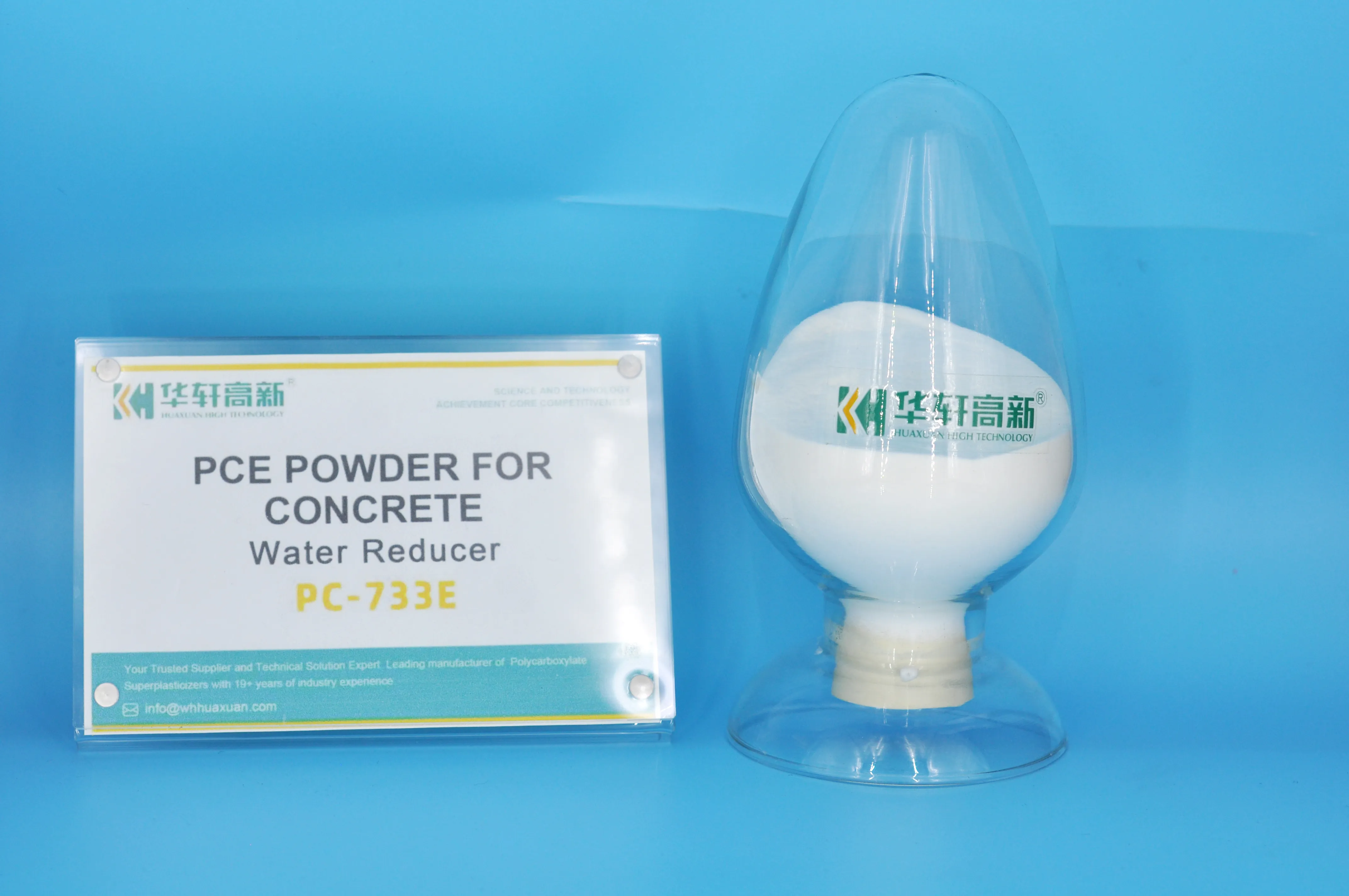 PC-733E polycarboxylate ether powder superplasticizer for concrete water reduction and workability improvement.
Slump Retention PCE
Slump retention PCE is specially developed to maintain concrete workability over extended transportation and placement periods.
Typical slump retention time: 60–120+ minutes
Typical dosage: 0.15%–0.40%
Lower slump loss rate than SNF systems
Better workability stability under hot weather conditions
It is commonly used in ready-mix concrete, long-distance pumping, and large infrastructure projects requiring stable workability during transportation and construction.
 KH-207 slump retention concrete admixture sample in laboratory measuring beaker
Early Strength PCE
Early strength PCE is optimized to accelerate hydration and improve early compressive strength development.
Typical 1-day strength increase: 15%–30%
Typical dosage: 0.15%–0.35%
Faster setting and demolding performance
Suitable for steam curing systems
This type is widely used in precast concrete plants, pipe piles, tunnel segments, and fast-track construction projects where production efficiency is important.
Retarding PCE
Retarding PCE is designed to delay concrete setting time while maintaining fluidity and workability.
Typical setting delay: 2–6 hours depending on dosage and cement type
Typical dosage: 0.15%–0.50%
Improved slump retention under high temperatures
Reduced rapid hydration in mass concrete
Retarding PCE is commonly used in hot weather concreting, mass concrete pours, and projects requiring long transportation times.
Anti-Clay PCE
Anti-clay PCE is developed to improve compatibility with aggregates containing clay, mud powder, or manufactured sand fines.
Improved tolerance to clay-contaminated aggregates
Reduced adsorption loss caused by montmorillonite clay
More stable slump retention compared with ordinary PCE
This type is widely used in manufactured sand, concrete, and infrastructure projects where aggregate quality is unstable or local sand contains high mud content.
Precast Concrete PCE
Precast concrete PCE is optimized for high early strength, low water-binder ratio, and fast mold turnover.
Typical water reduction rate: 30%–40%
Typical dosage: 0.12%–0.30%
Faster demolding and steam curing response
Improved surface finish and concrete density
It is commonly used in precast beams, slabs, wall panels, pipe piles, and tunnel segment production systems.
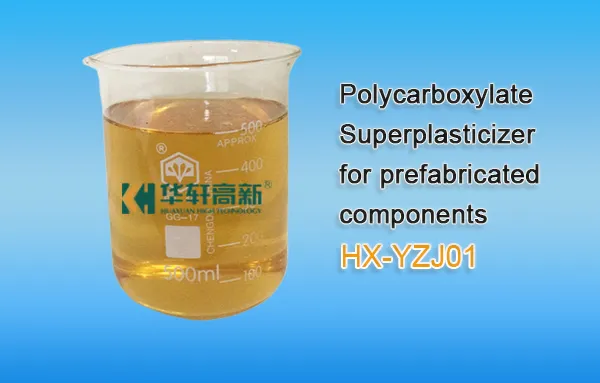 HX-YZJ01 PCE-based water reducer for prefabricated concrete and precast component production
Pumped Concrete PCE
Pumped concrete PCE is specially formulated to improve pumpability and maintain stable flow during long-distance pumping.
Reduced pumping pressure and pipe resistance
Better lubrication effect during pumping
Typical slump retention: 60–90 minutes
This type is widely used in high-rise buildings, bridge construction, and large-volume pumped concrete applications.
Self-Leveling Mortar PCE
Self-leveling mortar PCE is designed for cement-based self-leveling systems requiring high fluidity and stable open time.
High flowability with low bleeding
Improved flow spread and leveling performance
Typical dosage: 0.05%–0.20%
Reduced segregation and shrinkage cracking
It is commonly used in industrial flooring, decorative flooring, and self-leveling underlayment systems.
Gypsum-Based System PCE
Gypsum-based PCE is specially developed for gypsum binders and gypsum-based dry-mix mortar systems.
Good compatibility with gypsum hydration systems
Lower air entrainment
Improved fluidity and water reduction
Typical dosage: 0.03%–0.15%
This type is commonly used in gypsum self-leveling, gypsum plaster, gypsum putty, and gypsum-based decorative materials.
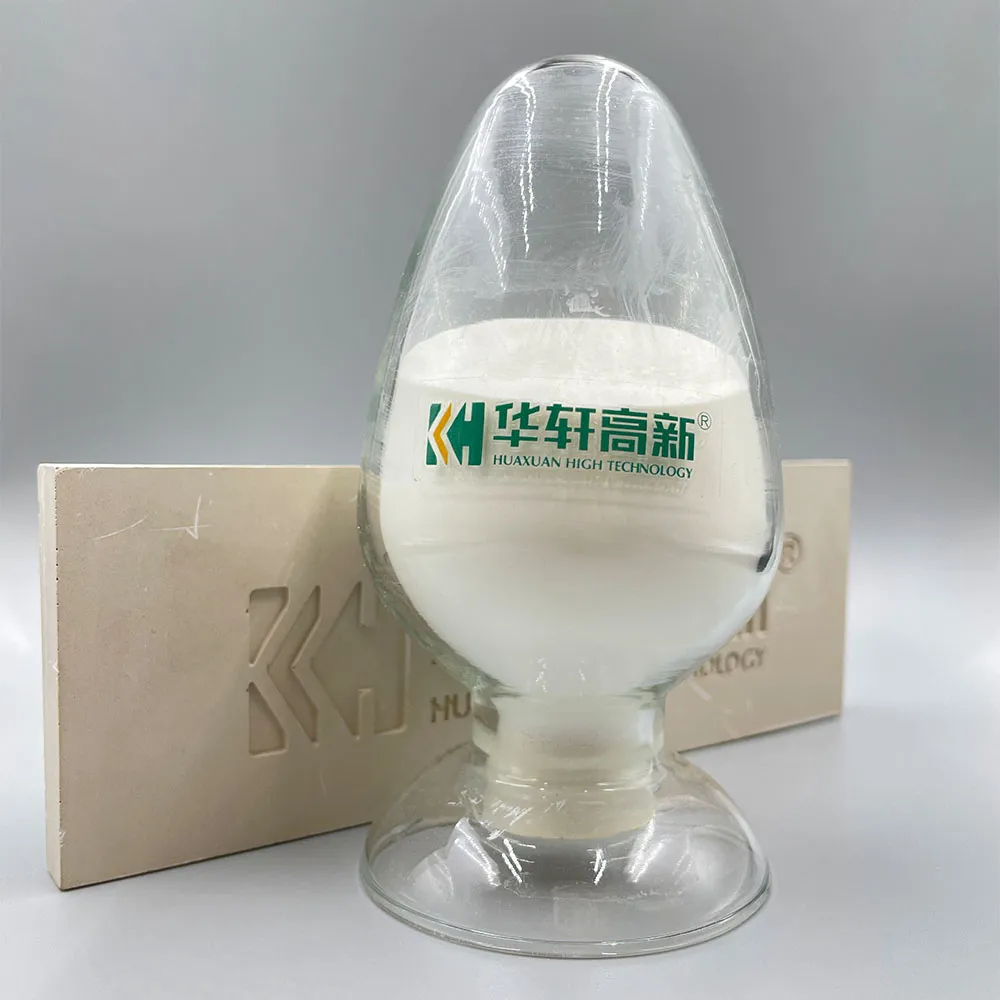
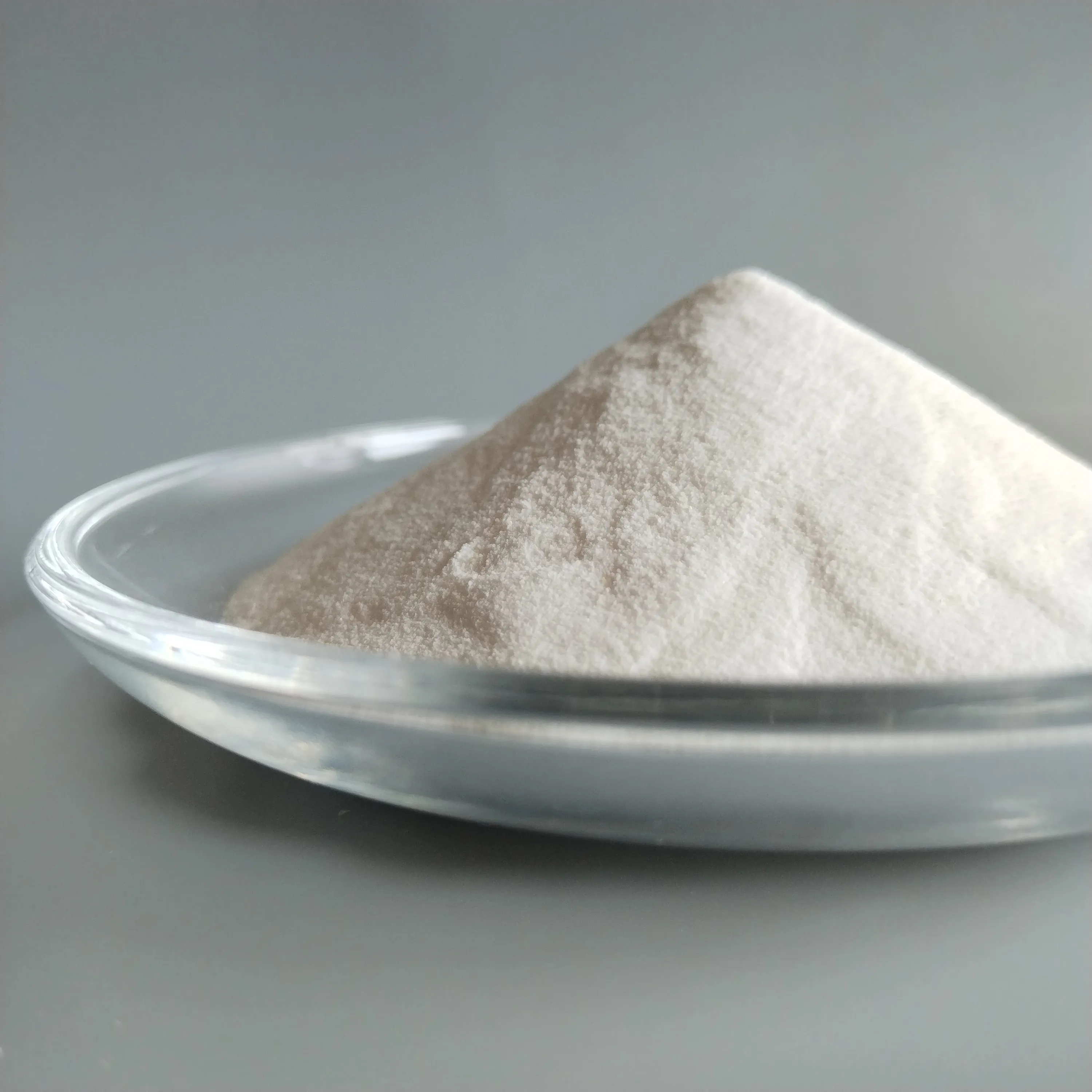 Close-up view of PC-1006E white polycarboxylate superplasticizer powder in a glass dish.
UHPC PCE
UHPC PCE is designed for ultra-high-performance concrete with extremely low water-binder ratios and ultra-fine particle systems.
Typical water reduction rate: 35%–40%
Suitable for water-binder ratios below 0.20
Excellent dispersion of silica fume and ultra-fine powders
Improved concrete density and particle packing
UHPC PCE is widely used in bridge engineering, ultra-high-strength precast components, military engineering, and advanced infrastructure applications requiring extremely high strength and durability.

How to Choose the Right Superplasticizer Type
Choosing the right superplasticizer type is important for achieving the desired concrete strength, workability, durability, and construction efficiency. Different superplasticizers provide different water reduction performance, slump retention behavior, compatibility, and cost efficiency depending on the project requirements.
Based on Concrete Strength Requirements
For ordinary concrete applications, lignosulfonate or SNF superplasticizers may be sufficient.
For high-strength concrete (HSC) and ultra-high performance concrete (UHPC), PCE superplasticizers are generally preferred because they can achieve water reduction rates of 25%–40% and support water-binder ratios below 0.25.
Early strength PCE is commonly used in precast concrete systems requiring rapid strength development and fast demolding.
Based on Workability Requirements
Projects requiring high flowability or self-compacting performance usually require high-range superplasticizers with strong dispersion ability.
SNF water reduction: typically 15%–25%
PCE water reduction: typically 25%–40%
For self-compacting concrete (SCC) and self-leveling mortar, PCE superplasticizers are commonly used because of their superior flowability and lower segregation risk.
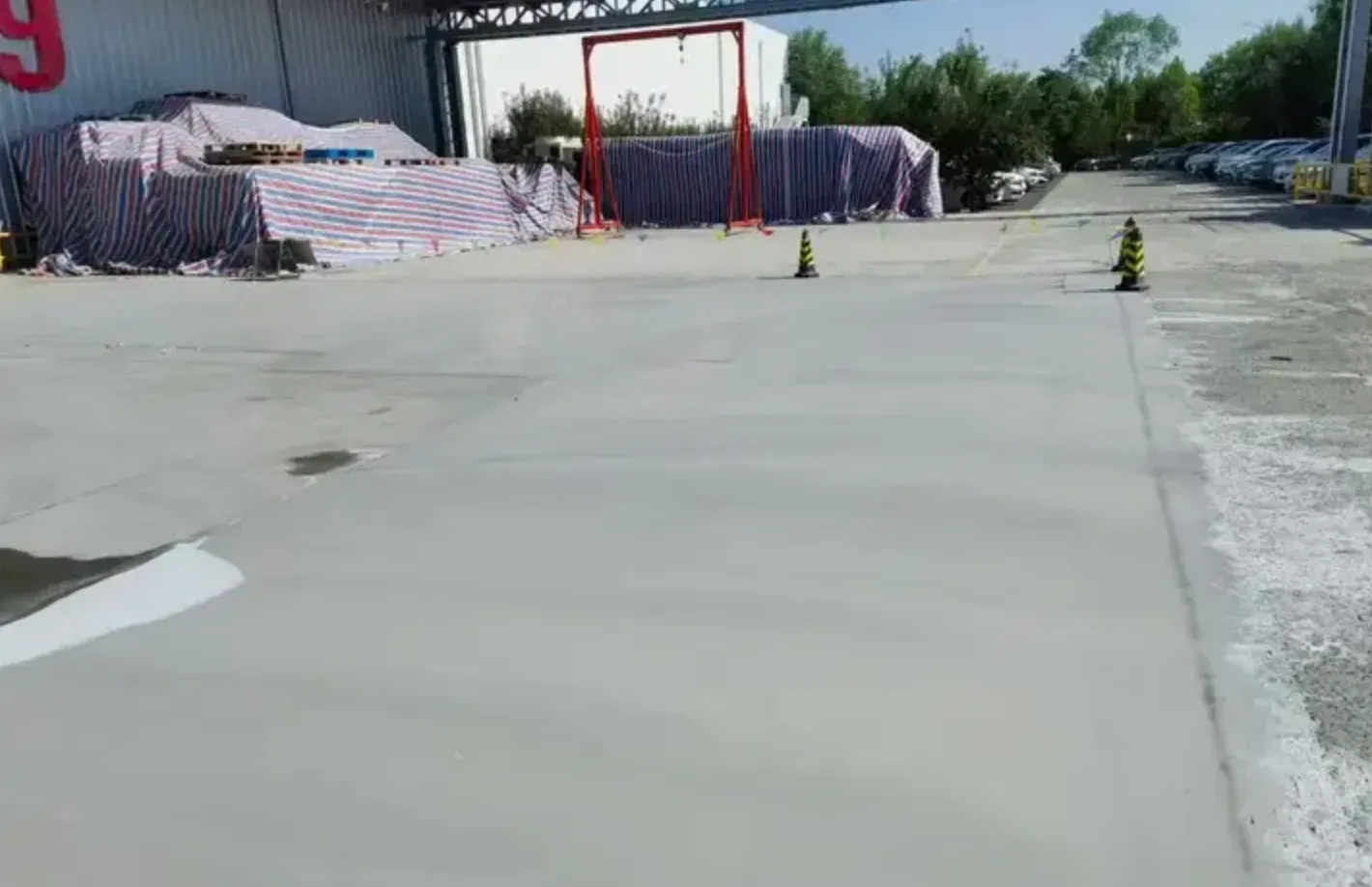
 Fresh concrete placement process for reinforced concrete construction applications.
Based on Slump Retention Requirements
If long transportation time or extended placement time is required, slump retention becomes critical.
SNF slump retention: typically 30–60 minutes
Slump retention PCE: typically 60–120+ minutes
For ready-mix concrete, pumped concrete, and hot weather construction, slump retention type PCE is usually recommended.

Based on Cement Compatibility
Different cement systems may react differently with the same superplasticizer.
Factors affecting compatibility include:
C3A content
Cement fineness
Gypsum type
Fly ash and slag content
Clay contamination
PCE systems generally require more careful compatibility evaluation than traditional SNF systems due to their stronger adsorption sensitivity.
Based on Construction Method
Different construction methods require different concrete properties.
Pumped concrete → Pumped concrete PCE
Precast concrete → Early strength or precast PCE
SCC → High-flow PCE
Mass concrete → Retarding PCE
Self-leveling mortar → Self-leveling PCE
Selecting the correct functional PCE type helps improve construction efficiency and reduce site problems.
Based on Climate Conditions
Environmental temperature significantly affects concrete performance.
Under hot weather conditions above 30°C:
Slump loss accelerates
Cement hydration speeds up
Setting time shortens
Retarding PCE or slump retention PCE is commonly used in high-temperature environments.
Under low-temperature conditions, early strength PCE may help improve early hydration and strength development.
Based on Pumping Requirements
Long-distance or high-rise pumping projects require concrete with stable flowability and low pumping resistance.
Pumped concrete PCE helps:
Reduce pumping pressure
Improve the lubrication effect
Lower pipe blockage risk
Maintain a slump during transportation
For high-rise pumping projects exceeding 100 meters, stable slump retention is especially important.
 Concrete pumping process using water reducers to improve lubrication and reduce pumping resistance.
Based on Cost and Budget
Traditional SNF superplasticizers are usually lower in material cost than PCE systems.
However, PCE often provides:
Lower dosage requirement
Lower water demand
Reduced cement consumption
Better long-term durability
Although initial material cost may be higher, PCE can reduce overall project cost in many high-performance concrete applications.
Based on Project Type
Different projects usually require different superplasticizer types:
| Project Type | Recommended Superplasticizer Type |
| Ordinary ready-mix concrete | SNF or standard PCE |
| High-strength concrete | Water-reducing PCE |
| Precast concrete | Early strength PCE |
| SCC | High-flow PCE |
| Pumped concrete | Slump retention PCE |
| UHPC | UHPC PCE |
| Self-leveling mortar | Self-leveling PCE |
| Hot weather concrete | Retarding PCE |
| Manufactured sand concrete | Anti-clay PCE |
Frequently Asked Questions About Superplasticizer Types
Which Superplasticizer Type Has the Highest Water Reduction Rate?
Polycarboxylate superplasticizers (PCE) generally provide the highest water reduction rate, typically around 25%–40%.
What Is the Difference Between PCE and SNF?
PCE provides higher water reduction, better slump retention, and lower dosage than SNF. SNF is usually lower in cost but has faster slump loss.
Which Superplasticizer Type Is Best for Precast Concrete?
Early strength PCE and melamine-based superplasticizers are commonly used for precast concrete due to their fast strength development.
Which Superplasticizer Type Is Best for Self-Leveling Mortar?
Self-leveling mortar PCE is typically the best choice because it provides high flowability and low segregation.
Which Superplasticizer Type Is Best for Hot Weather?
Retarding PCE or slump retention PCE is commonly used in hot weather to reduce rapid slump loss and delayed hydration problems.
Why Does Concrete Lose Slump Quickly?
Rapid slump loss is usually caused by high C3A cement content, high temperature, poor compatibility, or insufficient slump retention performance.
Can Superplasticizers Increase Concrete Strength?
Yes. By reducing the water-to-cement ratio, superplasticizers can improve concrete compressive strength and durability.
What Causes Bleeding and Segregation?
Excessive water, improper dosage, poor aggregate grading, or overdose of superplasticizer may cause bleeding and segregation.
How Much Superplasticizer Should Be Added?
Typical dosage depends on the type:
SNF: 0.2%–1.5%
SMF: 0.5%–2.0%
PCE: 0.11%–0.5%
by weight of cementitious materials.
What Happens If Too Much Superplasticizer Is Added?
Overdose may cause excessive retardation, segregation, bleeding, delayed setting, or abnormal air entrainment.
Can Different Superplasticizer Types Be Mixed Together?
Mixing different superplasticizer types is generally not recommended unless compatibility testing is performed.
Why Is Cement Compatibility Important?
Poor compatibility may cause rapid slump loss, unstable workability, abnormal setting time, or reduced water reduction performance.
Are Polycarboxylate Superplasticizers Environmentally Friendly?
Compared with traditional superplasticizers, PCE systems generally require lower dosage and help reduce water and cement consumption, supporting green concrete development.
What Is the Difference Between Water Reducers and Superplasticizers?
Water reducers provide moderate water reduction, while superplasticizers offer much higher water reduction and significantly improve concrete flowability and workability.
Superplasticizer vs Water Reducer: Key Differences and Uses in Concrete
What Is the Difference Between Plasticizers and Superplasticizers?
Plasticizers are normal or mid-range water reducers, while superplasticizers are high-range water reducers with better dispersion, higher water reduction efficiency, and improved slump retention.
Conclusion
Different superplasticizer types provide different levels of water reduction, slump retention, workability, and strength development. Traditional systems such as lignosulfonate and SNF are still used in many ordinary concrete applications, while PCE superplasticizers have become the preferred choice for modern high-performance concrete, SCC, pumped concrete, and UHPC systems.
Choosing the right superplasticizer depends on factors such as concrete strength requirements, slump retention time, cement compatibility, construction conditions, and project budget. Proper trial mixes and compatibility testing are also essential before large-scale production.
If you are looking for high-performance PCE superplasticizers for ready-mix concrete, precast concrete, self-leveling mortar, gypsum systems, or UHPC applications, feel free to contact us for technical support and customized formulation solutions
Related Reading
For a broader overview of definitions, density, chemistry, product forms and selection, read What Is a Superplasticizer? Definition, Density, Types and Concrete Use.
How Does Superplasticizer Work in Concrete?
Polycarboxylate Superplasticizer Powder: Uses, Dosage, Storage and Compatibility
Polycarboxylate Superplasticizer Flake: Applications, Advantages and Solution Preparation
Polycarboxylate Superplasticizer Flake Product
PCE vs Naphthalene Superplasticizer: Key Differences
Types of Superplasticizers in Concrete
How Much Superplasticizer Should Be Added to Concrete?
Concrete Superplasticizer Market: Size, Trends, Segmentation, Key Players & Future Outlook