July 30, 2026
Back to News
Quick Answer
Polycarboxylate superplasticizer, commonly shortened to PCE, is a modern high-range water-reducing admixture used in concrete, mortar, and some gypsum-based systems. Its main purpose is simple: it helps a mix reach the required flow, slump, or slump flow with less mixing water than would otherwise be needed.
In concrete technology, PCE belongs to the high-range water reducer family. ASTM C494/C494M classifies high-range water-reducing admixtures under Type F, and high-range water-reducing and retarding admixtures under Type G; the standard also notes that Types F and G can show higher water reduction in mixtures with higher cement factors. ASTM C494/C494M: Because actual performance depends on the cement, supplementary cementitious materials, aggregate fines, clay content, temperature, mixing sequence, dosage, and the specific PCE grade, a universal water-reduction number is misleading unless the test conditions are stated.
The practical value of PCE is not only “more flow.” Used correctly, it can help lower the water-binder ratio, improve placing and pumping, support self-consolidating or high-performance concrete, and maintain workability during transport or waiting time. Used incorrectly, it may cause excessive retardation, air variation, segregation, bleeding, or unexpected slump loss. For that reason, PCE should be selected and verified by trial mix, not by name alone.
 KH-P601 powder defoamer used in PCE concrete admixtures, dry mix mortar, self-leveling compounds, and gypsum-based systems.
PCE Terminology: Superplasticizer, Water Reducer, HRWR and Polycarboxylate Ether
The terms around PCE are often mixed together, but they do not mean exactly the same thing. A water reducer is the broad category. A superplasticizer is a stronger water reducer used when normal plasticizers cannot provide enough flow or water reduction. HRWR means high-range water-reducing admixture, which is the performance class used in standards and specifications. PCE is one chemical family commonly used to make modern HRWRs.
| Term | Meaning | Important Clarification |
|---|---|---|
| Water reducer | A concrete admixture that reduces the water needed to reach a given workability. | This is the broadest term and includes older and newer chemistries. |
| Superplasticizer | A high-efficiency water reducer used for high flow, low water-binder ratio, or both. | The term describes performance, not one single chemistry. |
| HRWR | High-range water-reducing admixture. | ASTM C494/C494M includes Type F and Type G classifications for high-range water reducers. ACI summary of ASTM C494/C494M |
| PCE | Polycarboxylate ether or polycarboxylate-based superplasticizer. | PCE usually refers to the finished admixture chemistry or its active polymer system. |
| PNS / SNF | Polynaphthalene sulfonate or sulfonated naphthalene formaldehyde. | PCE is not PNS or SNF. They are different superplasticizer chemistries. |
| PCE monomer / macromonomer | Raw material used to synthesize PCE polymers. | A monomer is not the same as a finished PCE admixture. |
| Mother liquor | Concentrated liquid polymer base used for formulation. | It is normally further adjusted before becoming a ready-to-use admixture. |
Want to Know More Different Between These Terminology, you can see:
Superplasticizer vs Water Reducer: Key Differences and Uses in Concrete
Mid-Range vs High-Range Water Reducer: Differences, Applications & Selection Guide
Where PCE Fits in Water Reducer Generations
Concrete water reducers have developed from lower-efficiency plasticizers to high-efficiency polymer systems. The word “generation” is useful as a simple historical guide, but it should not be used as the only selection rule. A well-matched older admixture may perform better in a specific low-demand mix than an unsuitable PCE grade.
| Admixture Family | Typical Position | Main Working Character | Common Use Logic |
|---|---|---|---|
| Lignosulfonate-based water reducers | Conventional water reducers | Moderate dispersion, often with setting influence depending on dosage and formulation. | General concrete where only moderate workability adjustment is required. |
| SNF / PNS | Earlier high-range superplasticizer family | Strong electrostatic dispersion, often good initial fluidity. | Precast, ready-mix, and general high-flow concrete where slump loss and compatibility are acceptable. |
| SMF | Earlier high-range superplasticizer family | High water reduction, often valued where low air and early strength are important. | Special mortar, gypsum, precast, and high-flow cementitious systems depending on formulation. |
| PCE | Modern high-range water reducer family | Comb-like polymer design allows strong dispersion and adjustable retention behavior. The Portland Cement Association describes polycarboxylate derivatives as a newer generation of HRWRs with adjustable main-chain and side-chain structure. PCA Design and Control of Concrete Mixtures, Chapter 7 | Ready-mix, SCC, precast, pumped concrete, high-performance concrete, UHPC, dry-mix mortar, and gypsum systems when the grade is properly selected. |
The key difference is flexibility. PCE polymers can be designed for different balances of initial water reduction, slump retention, early strength, viscosity control, and material compatibility. This is why two PCE products may behave very differently even when both are called “polycarboxylate superplasticizer.”
If you want to learn More about the Comparison between these water reducers, you can find more information in the following articles
What Is Naphthalene Superplasticizer?.
PCE vs Naphthalene Superplasticizer.
What PCE Does in Concrete
Fresh cement paste naturally tends to form flocs, or clusters of cement particles. These clusters trap part of the mixing water inside the flocculated structure instead of allowing that water to contribute to flow. A PCE admixture helps disperse cement particles, so more of the water already in the mix becomes effective for workability.
In practical mix design, this creates two possible benefits. The producer may keep the same water content and obtain higher flow, or reduce water while maintaining the target slump or slump flow. The second route is usually more important for structural concrete because lowering the water-binder ratio can support higher density and strength potential when curing and material quality are also controlled.
PCE does not create strength by itself. It improves the conditions under which a lower water-binder ratio and better particle dispersion become possible. If dosage, air content, curing, aggregate grading, or cement compatibility are not controlled, the expected hardened performance may not appear.
| Concrete Property | How PCE Can Help | What Must Be Checked |
|---|---|---|
| Workability | Improves slump, slump flow, spread, or pumping response at a given water content. | Segregation, bleeding, finishability, and whether the flow remains stable after mixing. |
| Water-binder ratio | Allows the target workability to be reached with less water. | Actual water reduction must be measured under the project mix conditions, not assumed from a catalog value. |
| Slump retention | Special retention grades can slow workability loss during transport, waiting, or pumping. | Retention time depends strongly on cement chemistry, temperature, mixing energy, and dosage. |
| Strength potential | Supports lower porosity when water-binder ratio is reduced and curing is adequate. | Compressive strength should be verified at required ages using project materials. |
| Durability potential | Lower water-binder ratio can help reduce permeability when the concrete is properly proportioned and cured. | Durability is also controlled by binder type, curing, air-void system, cracking, exposure class, and construction quality. |
| Placement efficiency | Improves flow for pumping, dense reinforcement, precast filling, or self-consolidating concrete. | Excessive flow without stability can increase segregation risk. |
If you want to know more details about how PCE works: Polycarboxylate Ether Superplasticizer Properties: Structure and Performance
For detailed symptoms, causes, tests, and corrective actions, see Common Problems When Using Polycarboxylate Superplasticizer in Concrete.
Typical PCE Types by Performance Target
PCE should be selected by performance requirement, not by the generic chemical name. A product designed for strong initial dispersion may not provide long slump retention. A retention-type product may not be the best option for fast demolding. A low-viscosity PCE for UHPC may behave differently from a standard ready-mix grade.
| Performance Target | Typical PCE Type | Where It Is Commonly Used | Main Verification Point |
|---|---|---|---|
| High initial flow or strong water reduction | High-water-reduction PCE | High-strength concrete, SCC, pumped concrete, dense reinforcement, general high-flow concrete. | Initial slump or slump flow, bleeding, segregation, and dosage sensitivity. |
| Workability during transport or waiting time | Slump-retention PCE | Ready-mix concrete, hot-weather placement, long-distance delivery, delayed discharge. | Slump retention curve at site temperature and actual delivery time. |
| Fast mold turnover or early-age strength | Early-strength or precast-oriented PCE | Precast elements, pipe piles, segments, panels, steam-cured or accelerated production systems. | Setting time, early compressive strength, demolding time, and surface quality. |
| Low viscosity at very low water-binder ratio | Low-viscosity / UHPC-oriented PCE | UHPC, reactive powder concrete, grouts, very dense binder systems. | Flow spread, viscosity, mixing time, air control, and strength development. |
| Dry-mix compatibility | Powder PCE for mortar or specialty dry blends | Tile adhesive, repair mortar, self-leveling mortar, grouts, dry-mix products. | Dispersion after dry blending, dissolution behavior, open time, and final strength. |
| Gypsum-based systems | Gypsum-compatible PCE | Gypsum self-leveling mortar, gypsum board, gypsum plaster, gypsum-based dry mortar. | Fluidity, setting balance, surface quality, and compatibility with gypsum retarder or accelerator. |
| Clay-bearing aggregates or difficult sand | Clay-tolerant or compatibility-adjusted PCE | Concrete made with manufactured sand, variable aggregates, or fines with high adsorption demand. | Methylene blue value, sand quality, dosage demand, slump loss, and stability. |
The same project may also use more than one admixture function, such as initial dispersion plus retention or water reduction plus set control.
Those combinations should be validated as a complete admixture system because changing one component can change air content, setting time, and slump retention.
Common Product Forms
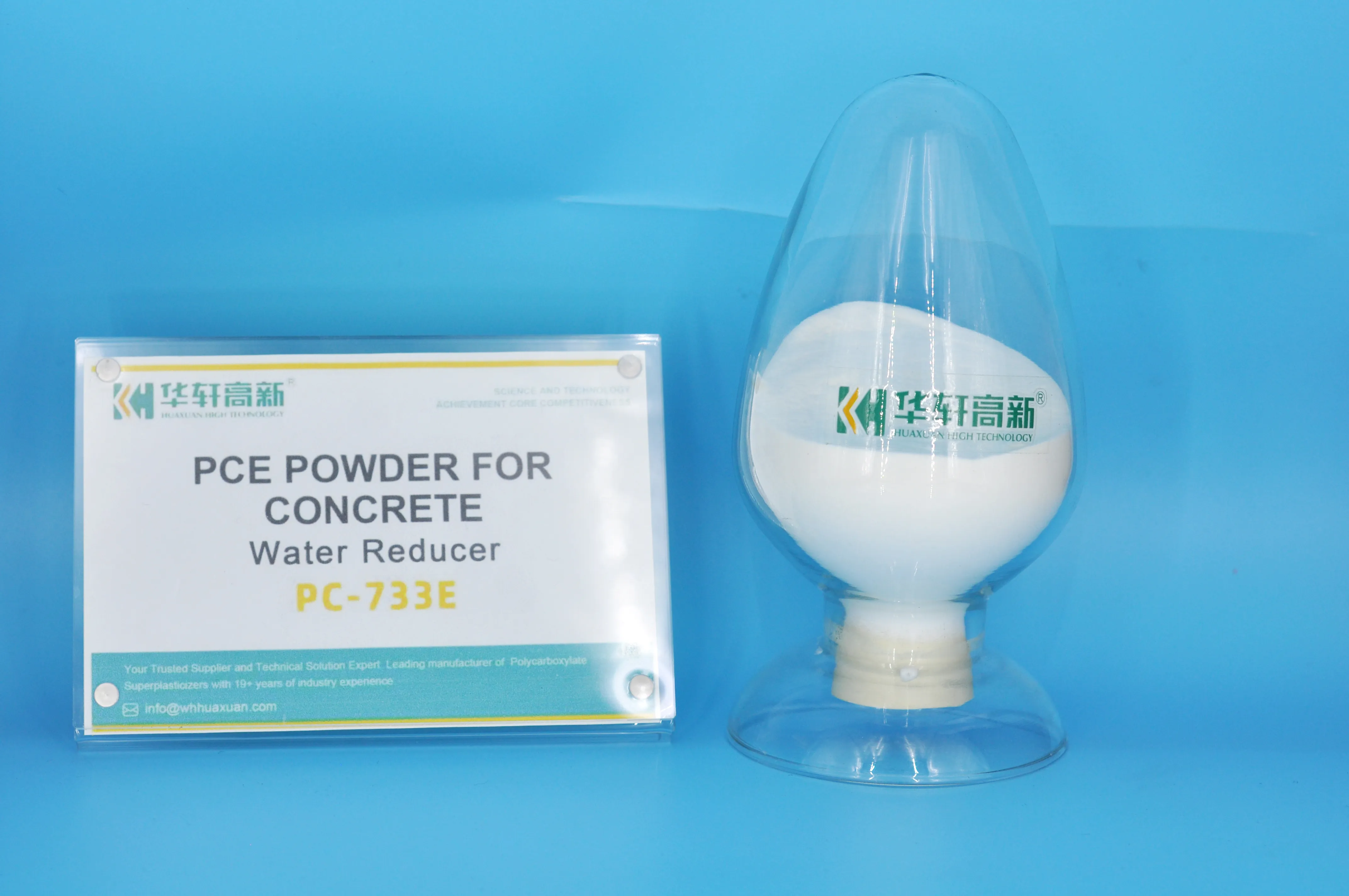
PCE admixtures are commonly supplied as liquid, powder, or flake. The form affects handling, storage, transportation, batching method, and use in dry products, but it does not automatically define performance. A liquid PCE can be designed for water reduction or retention; a powder PCE can be designed for mortar, concrete, gypsum, or specialty blends. The active polymer design still matters.
| Form | Typical Use Logic | Practical Advantages | Key Cautions |
|---|---|---|---|
| Liquid PCE | Ready-mix concrete, precast concrete, batching plants, and projects using liquid admixture dispensers. | Easy dosing in concrete plants, fast dispersion in mixing water, suitable for on-site adjustment when controlled properly. | Water content, solid content, storage temperature, microbial stability, and pump/scale calibration must be managed. |
| Powder PCE | Dry-mix mortar, export supply, bagged products, and cases where liquid water content is undesirable. | Lower transport water, easier dry blending, useful in premixed powder formulations. | Dissolution, dust control, mixing uniformity, moisture protection, and dosage basis need attention. |
| Flake PCE | Concentrated solid form for selected formulation, storage, or transport needs. | Compact form and reduced transported water compared with liquid products. | Dissolution procedure, moisture sensitivity, and handling method must be defined before use. |
For detailed selection between liquid and powder, see PCE Powder vs PCE Liquid: Differences, Selection and Use in Concrete. For powder-specific manufacture, dosage, dissolution, storage, and compatibility, see PCE Powder Superplasticizer: Properties, Dosage, Use and Storage. For flake-specific handling and dissolution, see PCE Flake Superplasticizer: Properties, Applications and Handling.
Typical Performance Indicators to Check
Because polycarboxylate superplasticizers are designed for different performance objectives, comparing products by a single advertised water-reduction value is rarely meaningful. A complete evaluation considers fresh concrete behavior, hardened concrete performance, and compatibility with the actual project materials.
Performance should always be verified using the same cement, supplementary cementitious materials, aggregates, mixing sequence, and curing conditions that will be used in production. Laboratory values obtained under different conditions cannot be directly compared.
| Performance Indicator | Why It Matters | Typical Evaluation Method |
|---|---|---|
| Water reduction | Determines how much mixing water can be reduced while maintaining target workability. | Compare reference and treated mixtures at equal slump or slump flow. |
| Initial slump or slump flow | Indicates fresh workability immediately after mixing. | ASTM C143 (slump) or ASTM C1611 (slump flow for SCC). ASTM C143 | ASTM C1611 |
| Slump retention | Shows how well workability is maintained during transport and placement. | Repeated slump or slump-flow measurements over the required project time. |
| Air content | Excessive or unstable air may influence strength and durability. | ASTM C231 or ASTM C173 depending on aggregate type. |
| Setting time | Helps determine construction scheduling and finishing operations. | Compare initial and final setting under project conditions. |
| Bleeding and segregation | Indicates whether increased flow remains stable. | Visual observation together with fresh concrete testing. |
| Compressive strength | Confirms that the desired water-binder ratio produces the expected hardened performance. | ASTM C39 or equivalent national standard. |
| Compatibility | Confirms that the selected PCE performs consistently with local materials. | Trial batches using actual cement, SCMs, aggregates and admixture dosage. |
Many manufacturers advertise water reduction values such as 25%, 35%, or even higher. These figures may all be technically correct under their respective laboratory conditions, but they cannot be compared directly unless the dosage, cement chemistry, water-binder ratio, aggregate grading, and target workability are identical. For this reason, project-specific testing is more valuable than comparing catalog numbers alone.
Main Applications
PCE technology is used across many cementitious materials because different polymer designs can be optimized for different fresh-state requirements. The same chemistry family may therefore appear in applications ranging from ordinary ready-mixed concrete to ultra-high-performance concrete.
| Application | Primary Requirement | Why PCE Is Commonly Used |
|---|---|---|
| Ready-mixed concrete | Stable workability during transportation. | Allows producers to balance water reduction with slump retention according to delivery time. |
| Precast concrete | High early performance and production efficiency. | Supports low water-binder ratios and good mold filling while maintaining dimensional consistency. |
| Self-consolidating concrete (SCC) | High flow without vibration. | Provides excellent dispersion while helping maintain mixture stability when properly proportioned. |
| Pumped concrete | Smooth pumping through pipelines. | Improves flow characteristics and helps reduce pumping resistance. |
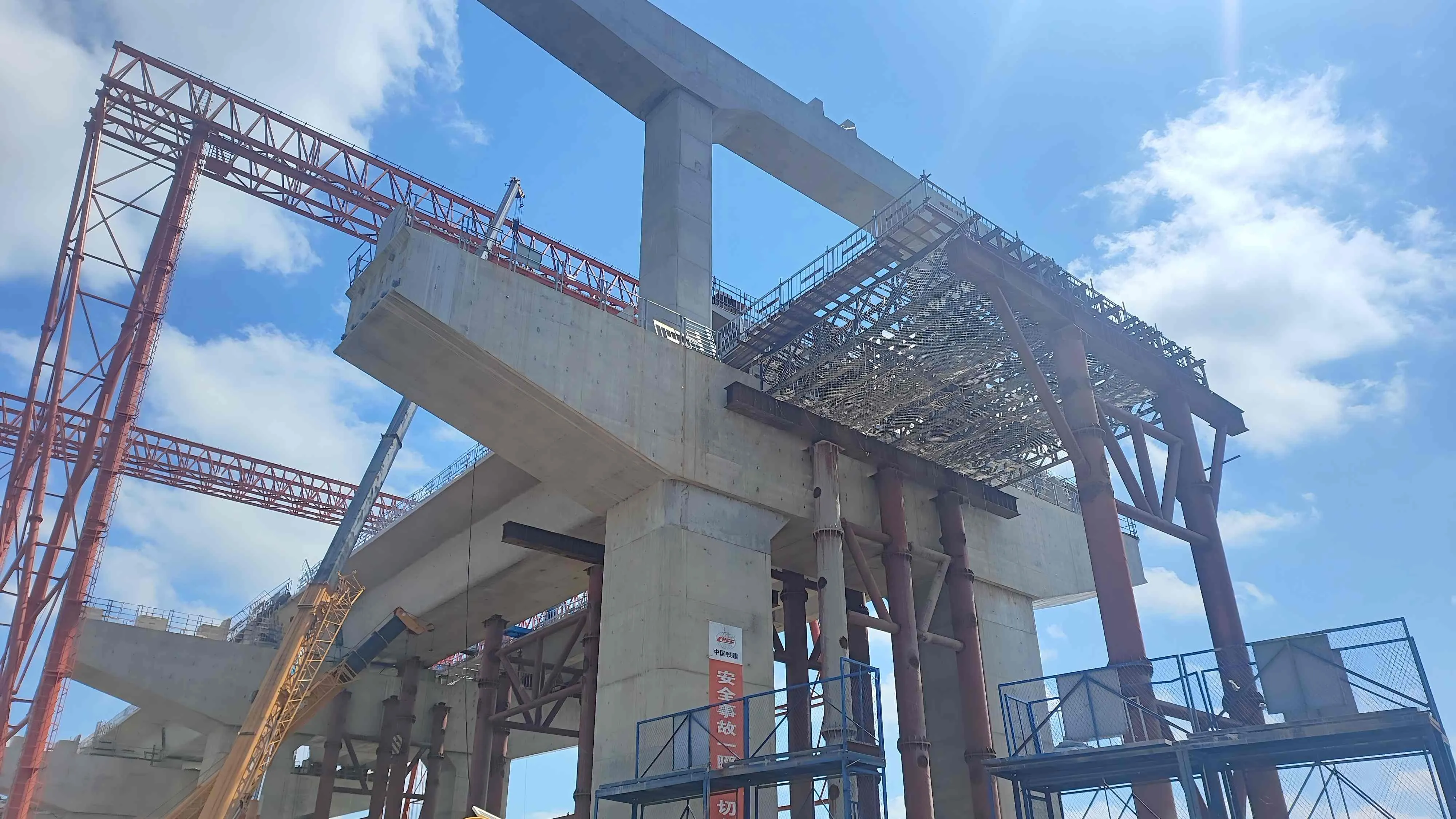
| High-performance concrete (HPC) | Low permeability and high mechanical performance. | Supports reduced water-binder ratios required for durable structural concrete. |
| Ultra-high-performance concrete (UHPC) | Very low water-binder ratio with workable fresh properties. | Special low-viscosity PCE grades are commonly used in dense particle packing systems. |
| Dry-mix mortar | Consistent dispersion after mixing with water. | Powder forms allow incorporation into factory-produced dry blends. |
| Gypsum products | Improved fluidity with controlled setting behavior. | Special formulations can improve workability in gypsum-based materials while maintaining surface quality. |
The optimum PCE for one application is not automatically suitable for another. A formulation developed for long-distance ready-mix transport may perform differently from one intended for rapid precast production or UHPC.
Advantages
Modern PCE technology offers engineers considerable flexibility because its polymer architecture can be adjusted for different performance objectives rather than providing only one fixed behavior.
- High water-reduction potential. Properly selected PCE grades allow lower water-binder ratios while maintaining required workability, supporting higher-density cementitious matrices.
- Excellent workability. Concrete can often be placed, pumped, and compacted more easily without increasing mixing water.
- Adaptable polymer design. Different formulations can emphasize initial flow, slump retention, early strength, viscosity control, or compatibility with particular material systems.
- Broad application range. PCE technology is used in ordinary structural concrete, SCC, HPC, UHPC, precast products, dry-mix mortar, and gypsum-based materials.
- Potential resource optimization. By reducing water demand, PCE may contribute to optimized mix designs when verified through laboratory testing and project qualification.
These advantages should be viewed as performance potential rather than guaranteed outcomes. Final results always depend on the complete concrete mixture rather than the admixture alone.
For More Details about PCE Advantages:
Limitations and Compatibility Risks
No superplasticizer performs independently of the materials surrounding it. A PCE that works exceptionally well with one cement may require dosage adjustment or even reformulation when used with another.
| Potential Issue | Possible Cause | Recommended Approach |
|---|---|---|
| Unexpected slump loss | Cement chemistry, clay contamination, temperature, insufficient dosage, mixing sequence. | Review material compatibility and repeat laboratory trials. |
| Delayed setting | High dosage, retentive formulations, cement-admixture interaction. | Evaluate setting time together with workability requirements. |
| Excessive air content | Material interaction or formulation characteristics. | Measure fresh air content rather than assuming normal values. |
| Bleeding or segregation | Flow exceeds mixture stability. | Adjust mixture proportions instead of relying only on admixture dosage. |
| Variable strength | Water adjustment, curing conditions, inconsistent batching. | Verify compressive strength through standard testing. |
| Poor compatibility | Differences in cement, SCMs, aggregates, or mixing procedure. | Carry out complete compatibility trials before production. |
Several factors deserve particular attention:
- Cement composition, especially sulfate balance and mineral composition.
- Supplementary cementitious materials such as fly ash, slag, silica fume, or limestone powder.
- Clay-bearing manufactured sand or contaminated aggregates, which may adsorb part of the active polymer.
- Ambient temperature and concrete temperature.
- Mixing sequence and mixing energy.
- Actual active solids content of the commercial admixture.
Detailed diagnosis of slump loss, excessive retardation, incompatibility, and corrective actions is covered in Common Problems When Using Polycarboxylate Superplasticizer in Concrete.
How to Choose the Right PCE
Selecting a PCE begins with defining the engineering objective rather than choosing a chemical name. The desired fresh concrete behavior, production method, transport time, and construction schedule should determine the required performance profile.
| If Your Priority Is… | Look For… | Verify By… |
|---|---|---|
| Maximum water reduction | High-water-reduction formulation | Water reduction at target slump. |
| Long transport time | Slump-retention formulation | Slump retention throughout expected delivery. |
| Rapid precast production | Early-strength-oriented formulation | Setting time and early compressive strength. |
| UHPC production | Low-viscosity formulation | Flowability, viscosity, and particle dispersion. |
| Dry-mix manufacturing | Powder PCE | Dispersion after water addition and storage stability. |
| Gypsum products | Gypsum-compatible formulation | Fluidity together with controlled setting. |
| Difficult aggregate conditions | Compatibility-adjusted formulation | Performance using actual local materials. |
Equally important is deciding the physical form. Liquid, powder, and flake products each suit different manufacturing processes and logistics. Detailed selection guidance is available in
PCE Powder vs PCE Liquid: Differences, Selection and Use in Concrete and PCE Flake Superplasticizer: Properties, Applications and Handling.
Market Outlook
Testing Before Use
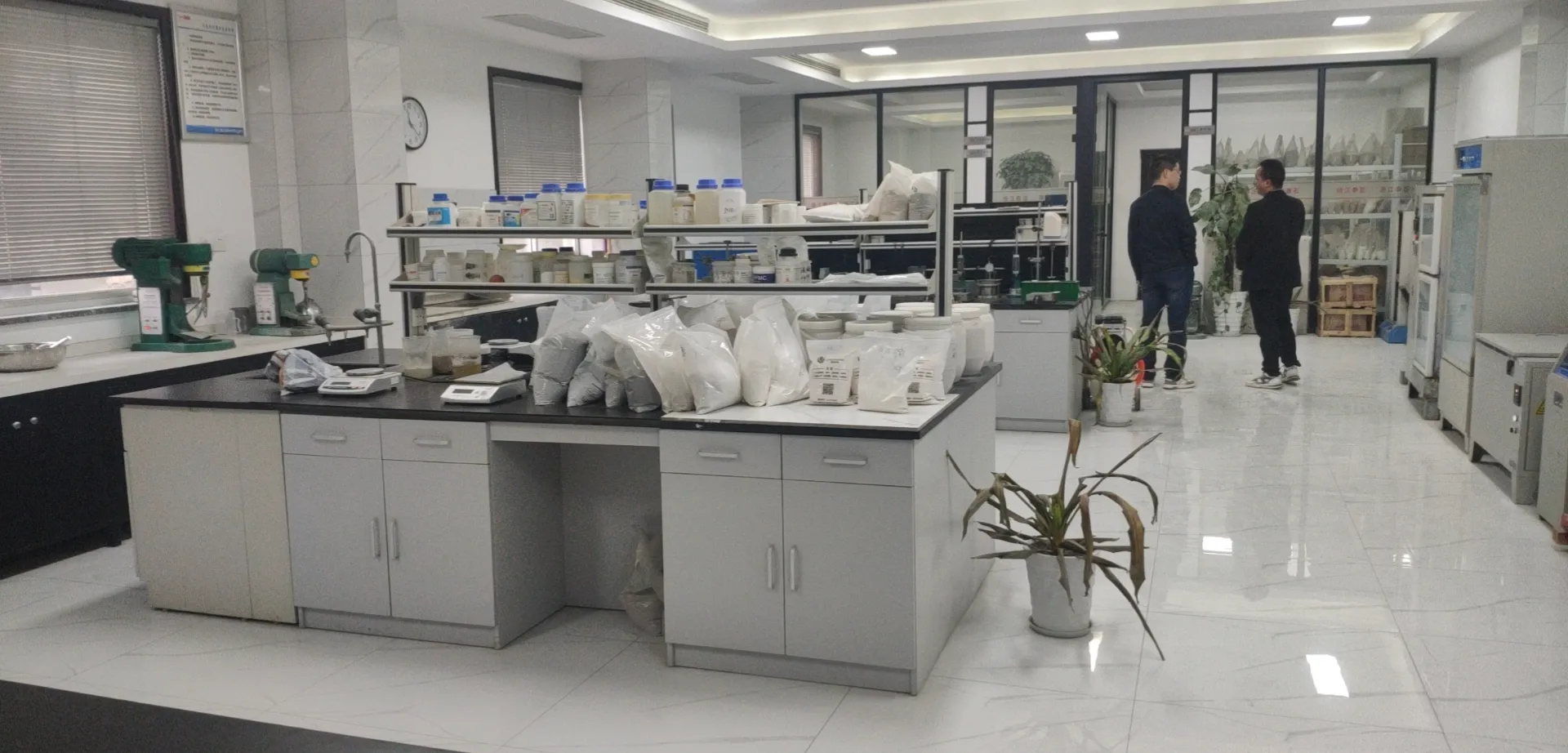
Before introducing a new PCE into production, a structured trial program should be completed using the actual project materials rather than laboratory reference materials alone.
A practical evaluation normally includes:
- Preparation of a reference mixture without the new admixture.
- Multiple dosage levels rather than a single dosage point.
- Measurement of slump or slump flow immediately after mixing and throughout the required working period.
- Observation of bleeding, segregation, finishability, and pumping behavior where applicable.
- Measurement of air content and setting characteristics.
- Compressive strength testing at the specified project ages.
- Confirmation that production batching equipment can deliver the required dosage consistently.
Documenting these results provides a more reliable basis for admixture selection than relying on published technical data obtained under different laboratory conditions.
For the Dosage and Adding Method, you can find more details in the following Articals
Industry Naming and Functional PCE Grades
In procurement and technical discussions, polycarboxylic acid water reducer, polycarboxylate water reducer, polycarboxylate ether superplasticizer, and PCE high-range water reducer are commonly used for the same broad technology family. “Polycarboxylic acid” is an industry translation rather than a statement that the supplied product is simply a free acid. Specifications should identify the product form, active content, intended performance, and test method instead of relying on the name alone.
Functional grades include high-water-reduction, slump-retention, early-strength, anti-clay, viscosity-reduction, UHPC, dry-mix, and gypsum-compatible versions. These labels describe a formulation target, not a universal guarantee. A grade optimized for long slump retention may not be the best choice for rapid precast cycles, and a dry-mix powder cannot be substituted for a liquid grade on an equal delivered-weight basis. Selection must be verified with the project’s cement, supplementary materials, aggregate fines, temperature, and other admixtures.
Frequently Asked Questions
Is PCE the same as a superplasticizer?
PCE is one family of superplasticizers. Other high-range water-reducing chemistries include sulfonated naphthalene formaldehyde (SNF/PNS) and sulfonated melamine formaldehyde (SMF).
Does PCE always increase concrete strength?
No. PCE helps create the conditions for higher strength by allowing a lower water-binder ratio while maintaining workability. Final strength still depends on mixture design, curing, materials, and construction quality.
How much water reduction can PCE provide?
There is no single universal value. Water reduction depends on the specific PCE formulation, dosage, cement chemistry, aggregate characteristics, water-binder ratio, and target workability. Published values should always be interpreted together with their test conditions.
Can one PCE be used for every concrete project?
Usually not. Different projects may require different balances of water reduction, slump retention, early strength, viscosity, or compatibility with local materials.
Is liquid PCE better than powder PCE?
Neither form is universally better. Liquid products are common in ready-mixed concrete, while powder products are often preferred for dry-mix systems and international transportation. The appropriate choice depends on manufacturing and application requirements.
Why is compatibility testing necessary?
Concrete performance is influenced by the interaction between the admixture and the complete mixture. Small differences in cement, supplementary materials, aggregate quality, temperature, or batching sequence can significantly change fresh and hardened properties.
Conclusion
Polycarboxylate superplasticizer is a family of modern high-range water-reducing admixtures rather than a single universal product. Its primary role is to help concrete achieve the required workability with less mixing water, making it possible to design mixtures that combine efficient placement with lower water-binder ratios.
Successful use depends less on choosing “a PCE” than on selecting a formulation that matches the project’s performance objectives and verifying that it is compatible with the actual cementitious system. Careful laboratory evaluation, field validation, and quality control remain essential to achieving consistent concrete performance.