July 30, 2026

Quick Answer
The correct way to add superplasticizer is usually:
- Calculate dosage based on cementitious material weight.
- Prepare the base mix with cement, aggregates, and part of the water.
- Add the superplasticizer using the appropriate method.
- Continue mixing for approximately 2–5 minutes.
- Wait for adsorption and flow stabilization.
- Fine-tune consistency gradually if needed.
- Place concrete without unnecessary delay.
Step-by-step process for adding superplasticizer to concrete correctly, from dosage calculation to final concrete placement.
Quick checklist:
| Item | Do | Avoid |
|---|---|---|
| Dosage Basis | Calculate by binder weight | Dose by total concrete weight |
| Mixing Time | Mix long enough | Judge slump immediately |
| Consistency Adjustment | Adjust gradually | Add large correction doses |
| Activation Timing | Allow activation time | Overdose too early |
How to Add Superplasticizer to Concrete Correctly
Correct addition sequence matters.
Even a good superplasticizer may deliver poor performance if it is added at the wrong time, mixed unevenly, or used with incorrect water control.
 Polycarboxylate superplasticizer powder dosage measurement during concrete admixture laboratory testing.
Step 2 — Prepare Base Mix
Prepare the concrete base mix before introducing the superplasticizer.
The objective is to create a uniform starting system so the admixture can disperse cement particles efficiently.
Cement
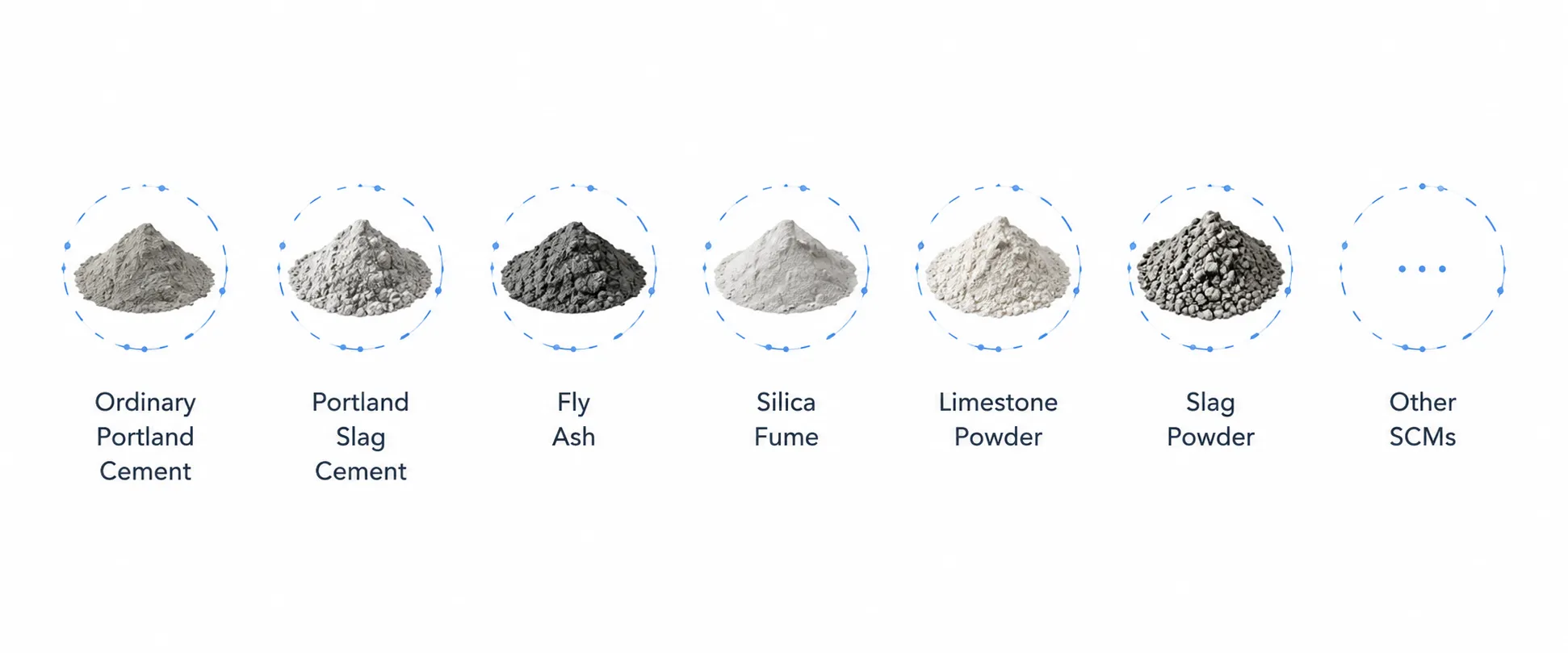 Customized PCE formulations compatible with different global cement systems and supplementary cementitious materials.
Add cement (and SCMs if used) according to the designed binder content.
Typical binder components may include:
- Portland cement
- fly ash
- slag cement
- silica fume
Because superplasticizers act primarily on cement particles, consistent binder measurement is critical.
Poor batching accuracy can significantly affect:
- slump
- water demand
- dosage efficiency
Aggregates
 Coarse aggregate gravel used as structural skeleton in precast concrete production
Load coarse and fine aggregates according to the mix design.
Aggregate condition strongly influences admixture performance.
Check for:
- grading consistency
- sand quality
- moisture content
- clay contamination
Poorly graded or clay-contaminated aggregates often increase admixture demand and may cause abnormal slump behavior.
Ready-mix plants commonly perform aggregate moisture correction to maintain stable water content.
 Laboratory preparation of aggregates for concrete admixture and cement compatibility testing.
Partial water addition
Do not always add the full mixing water immediately.
A common industrial practice is to introduce:
approximately 60–80% of total water first
, followed by the superplasticizer and remaining water later.
This approach helps:
- improve dispersion uniformity
- reduce localized overdosing
- improve workability control
Common addition methods include:
| Method | Typical Practice |
|---|---|
| Through batching water | Common for liquid PCE |
| Pre-dissolved in water | Common for powder systems |
| Delayed addition after initial mixing | Used for slump optimization |
Many producers begin mixing the base materials first, then introduce the superplasticizer 30–60 seconds after mixing starts, allowing the admixture to distribute more evenly through the cement system.
After addition, adequate mixing time (typically 2–5 minutes) is usually required before evaluating slump or flowability.
Step 3 — Choose the Addition Method
Superplasticizers can be introduced into concrete using several methods. The best method depends on:
product form (liquid or powder)
batching equipment
concrete application
mixing procedure
The goal is always the same: achieve uniform dispersion without overdosing or uneven distribution.
 Key factors affecting how superplasticizers are introduced into concrete, including liquid or powder form, equipment, application type, and mixing method.
When using PCE flake, dissolve it according to the supplier’s instructions before batching and calculate dosage from the resulting active-solids concentration.
Method A — Add directly into the concrete mix

This is the most common method for ready-mix, pumped, and precast concrete.
The superplasticizer is added directly into the mixer after the base materials and part of the mixing water have been introduced.
Typical sequence:
- Add cement and aggregates.
- Add 60–80% of total water.
- Start mixing.
- Add superplasticizer directly into the wet mix.
- Continue mixing for 2–5 minutes.
This method is widely used for liquid PCE systems because it is simple and integrates easily into batching plant dosing equipment.
Advantages:
- fast operation
- suitable for automated plants
- easy dosage control
However, poor mixing or immediate full-water addition may reduce dispersion efficiency.
Direct addition method for superplasticizer in ready-mix, pumped, and precast concrete production using liquid PCE systems.
Method B — Pre-Dissolve in Water
 Pre-dissolving superplasticizer in water before mixing can improve dispersion uniformity, dosage accuracy, and dissolution speed in powder systems.
In this method, the superplasticizer is first diluted or dissolved in mixing water before entering the concrete.
This is common for:
- powder PCE products
- laboratory batching
- small-scale production
- mortar systems
Typical sequence:
- Measure required admixture amount.
- Dissolve or dilute into mixing water.
- Stir until evenly dispersed.
- Add solution into the mixer.
Pre-dissolving can improve:
- dispersion uniformity
- dosage accuracy
- dissolution speed for powder systems
Many technical guides recommend this approach when using spray-dried powder superplasticizers.
Method C — Dry Blend Method (Powder Systems)
 Dry blend method for powder PCE systems used in dry-mix mortar, self-leveling compounds, tile adhesives, repair mortars, and grout systems.
Dry blending is commonly used in dry-mix mortar and powder admixture systems.
The powder superplasticizer is blended directly with dry ingredients before water addition.
Typical applications:
- dry-mix mortar
- self-leveling compounds
- tile adhesives
- repair mortars
- grout systems
Typical sequence:
- Dry blend powder PCE with cement and fillers.
- Mix until uniform distribution is achieved.
- Add water during final mixing.
- Continue mixing until desired workability develops.
Advantages:
- suitable for factory dry-mix production
- good storage compatibility
- convenient for packaged mortar products
Because powder superplasticizers often have 95–98% solid content, dry blending allows very low dosage use while maintaining accurate distribution.
Regardless of the method selected, sufficient mixing time is critical before evaluating slump, flowability, or workability.
Step 4 — Continue Mixing Properly
After adding the superplasticizer, proper mixing is critical.
Many performance problems that appear to be “dosage issues” are actually caused by insufficient mixing time or uneven dispersion.
Superplasticizers require time to adsorb onto cement particles and fully develop their water-reducing effect.
Minimum Mixing Time
Concrete should continue mixing after admixture addition before evaluating slump or flowability.
A practical industry guideline is:
minimum 2–5 minutes of continued mixing after superplasticizer addition
depending on:
- mixer type
- batch size
- admixture chemistry
- product form (liquid vs powder)
Premature slump checking may lead operators to mistakenly add more admixture and cause overdosing.
Mechanical Mixer
For laboratory batches, countertop systems, and small-scale production, mechanical drill mixers or paddle mixers are commonly used.
Typical practice:
- add admixture
- continue mixing for approximately 2–3 minutes
- evaluate consistency after full dispersion
Mechanical mixers can develop workability quickly, but uneven mixing may occur if the batch is too dry or overloaded.
 Mechanical mixers commonly used for laboratory batches, small-scale production, mortar systems, and countertop concrete mixing applications.
 A technician conducting concrete admixture mixing and performance evaluation in a laboratory.
 Mechanical mixing of cementitious grout material for construction admixture testing.
Mortar Mixer
Mortar mixers and forced mixers are common in:
- dry-mix mortar
- self-leveling compounds
- grout systems
- small concrete batches
Because powder admixtures need time to disperse, mixing duration is often slightly longer.
Typical practice:
3–5 minutes total mixing after addition
Many powder PCE suppliers recommend longer mixing windows to ensure full dissolution and uniform particle distribution.
 Mortar mixer commonly used for dry-mix mortar, grout systems, self-leveling compounds, and small concrete batch production.
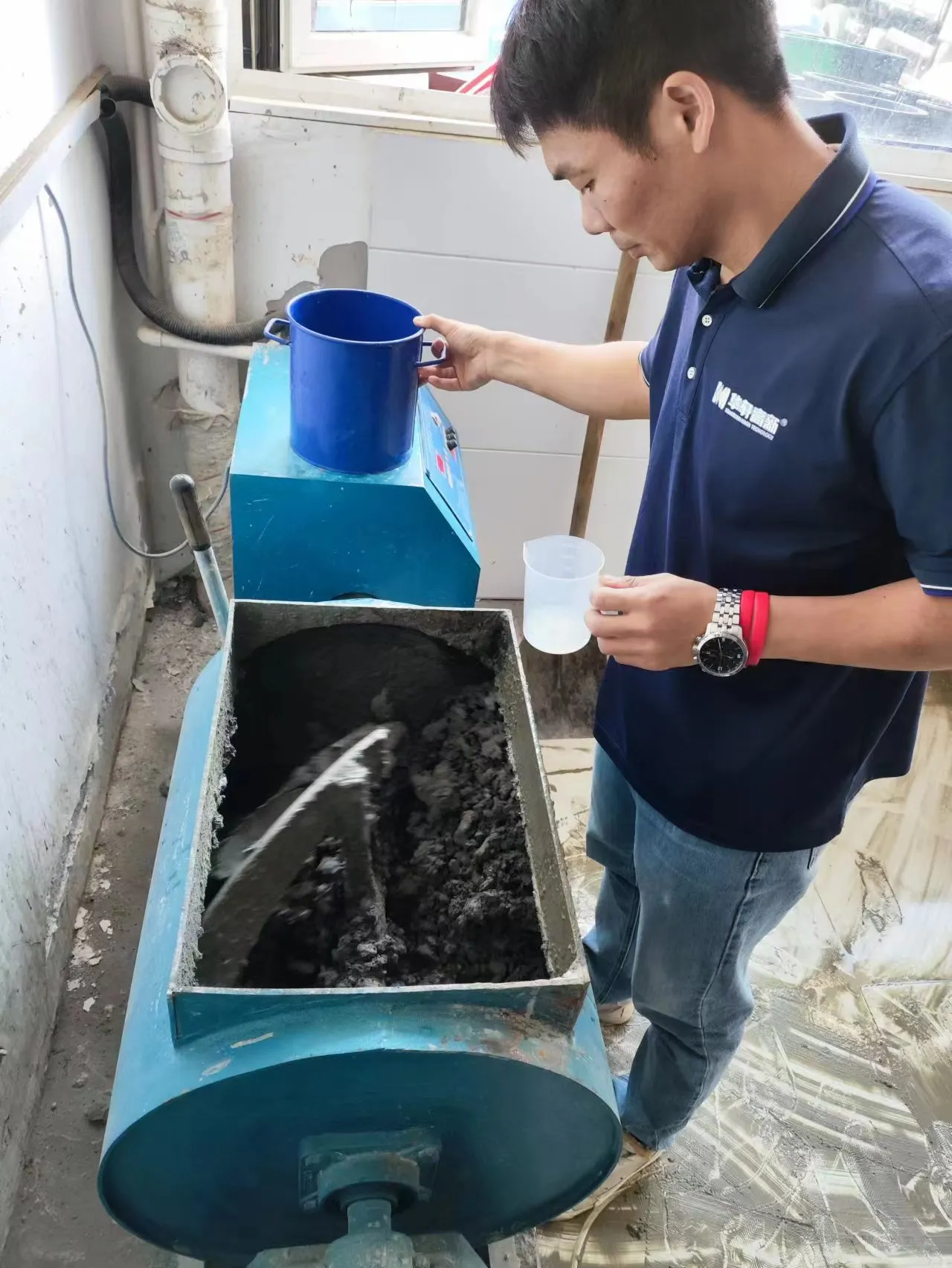 Technician performing concrete mixing and admixture performance testing in a construction materials laboratory.
Delayed Activation Behavior
Superplasticizers do not always show their full effect immediately after addition.
A short delay commonly occurs because the admixture must:
- disperse through the mix
- adsorb onto cement particles
- break down cement flocculation
This delayed activation behavior is especially noticeable with:
- powder PCE systems
- low-water mixes
- dry-mix mortar formulations
A common field mistake is:
add superplasticizer → check too early → assume dosage is insufficient → add more.
This often results in:
- excessive slump
- segregation
- instability
- overdosing problems
For this reason, many producers wait until the planned mixing cycle is complete before making final workability adjustments.
Step 5 — Wait Before Judging Workability
Do not judge slump, flowability, or consistency immediately after adding the superplasticizer.
Many superplasticizers require a short activation period before their full water-reducing effect becomes visible. Evaluating the mix too early is one of the most common causes of accidental overdosing.
2–5 Minute Adsorption Period
After addition, superplasticizer molecules need time to:
- disperse through the concrete matrix
- adsorb onto cement particles
- break apart cement flocculation
- release trapped mixing water
A practical industry guideline is to allow approximately 2–5 minutes of continued mixing before making final workability judgments.
This behavior is especially important for:
- PCE powder systems
- low-w/c concrete
- dry-mix mortar
- SCC and high-performance mixes
Flow Stabilization
Concrete workability often changes during the first few minutes after admixture addition.
It is common to observe:
initial stiff appearance → gradual flow increase → stabilized workability.
For this reason, many laboratories and batching plants evaluate:
- final slump
- slump flow
- rheology stability
only after the planned mixing cycle is completed.
Checking too early can lead to unnecessary re-dosing, which increases the risk of:
- excessive slump
- segregation
- bleeding
Step 6 — Fine-Tune Consistency if Needed
After the full mixing cycle is completed, check whether the concrete has reached the target workability.
If slump, flowability, or pumpability is still outside the required range, make controlled adjustments rather than large dosage corrections.
Incremental Adjustment
Adjust the mix gradually.
A common field practice is to modify dosage in small increments instead of making a large one-time correction.
Typical adjustment range:
0.02–0.10% by binder weight per adjustment step
Depending on admixture sensitivity and application.
This is particularly important in:
- SCC
- high-strength concrete
- low-w/c systems
- dry-mix mortar
where small dosage changes can produce large workability shifts.
Small-Step Dosing
Avoid adding a large extra amount immediately after the first workability check.
Instead:
- add a small correction dose
- continue mixing
- allow stabilization
- re-evaluate consistency
This approach reduces the risk of:
- excessive slump
- segregation
- bleeding
- over-retardation
In practical batching operations, small-step dosing is usually safer than single large corrections.
Observe–Adjust Cycle
 Observe–adjust–recheck cycle used to fine-tune concrete slump, flowability, and workability without overcorrection.
Fine-tuning should follow an observe → adjust → recheck workflow.
Typical sequence:
- Measure slump / flowability.
- Compare with target requirement.
- Apply small adjustment if necessary.
- Mix for another short period.
- Re-measure before making additional corrections.
The goal is to reach stable workability without exceeding the system’s saturation point.
This iterative approach is widely used in:
- concrete laboratories
- ready-mix plants
- SCC optimization
- dry-mix formulation development.
Step-7: Place Concrete Without Delay
Once the target workability has been achieved, the concrete should be placed as soon as practical.
Fresh concrete containing superplasticizer does not maintain identical flow properties indefinitely. Slump, rheology, and workability can gradually change because hydration continues after mixing.
Delays between batching and placement may increase the risk of:
- slump loss
- reduced pumpability
- inconsistent flowability
- finishing difficulties
This is particularly important for:
- hot weather concrete
- pumped concrete
- SCC
- long-distance transport mixes
If extended working time is required, slump-retention formulations or adjusted admixture strategies may be necessary rather than relying on excessive re-dosing.
Good practice is:
achieve target workability → verify consistency → place concrete promptly.
 Flowability and workability evaluation of cementitious grout material during construction material testing.
Liquid vs Powder Addition Differences
Liquid and powder superplasticizers are not always added in the same way.
 PCE superplasticizer liquid and powder used in concrete admixture and dry mix mortar applications.
The preferred method depends on product form, mixing equipment, and application type.
| Topic | Liquid Superplasticizer | Powder Superplasticizer |
|---|---|---|
| Common Application | Ready-mix concrete Precast concrete Pumping systems | Dry-mix mortar Self-leveling systems |
| Typical Addition Method | Direct addition Batching water dosing | Pre-dissolve in water Dry blend method |
| Mixing Sensitivity | Moderate | Higher |
| Activation Behavior | Faster | Often slightly delayed |
| Common Solids Level | 40–50% | 95–98% |
Liquid PCE systems are commonly dosed directly into the mixer or through batching water systems.
Powder systems are more frequently:
- dissolved in water before mixing
- dry blended into powder formulations
- used in mortar and dry-mix production.
When Should Superplasticizer Be Added?
Superplasticizer can be added at different stages of mixing depending on the product and batching process.
| Addition Timing | Typical Use |
|---|---|
| Before mixing | Possible in some systems |
| During mixing | Most common practice |
| Delayed addition | Often improves dispersion |
| After initial mixing | Used for slump correction |
Many producers add the superplasticizer 30–60 seconds after mixing starts, after cement, aggregates, and part of the water are already moving through the system.
Delayed addition can improve:
- dispersion efficiency
- slump development
- dosage stability
However, timing should follow supplier recommendations and plant practice.
 Concrete material mixing test for admixture performance and formulation evaluation.
Common Mistakes When Adding Superplasticizer
Even the correct dosage can perform poorly if the addition procedure is wrong.
Common field mistakes include:
| Mistake | Possible Result |
|---|---|
| Adding all water immediately | Weaker dispersion |
| Checking slump too early | Accidental overdosing |
| Large one-shot correction | Segregation Bleeding |
| Insufficient mixing | Unstable workability |
| Wrong addition method | Poor performance |
| Ignoring compatibility | Rapid slump loss |
Many apparent “dosage problems” are actually mixing sequence or compatibility problems.
How to Add Superplasticizer in Small Batches
Small-batch concrete often behaves differently from industrial plant production because mixing energy and dispersion are lower.
Small Mixer Batches
For bucket mixers, paddle mixers, or portable mixers:
- Calculate dosage carefully
- Use partial water addition
- Mix thoroughly after addition
- Allow 2–5 minutes before judging consistency.
Pre-dissolving the admixture is often helpful for small batches.
Countertop Concrete
Countertop mixes frequently use low-water, high-performance formulations.
A common practice is:
Start with a relatively stiff mix
Add small amounts of superplasticizer
Continue mixing until flow develops.
Because activation may be delayed, avoid immediately adding more admixture.
Lab Mixing
Laboratory batching usually uses incremental dosing and controlled observation.
Typical workflow:
- Prepare baseline mix
- Add measured dosage
- mix thoroughly
- observe slump or flow behavior
- Adjust gradually if necessary.
Small dosage changes can create large workability shifts in lab-scale batches.
Need Help Choosing the Right Superplasticizer or Addition Method?
Different cement systems, aggregate quality, mixer types, and applications may require different superplasticizer formulations and dosing strategies.
Whether you are working with ready-mix concrete, precast concrete, SCC, dry-mix mortar, self-leveling, or powder admixture systems, our technical team can help you optimize:
✔ Product selection
✔ Dosage recommendation
✔ Addition sequence & mixing method
✔ Cement compatibility testing
✔ Customized formulation solutions
Contact us for technical support, product recommendations, or sample evaluation for your concrete or mortar application.
Related Reading
- What Is a Superplasticizer?
- How Does Superplasticizer Work in Concrete?
- How to Add Superplasticizer to Concrete
- Does Superplasticizer Increase Compressive Strength?
- Types of Superplasticizers in Concrete
- Superplasticizer vs Water Reducer: Key Differences and Uses
- What Is Polycarboxylate (PCE) Superplasticizer?
- PCE vs Naphthalene Superplasticizer: Which Should You Choose?