July 30, 2026
Quick Answer
Concrete admixtures can be classified in two main ways: by standard type and by engineering function. Under ASTM C494, chemical admixtures are grouped into Type A, B, C, D, E, F, G, and S, covering water reducers, retarders, accelerators, high-range water reducers, and special-performance admixtures.
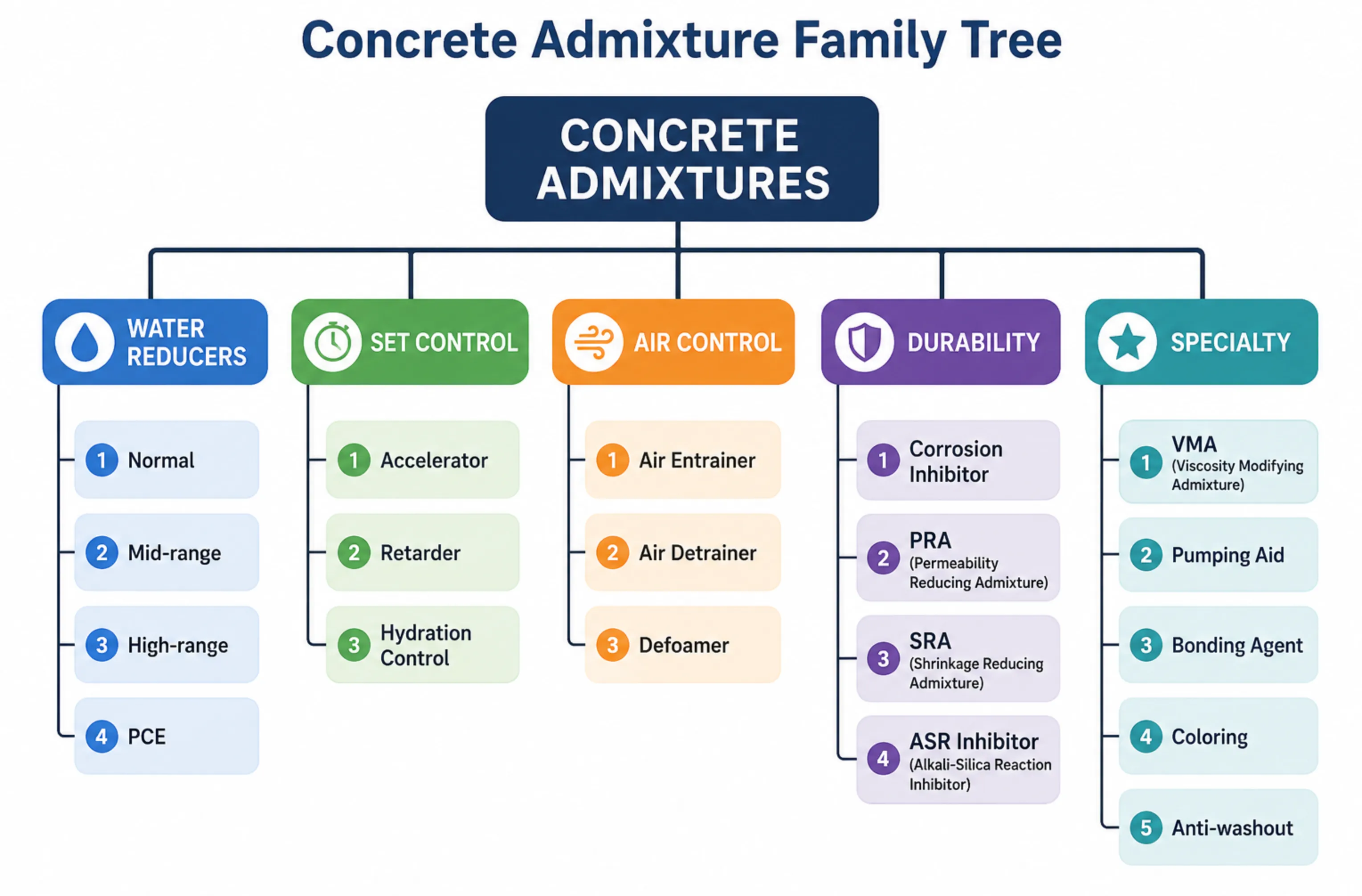
In practical concrete technology, admixtures are more commonly grouped into functional families such as water-reducing admixtures, set-control admixtures, air-control admixtures, durability admixtures, and specialty admixtures. Each type solves a different concrete problem, such as reducing water demand, extending workability, improving early strength, controlling air content, reducing permeability, or improving pumpability.
Among modern chemical admixtures, polycarboxylate ether superplasticizers, also known as PCE superplasticizers, are one of the most important types because they provide high water reduction, strong cement particle dispersion, and excellent slump retention for ready-mix concrete, precast concrete, SCC, UHPC, and high-performance concrete.
Article Outline:
- ASTM C494 Types of Concrete Admixtures
- Functional Classification of Concrete Admixtures
- Chemical Admixtures vs Mineral Admixtures
- Classification by Working Mechanism
- How Different Types of Admixtures Work Together
- Frequently Asked Questions
- Conclusion
Why Are Concrete Admixtures Classified into Different Types?
There is no single concrete admixture that can simultaneously maximize workability, accelerate strength development, delay setting, improve freeze–thaw durability, reduce shrinkage, and protect reinforcing steel.
Many of these objectives require different—and sometimes opposite—mechanisms. For example, an accelerator speeds up cement hydration, while a retarder deliberately slows it. Likewise, an air-entraining agent intentionally introduces microscopic air bubbles to improve freeze–thaw resistance, whereas a defoamer removes unwanted foam or excess air from the system.
Because modern concrete must satisfy different performance requirements under different construction conditions, admixtures are classified according to the function they perform rather than their chemical composition.
As concrete technology has evolved, admixtures have expanded beyond simply improving workability. Today they are designed to optimize performance throughout the entire life cycle of concrete—from batching and transportation to placement, hardening, and long-term durability. Most admixtures therefore fall into one or more of the following performance categories:
Hardened concrete performance — increase strength, reduce permeability, and improve surface quality.
Durability enhancement — improve resistance to freeze–thaw cycles, chloride penetration, corrosion, shrinkage, sulfate attack, and alkali–silica reaction (ASR).
Construction efficiency — accelerate or delay setting to accommodate weather conditions, transportation distance, production schedules, or precast manufacturing.
Special performance — provide waterproofing, underwater placement, self-consolidation, pumping performance, coloring, or other project-specific functions.
Rather than viewing admixtures as isolated products, it is more useful to think of them as solutions to specific engineering problems. The desired concrete performance determines the appropriate admixture system, and multiple admixtures are often combined to achieve several objectives simultaneously. For example, a high-rise project may require a PCE superplasticizer for pumping, a slump-retaining admixture for long transportation, and a corrosion inhibitor for long-term durability. This performance-oriented approach is also reflected in ASTM standards, which classify chemical admixtures primarily according to their intended function.
| Performance Requirement | Typical Admixture |
|---|---|
| Improve workability | Water Reducer / Superplasticizer |
| Maintain slump during transport | Retarder / Slump-Retaining Admixture |
| Accelerate early strength | Accelerator |
| Improve freeze–thaw durability | Air-Entraining Agent |
| Reduce drying shrinkage | Shrinkage-Reducing Admixture (SRA) |
| Protect reinforcing steel | Corrosion Inhibitor |
| Reduce water penetration | Permeability-Reducing Admixture (PRA) |
| Improve pumpability or SCC performance | PCE Superplasticizer + Viscosity Modifying Admixture (VMA) |
Chemical Admixtures vs Mineral Admixtures
Although concrete admixtures are often divided into chemical admixtures and mineral admixtures, these two categories modify concrete in different ways.
Chemical admixtures are typically added in small dosages—usually less than 5% by mass of cement—to control the behavior of fresh or hardened concrete. Their primary purpose is to improve workability, regulate setting time, reduce water demand, increase durability, or provide other specialized performance.
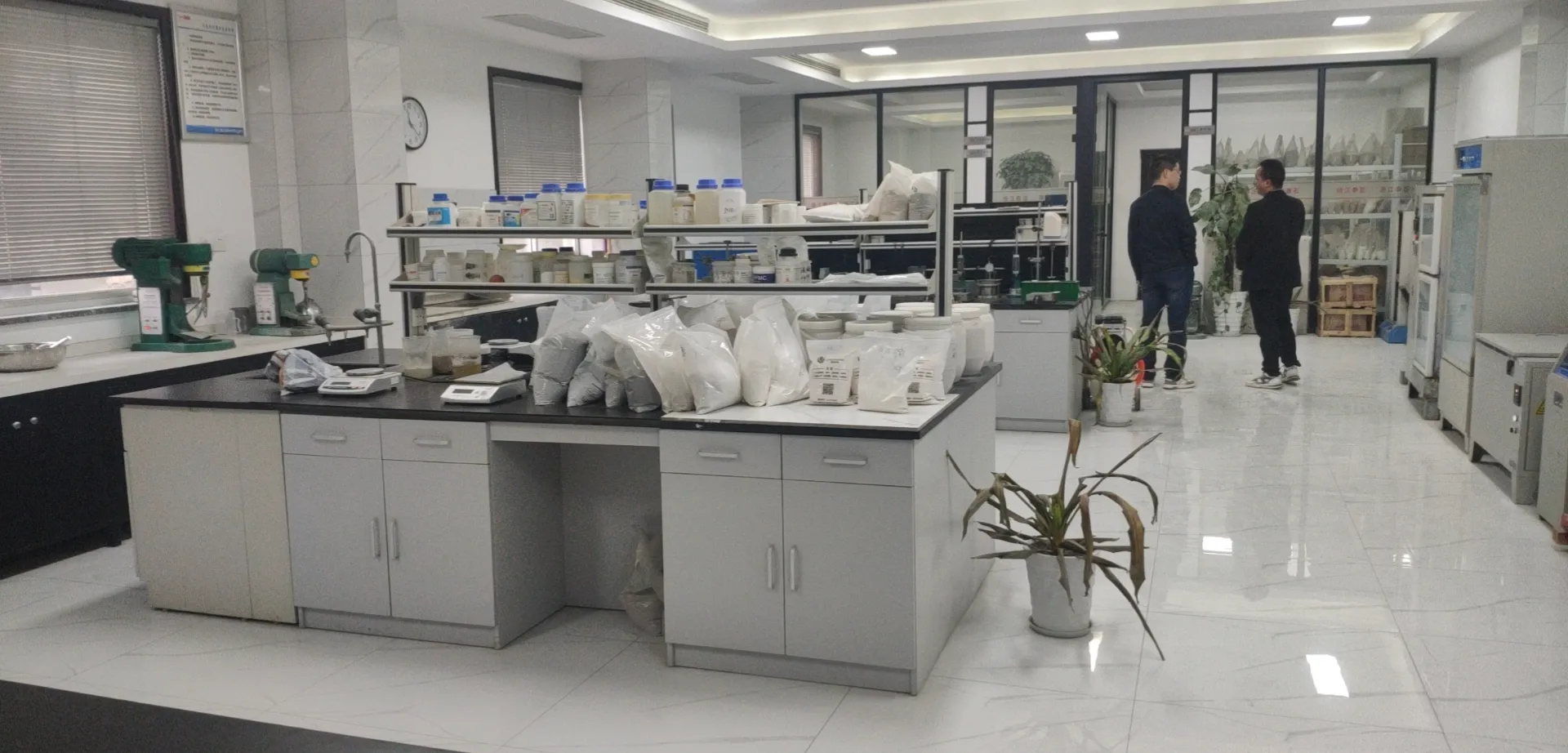
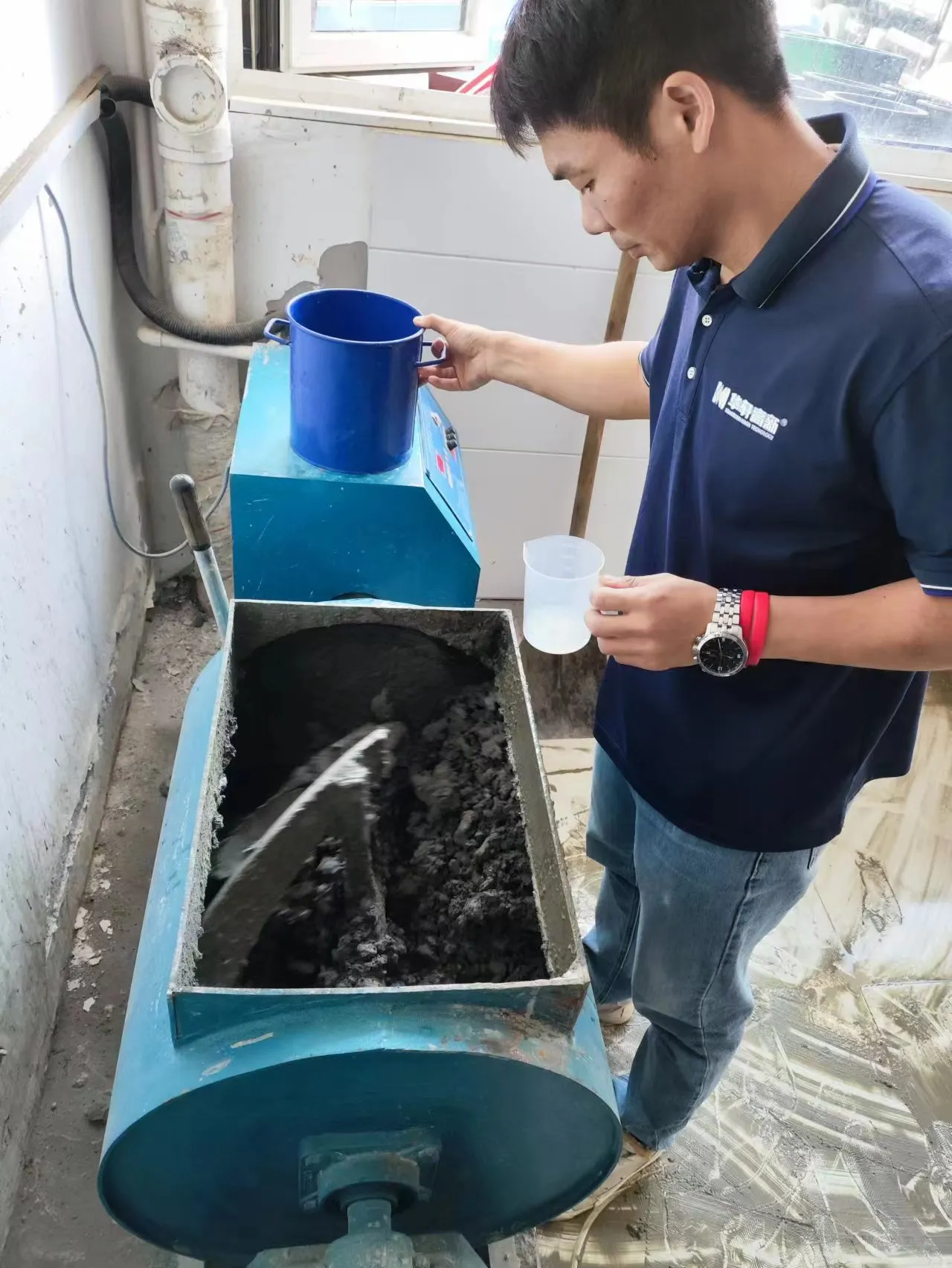 Technician performing concrete mixing and admixture performance testing in a construction materials laboratory.
Mineral admixtures, more accurately known today as supplementary cementitious materials (SCMs), are added in much larger quantities and partially replace Portland cement. Instead of simply modifying concrete behavior, SCMs participate in cement hydration and improve the microstructure of hardened concrete. Common examples include fly ash, ground granulated blast-furnace slag (GGBFS), silica fume, and metakaolin.
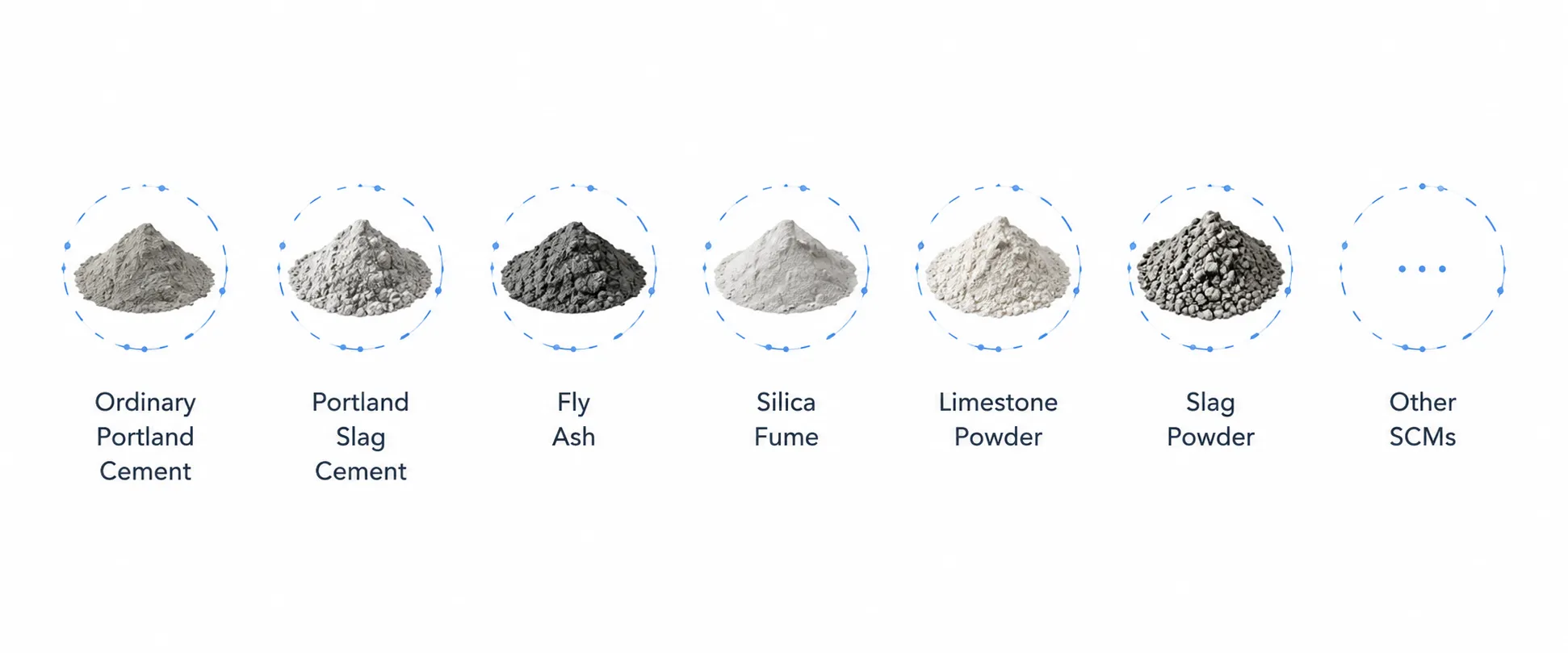
The distinction is reflected in modern standards. ASTM C494 classifies chemical admixtures according to their function, while SCMs are covered by separate ASTM specifications such as ASTM C618 for fly ash and ASTM C989 for slag cement. Although SCMs are not classified as chemical admixtures under ASTM, many engineers still refer to them as “mineral admixtures” in everyday practice.
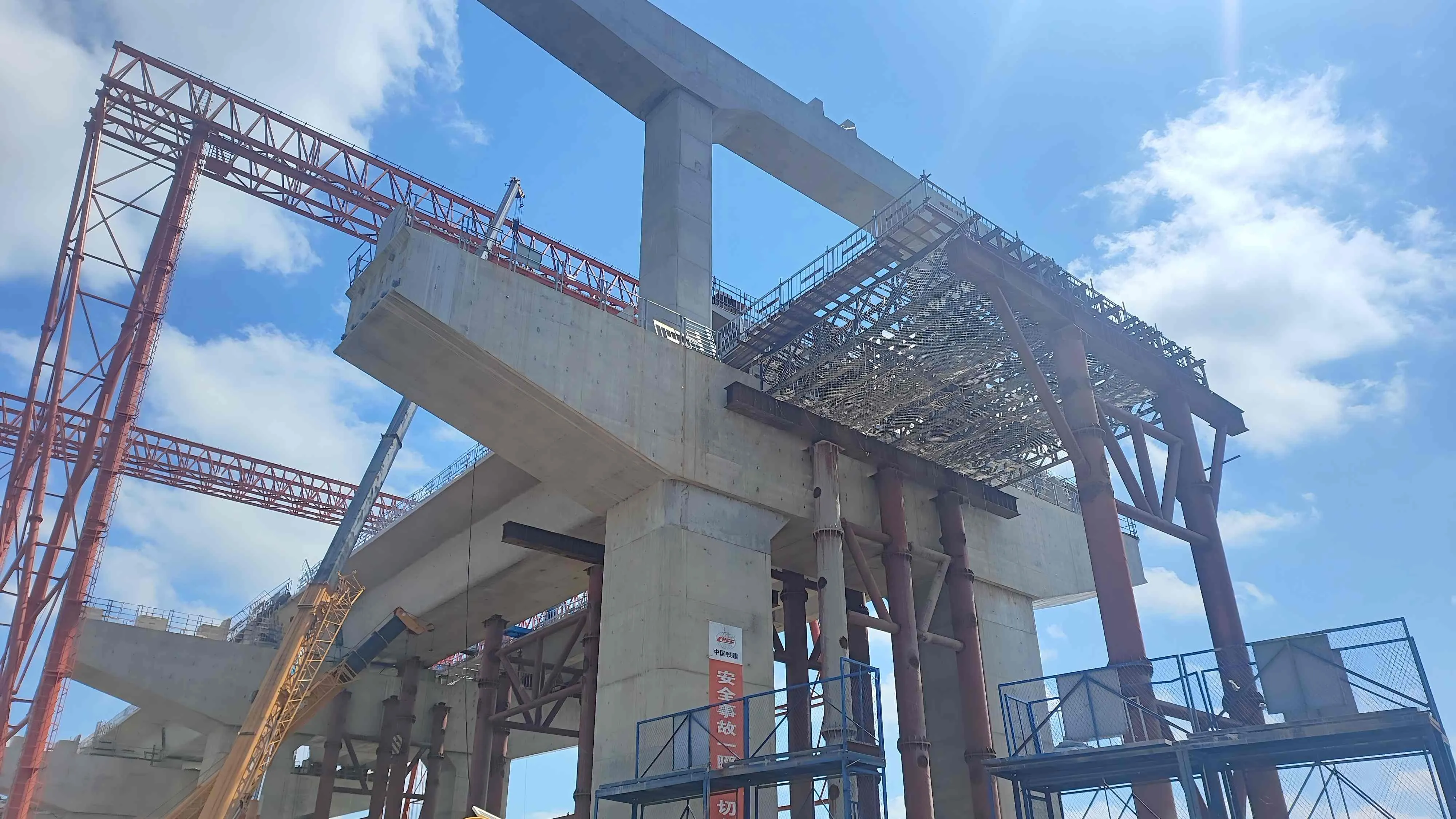
Today, high-performance concrete usually combines both categories. A modern bridge or high-rise project may use a PCE superplasticizer to reduce water demand while simultaneously incorporating fly ash or slag to reduce permeability, lower hydration heat, and decrease the carbon footprint of the concrete.
| Feature | Chemical Admixtures | Mineral Admixtures (SCMs) |
|---|---|---|
| Typical dosage | Small (generally <5% of cement) | Partial cement replacement (15–70% depending on SCM) |
| Primary purpose | Modify concrete behavior | Improve hydration and concrete microstructure |
| Examples | Water reducer, retarder, accelerator, AEA | Fly ash, slag, silica fume, metakaolin |
| ASTM standards | ASTM C494 | ASTM C618, ASTM C989, ASTM C1240 |
ASTM C494 Types of Concrete Admixtures
ASTM C494 is the most widely recognized international standard for classifying chemical admixtures used in concrete. Rather than grouping products by their chemical composition, it classifies admixtures according to the primary performance they provide in concrete. This functional approach allows engineers, concrete producers, and contractors to select admixtures based on project requirements such as reducing water demand, accelerating strength development, delaying setting, or combining multiple performance benefits in a single product.
For the broader definition, purposes, and working principles, see our guide to what a concrete admixture is.
The standard defines eight categories of chemical admixtures: Types A, B, C, D, E, F, G, and S. Some types perform a single function, while others combine two functions—for example, reducing water while simultaneously delaying or accelerating setting. Modern concrete mixtures often use several ASTM admixture types together to achieve the desired balance between workability, strength, durability, and construction efficiency.
The table below summarizes the ASTM C494 classification.
ASTM Type | Official Classification | Primary Function | Typical Applications |
|---|---|---|---|
Type A | Water-Reducing Admixture | Reduce water demand | General concrete |
Type B | Retarding Admixture | Delay setting time | Hot weather, mass concrete |
Type C | Accelerating Admixture | Accelerate setting and early strength | Cold weather, precast |
Type D | Water-Reducing and Retarding Admixture | Reduce water and delay setting | Long transportation, hot climates |
Type E | Water-Reducing and Accelerating Admixture | Reduce water and increase early strength | Precast production, rapid construction |
Type F | High-Range Water-Reducing Admixture | Significant water reduction | High-strength concrete, SCC, UHPC |
Type G | High-Range Water-Reducing and Retarding Admixture | High water reduction with slump retention | Ready-mix, pumped concrete, hot weather |
Type S | Specific Performance Admixture | Provide special performance beyond Types A–G | Specialized engineering applications |
Although ASTM Type A through Type G are the most commonly specified categories, Type S provides flexibility for new technologies that do not fit within the traditional classifications. As concrete technology continues to evolve, many modern specialty admixtures are evaluated under Type S when they provide unique performance characteristics not fully covered by the earlier categories.
In practice, ASTM classification serves as a performance standard rather than a product catalog. For example, two different manufacturers may produce Type F superplasticizers using completely different chemistries, yet both can be classified as Type F if they satisfy the required performance criteria defined by ASTM C494. Likewise, many modern polycarboxylate ether (PCE) superplasticizers are marketed as either Type F or Type G depending on whether they are optimized for maximum water reduction or extended slump retention.
Type A — Water-Reducing Admixture
Type A admixtures, commonly known as water-reducing admixtures or plasticizers, are designed to reduce the amount of mixing water required to achieve a given workability.
According to ASTM C494, a Type A admixture must provide measurable water reduction while maintaining the desired consistency of fresh concrete. Conventional Type A products typically reduce water demand by about 5–10%, depending on the cement, mix design, and dosage.
The primary purpose of a Type A admixture is to improve the efficiency of the concrete mixture.
Lowering the water-cement ratio without sacrificing slump produces denser concrete with higher compressive strength, lower permeability, and improved long-term durability. Alternatively, the same water content can be maintained to increase workability, making concrete easier to place and consolidate.
Traditional Type A admixtures are commonly based on lignosulfonates, although modified lignosulfonates and some synthetic polymers are also used. These materials work by adsorbing onto cement particles and creating electrostatic repulsion, which disperses cement flocs and releases water trapped within the paste. Compared with modern superplasticizers, the dispersion effect is relatively moderate but remains suitable for conventional concrete applications.
Type A admixtures are widely used in residential, commercial, and infrastructure construction where moderate water reduction is sufficient. They are commonly specified for slabs, foundations, pavements, and structural concrete that does not require extremely high strength or exceptional flowability.
Key characteristics of Type A admixtures include:
- Typically reduce mixing water by 5–10%
- Improve workability without adding extra water
- Increase compressive strength by lowering the water-cement ratio
- Reduce concrete permeability
- Improve finishing quality and surface appearance
- Suitable for most conventional concrete applications
Although Type A admixtures remain widely used because of their cost-effectiveness, many modern ready-mix plants have gradually shifted toward polycarboxylate ether (PCE) superplasticizers, which provide significantly greater water reduction and better slump retention. Nevertheless, conventional water reducers continue to be an economical choice for projects where extremely high performance is unnecessary.
Type B — Retarding Admixture
Type B admixtures are retarding admixtures designed to delay the setting time of concrete without significantly affecting its long-term strength. Rather than stopping cement hydration, they slow the early hydration reactions, providing additional time for transporting, placing, compacting, and finishing fresh concrete.
Retarding admixtures are particularly valuable when concrete is exposed to conditions that accelerate hydration. High ambient temperatures, large concrete pours, long transportation distances, and complex construction sequences can all cause concrete to lose workability before placement is complete. By extending the workable period, Type B admixtures help maintain construction quality while reducing the risk of cold joints and premature setting.
Most Type B admixtures function by temporarily slowing the hydration of cement compounds, particularly tricalcium aluminate (C₃A) and tricalcium silicate (C₃S). This delays the formation of early hydration products and shifts the hydration curve to a later time without significantly changing the final hydration products or ultimate strength.
Common retarding chemistries include:
- Lignosulfonates
- Hydroxycarboxylic acids
- Sugars and carbohydrate derivatives
- Organic phosphonates
- Sodium gluconate and other gluconate-based retarders
Among these, sodium gluconate is one of the most widely used retarding components because it provides effective setting control at relatively low dosages while maintaining good compatibility with many cement systems.
Typical applications of Type B admixtures include:
- Hot-weather concreting
- Mass concrete to reduce thermal stress
- Long-distance ready-mix transportation
- Large foundation slabs
- Bridge decks and continuous pours
- Projects requiring extended finishing time
Key characteristics of Type B admixtures include:
- Delay initial and final setting time
- Extend workability during transportation and placement
- Reduce the risk of cold joints
- Improve construction flexibility under hot weather
- Help control heat development in mass concrete
- Usually have little effect on ultimate compressive strength when properly dosed
Although Type B admixtures are effective for extending working time, they do not improve workability by themselves. In modern concrete production, they are frequently used together with water-reducing admixtures or PCE superplasticizers to maintain both slump and workability during long transportation, especially in ready-mix concrete delivered under hot climatic conditions.
Type C — Accelerating Admixture
Type C admixtures are accelerating admixtures that shorten the setting time of concrete and promote rapid early strength development. Unlike retarders, which slow cement hydration, accelerators increase the rate of hydration, allowing concrete to harden more quickly during its first few hours or days.
Accelerating admixtures are commonly used in cold-weather concreting, precast manufacturing, rapid repair projects, and situations where early form removal or early traffic opening is required. By increasing the rate at which hydration products form, they help concrete reach stripping or service strength much sooner than untreated concrete.
Common accelerating chemistries include calcium nitrate, calcium formate, sodium thiocyanate, and other non-chloride accelerators. Although calcium chloride was historically one of the most effective accelerators, its use is now restricted in reinforced and prestressed concrete because chloride ions can promote steel corrosion.
Key characteristics of Type C admixtures include:
- Accelerate initial and final setting
- Increase early-age compressive strength
- Improve productivity in precast plants
- Enhance cold-weather concrete performance
- Reduce construction waiting time
- Generally have limited influence on long-term strength
Type D — Water-Reducing and Retarding Admixture
Type D admixtures combine the functions of Type A and Type B, providing both water reduction and setting retardation in a single product. They improve workability while simultaneously extending the placement and finishing time of fresh concrete.
This combination is particularly useful in ready-mix concrete that must travel long distances or be placed under hot weather conditions. By reducing the water requirement, Type D admixtures increase strength and durability, while the retarding effect helps maintain workability throughout transportation and placement.
Type D admixtures are widely used for bridge decks, large foundations, dams, high-rise construction, and other projects where concrete may remain in transit or placement for extended periods.
Key characteristics of Type D admixtures include:
- Moderate water reduction
- Extended setting time
- Improved slump retention during transport
- Lower water-cement ratio
- Better durability than untreated concrete
- Suitable for hot-weather concreting
Type E — Water-Reducing and Accelerating Admixture
Type E admixtures combine the water-reducing effect of Type A with the rapid strength development of Type C. They reduce the amount of mixing water while simultaneously accelerating hydration, allowing concrete to achieve higher early strength without sacrificing workability.
These admixtures are commonly specified for precast concrete, industrial flooring, airport pavements, rapid repair work, and projects with demanding construction schedules. Because less water is required, Type E admixtures also contribute to improved long-term strength and lower permeability.
Compared with Type C alone, Type E provides the additional benefit of reducing the water-cement ratio, making it possible to obtain both improved fresh concrete performance and enhanced hardened concrete properties.
Key characteristics of Type E admixtures include:
- Water reduction with accelerated setting
- Faster early strength gain
- Improved workability
- Reduced permeability
- Higher productivity in precast production
- Suitable for rapid construction projects
Type F — High-Range Water-Reducing Admixture (Superplasticizer)
Type F admixtures are high-range water reducers, more commonly known as superplasticizers. According to ASTM C494, they must reduce mixing water by at least 12%, although modern products often achieve reductions of 20–35% depending on the mix design.
Unlike conventional water reducers, Type F admixtures produce a much stronger dispersion of cement particles, allowing concrete to remain highly workable while maintaining a very low water-cement ratio. This combination enables the production of high-strength, high-performance, and self-consolidating concrete.
Historically, most Type F admixtures were based on sulfonated naphthalene formaldehyde (SNF) or sulfonated melamine formaldehyde (SMF). Today, however, polycarboxylate ether (PCE) superplasticizers have become the dominant technology because they combine electrostatic repulsion with steric hindrance, providing higher water reduction, lower dosage, and superior slump retention.
Type F admixtures are widely used in:
- High-strength concrete
- High-performance concrete (HPC)
- Self-consolidating concrete (SCC)
- Ultra-high-performance concrete (UHPC)
- Pumped concrete
- Precast concrete
- Infrastructure projects
Key characteristics of Type F admixtures include:
- Water reduction of at least 12% under ASTM C494
- Excellent workability at low water-cement ratios
- Increased compressive strength
- Reduced permeability
- Improved pumpability
- Widely based on modern PCE technology
Type G — High-Range Water-Reducing and Retarding Admixture
Type G admixtures combine the high water-reducing capability of Type F with the setting control of Type B. They provide excellent fluidity while extending slump retention and working time, making them particularly suitable for concrete that must remain workable for long periods.
Modern Type G products are predominantly PCE-based formulations engineered for ready-mix concrete, pumped concrete, and large infrastructure projects. They are especially valuable in regions with high ambient temperatures, where concrete can lose slump rapidly during transportation.
Compared with Type F, the primary advantage of Type G is not greater water reduction but better control over slump loss and setting behavior.
Key characteristics of Type G admixtures include:
- High-range water reduction
- Extended slump retention
- Delayed setting without excessive strength loss
- Excellent pumpability
- Suitable for hot-weather concreting
- Ideal for ready-mix and long-distance transportation
Type S — Specific Performance Admixture
Type S is the most flexible category in ASTM C494. It covers specific-performance admixtures that provide properties not adequately represented by Types A through G. Rather than defining a particular chemical composition or mechanism, Type S recognizes products developed to meet specialized engineering requirements.
As concrete technology has advanced, many innovative admixtures have been introduced that address challenges beyond traditional water reduction or setting control. Depending on their intended performance and supporting test data, these products may be classified as Type S.
Examples include:
- Hydration stabilizers
- Pumping aids
- Viscosity-modifying admixtures (VMAs)
- Specialized shrinkage-control products
- Certain waterproofing technologies
- Other performance-enhancing admixtures evaluated under ASTM requirements
Because Type S is performance-based rather than chemistry-based, the exact products included may vary among manufacturers and applications. Engineers should therefore evaluate these admixtures according to their documented performance characteristics instead of relying solely on the ASTM classification.
Key characteristics of Type S admixtures include:
- Designed for specialized engineering requirements
- Cover functions beyond traditional ASTM Types A–G
- Often used in high-performance or project-specific concrete
- Performance requirements are verified through standardized testing
- Continue to expand as new admixture technologies are developed
Functional Classification of Concrete Admixtures
While ASTM C494 classifies chemical admixtures according to standardized performance requirements, engineers and concrete producers more commonly classify admixtures by the function they perform in concrete. This functional classification provides a clearer understanding of how different admixtures solve specific engineering problems during batching, transportation, placement, hardening, and long-term service.
Rather than focusing on ASTM Types A through S, functional classification groups admixtures with similar purposes together. For example, both conventional water reducers and high-range water reducers improve workability by reducing water demand, even though they may belong to different ASTM categories. Likewise, accelerators and retarders are grouped as set-control admixtures because both regulate cement hydration in opposite ways.
Today, most concrete admixtures fall into five major functional categories
Each functional category addresses a different aspect of concrete performance.
Functional Category | Primary Purpose | Typical Admixtures |
|---|---|---|
Water Reducers | Improve workability while reducing water demand | Plasticizers, Superplasticizers, PCE |
Set-Control | Control setting and hydration rate | Accelerators, Retarders, Hydration Stabilizers |
Air-Control | Regulate entrained air and foam | Air-Entraining Agents, Air Detrainers, Defoamers |
Durability | Improve long-term durability | Corrosion Inhibitors, PRA, SRA, ASR Inhibitors |
Specialty | Provide project-specific performance | VMA, Pumping Aid, Bonding Agent, Anti-Washout |
Unlike ASTM classification, these categories are not mutually exclusive. A single admixture may belong to more than one functional group. For example, many modern polycarboxylate ether (PCE) superplasticizers not only reduce water demand but also provide slump retention, while some specialty admixtures simultaneously improve pumpability, segregation resistance, and surface finish.
The following sections examine each functional category in greater detail, explaining the different admixture types, their working principles, typical applications, and how they are selected for modern concrete construction.
Water-Reducing Admixtures
Water-reducing admixtures improve concrete workability by dispersing cement particles, allowing the same slump to be achieved with less mixing water. Lower water demand generally leads to higher strength, lower permeability, and improved durability. Depending on the level of water reduction and performance, water reducers can be divided into four main categories.
Type | Typical Water Reduction | Main Characteristics | Typical Applications |
|---|---|---|---|
Normal Water Reducers (Plasticizers) | 5–10% | Moderate water reduction, economical, suitable for general concrete | Residential, commercial, pavements |
Mid-Range Water Reducers (MRWR) | 8–15% | Better workability with lower risk of segregation | Pumped concrete, commercial buildings |
High-Range Water Reducers (HRWR) | ≥12% (ASTM Type F/FG) | Produce highly flowable concrete while maintaining a low water-cement ratio | High-strength concrete, SCC, precast |
Typically 20–35% | Latest-generation superplasticizer offering high water reduction, excellent slump retention, and low dosage | Ready-mix, precast, UHPC, HPC, long-distance transportation |
Among these categories, polycarboxylate ether (PCE) superplasticizers have become the dominant technology in modern concrete production because they provide superior dispersion, lower dosage, and longer slump retention than earlier generations of water reducers such as lignosulfonates, SNF, and SMF.
Set-Control Admixtures
Set-control admixtures regulate the rate of cement hydration, allowing engineers to either accelerate or delay concrete setting depending on construction requirements. They are commonly used to adapt concrete to hot or cold weather, long transportation distances, precast production, or continuous concrete placement.
Type | Primary Function | Typical Applications |
|---|---|---|
Accelerators | Speed up setting and early strength development | Cold-weather concreting, precast production, rapid repairs |
Retarders | Delay setting and extend working time | Hot weather, mass concrete, long-distance transportation |
Hydration Stabilizers | Temporarily suspend cement hydration and restart it later | Returned concrete, extended haul times, ready-mix management |
Although these admixtures produce opposite effects, they all work by controlling the kinetics of cement hydration rather than changing the final hydration products.
Air-Control Admixtures
Air-control admixtures regulate the amount and stability of air within fresh concrete. Depending on the application, they either intentionally introduce microscopic air bubbles to improve durability or remove unwanted air that could reduce strength and surface quality.
Type | Primary Function | Typical Applications |
|---|---|---|
Air-Entraining Agents (AEA) | Introduce stable microscopic air bubbles | Freeze–thaw resistant concrete, pavements, bridge decks |
Air Detrainers | Reduce excessive entrained air | High-strength concrete, precast products |
Defoamers | Eliminate foam generated during mixing | Concrete admixture production, mortar, grouting materials |
Air-entraining agents improve freeze–thaw durability by providing pressure-relief voids for expanding ice, while air detrainers and defoamers work in the opposite direction by reducing unnecessary air content and improving concrete density.
Durability Admixtures
Durability admixtures are designed to improve the long-term performance of concrete by reducing deterioration caused by moisture, chlorides, shrinkage, corrosion, or chemical attack. They are commonly specified for bridges, marine structures, tunnels, water-retaining structures, and other infrastructure with long design service lives.
Type | Primary Function | Typical Applications |
|---|---|---|
Corrosion Inhibitors | Protect reinforcing steel from chloride-induced corrosion | Marine structures, bridges, parking garages |
Permeability-Reducing Admixtures (PRA) | Reduce water penetration through concrete | Basements, tunnels, water tanks |
Shrinkage-Reducing Admixtures (SRA) | Minimize drying shrinkage and cracking | Industrial floors, slabs, large pours |
ASR Inhibitors | Suppress alkali–silica reaction (ASR) expansion | Concrete containing reactive aggregates |
These admixtures primarily improve concrete after placement by enhancing durability rather than significantly changing fresh concrete properties.
Specialty Admixtures
Specialty admixtures are developed to provide project-specific performance that is not fully covered by conventional water reducers or set-control admixtures. They are often used in advanced concrete technologies, challenging placement conditions, or specialized construction methods.
Type | Primary Function | Typical Applications |
|---|---|---|
Viscosity Modifying Admixtures (VMA) | Improve cohesion and reduce segregation | Self-consolidating concrete (SCC) |
Pumping Aids | Improve pumpability and reduce pipeline friction | High-rise buildings, long-distance pumping |
Bonding Agents | Improve adhesion between old and new concrete | Repair and rehabilitation |
Coloring Admixtures | Produce integrally colored concrete | Architectural concrete, decorative pavements |
Anti-Washout Admixtures | Prevent cement washout during underwater placement | Marine construction, underwater concreting |
As concrete technology continues to evolve, the range of specialty admixtures continues to expand. Many modern products combine multiple functions, allowing engineers to optimize workability, durability, constructability, and sustainability within a single concrete mixture.
Classification of Concrete Admixtures by Mechanism
Concrete admixtures are traditionally classified according to their function—for example, water reducers, retarders, or air-entraining agents. While this approach is useful for selecting products, it does not explain how different admixtures actually work.
From a scientific perspective, many admixtures share the same underlying mechanism even though they serve different purposes. For example, normal water reducers and polycarboxylate superplasticizers both disperse cement particles, while accelerators and retarders both regulate cement hydration. Likewise, air-entraining agents and defoamers both modify the behavior of bubbles, but in opposite directions.
Classifying admixtures by their mechanism provides a clearer understanding of why different products behave differently in concrete and why several admixtures can often be combined within the same concrete mixture.
Unlike functional classification, this mechanism-based approach explains the scientific principles behind concrete admixtures. The following sections examine each mechanism in more detail, showing how modern admixtures improve workability, strength, durability, and long-term concrete performance.
Mechanisms of Different Concrete Admixtures
Although concrete admixtures are usually classified according to their function, they actually work through a limited number of underlying mechanisms. Many seemingly different admixtures share the same scientific principle but are designed to achieve different engineering objectives.
Broadly speaking, most modern concrete admixtures improve concrete through one or more of the following mechanisms:
Working Mechanism | Typical Admixtures | Primary Effect |
|---|---|---|
Dispersion | Water Reducers, Superplasticizers (PCE, SNF, SMF) | Disperse cement particles and reduce water demand |
Hydration Control | Accelerators, Retarders, Hydration Stabilizers | Control the rate of cement hydration |
Surface Chemistry | Air-Entraining Agents, Defoamers, Air Detrainers, Hydrophobic PRAs | Modify air bubbles and surface energy |
Crystal Formation | Crystalline Waterproofing Admixtures, ASR Inhibitors | Form or regulate crystals inside hardened concrete |
Physical Modification | VMAs, Fibers, Shrinkage-Reducing Admixtures | Modify rheology or physical structure |
Dispersion Mechanism
Dispersion is the mechanism behind virtually all water-reducing admixtures. Cement particles naturally attract each other after water is added, forming flocs that trap mixing water inside the particle clusters. As a result, less free water remains available for flow, increasing water demand and reducing workability.
Water reducers disperse these cement particles, releasing the trapped water back into the cement paste. The same slump can therefore be achieved with less mixing water, producing lower water-cement ratios, higher strength, and lower permeability.
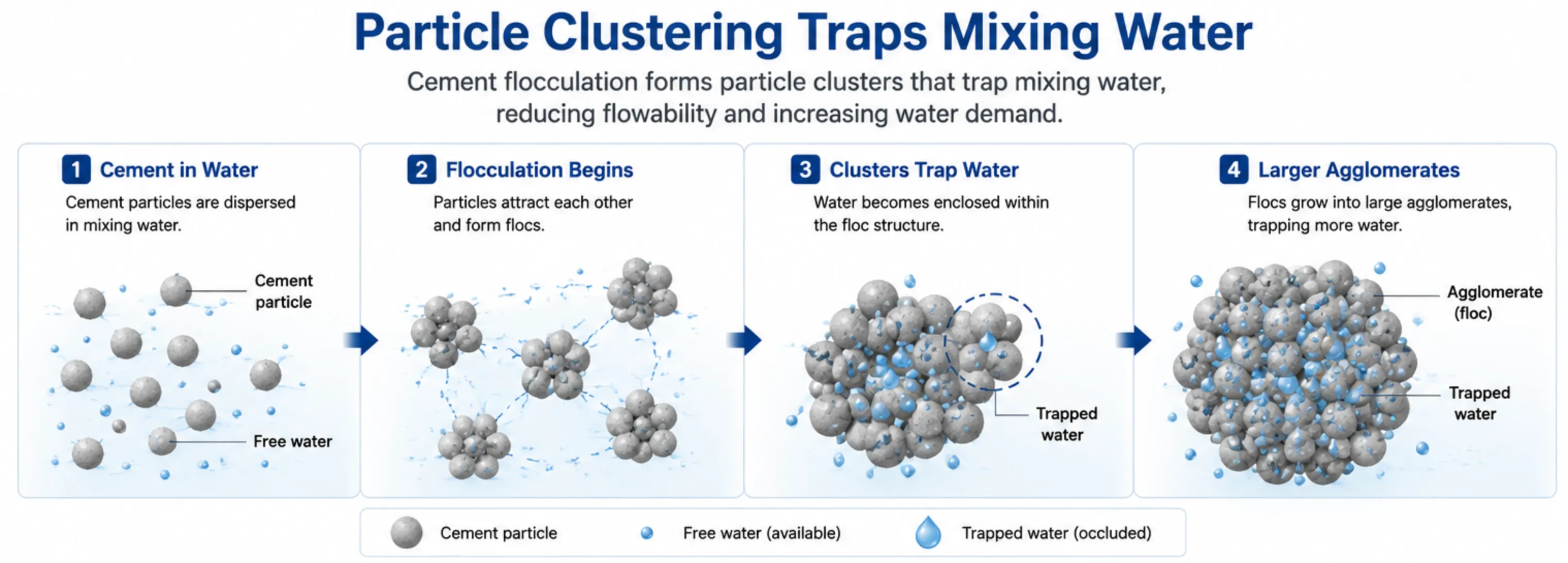 When cement particles form flocculated clusters, part of the mixing water becomes trapped inside the particle network. This trapped water reduces flowability, increases paste viscosity, and raises the water demand required for workable concrete.
Modern polycarboxylate ether (PCE) superplasticizers combine electrostatic repulsion with steric hindrance.
Negatively charged polymer backbones repel neighboring cement particles, while long polyethylene glycol side chains physically prevent them from reflocculating. This dual mechanism explains why PCE generally provides better water reduction and longer slump retention than previous generations of superplasticizers.
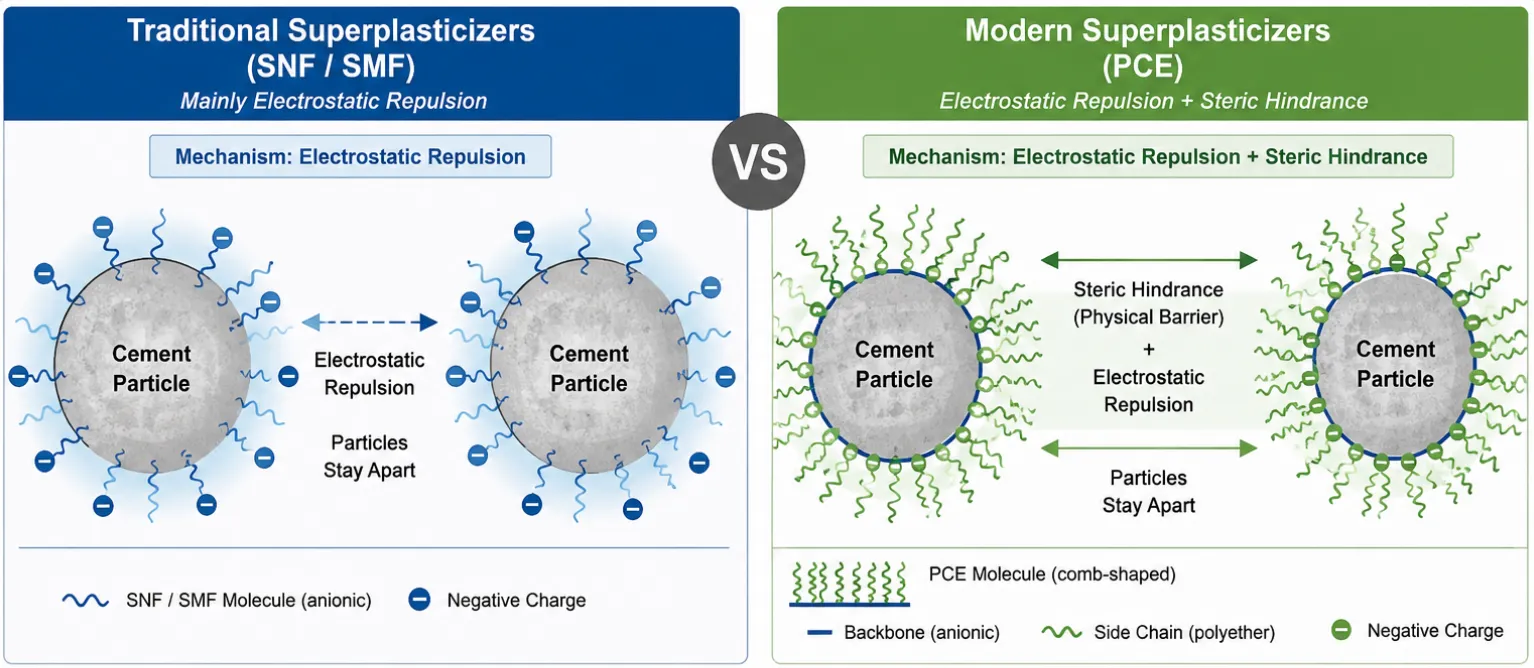 Traditional SNF/SMF superplasticizers mainly rely on electrostatic repulsion, while modern PCE superplasticizers combine electrostatic effects with steric hindrance to achieve stronger dispersion, lower dosage, and better slump retention in concrete.
Hydration Control Mechanism
Admixture-controlled hydration regulates the hydration reactions between cement and water. Their difference lies in the direction and degree of control rather than in fundamentally different mechanisms.
Accelerators increase the rate of hydration, allowing concrete to set faster and develop early strength more rapidly. Retarders delay hydration, extending working time during hot weather, long transportation, or mass concrete placement. Hydration stabilizers can temporarily suspend hydration almost completely before allowing it to resume later under controlled conditions.
Although these admixtures influence setting time differently, they all function by modifying the kinetics of cement hydration rather than changing the final hydration products.
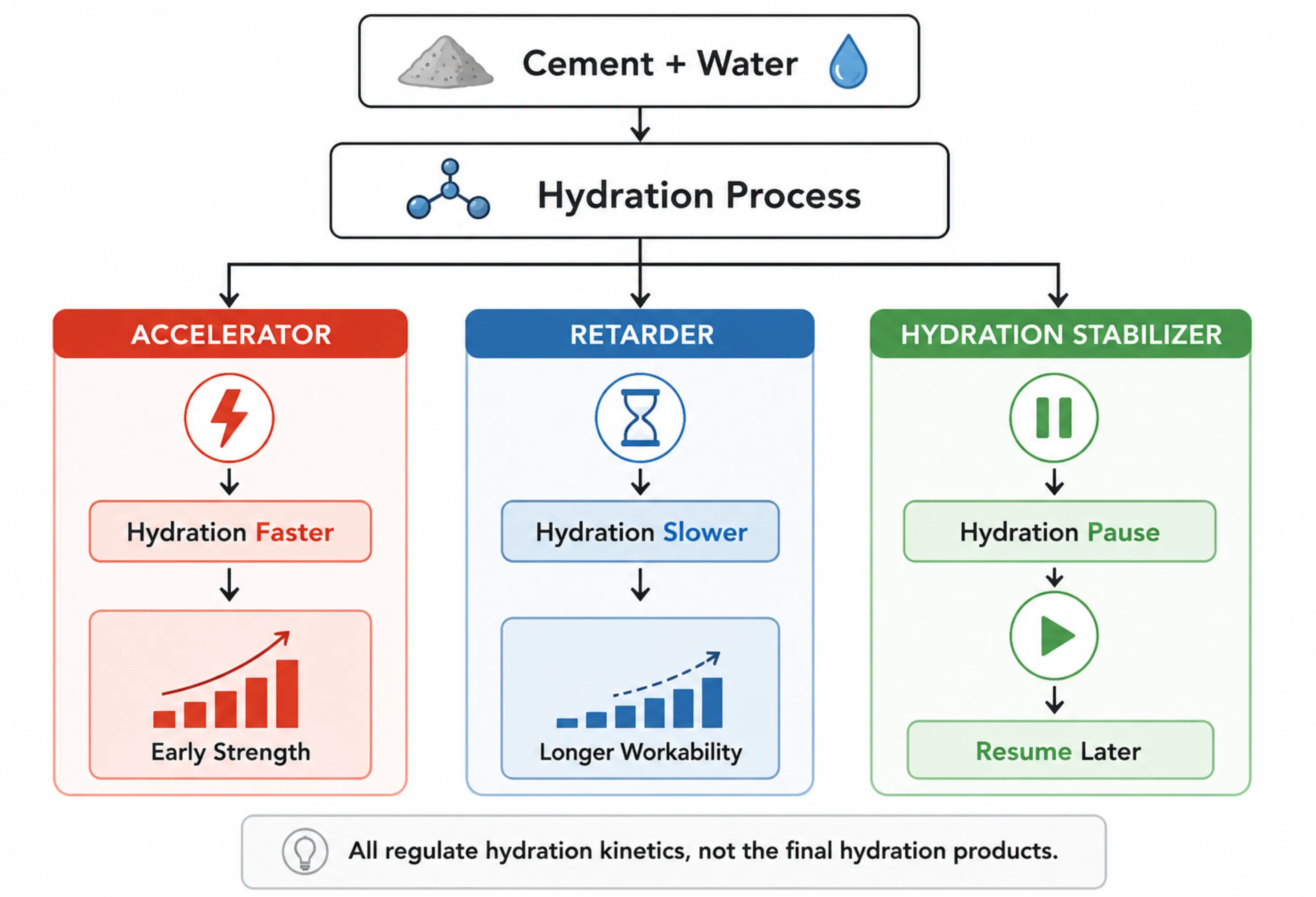 Accelerators, retarders, and hydration stabilizers all regulate cement hydration by increasing, delaying, or temporarily suspending the hydration process without changing the final hydration products.
Surface Chemistry Mechanism
Several admixtures work primarily by modifying surface chemistry rather than changing cement hydration.
Air-entraining agents are surfactants that reduce surface tension, allowing millions of stable microscopic air bubbles to form during mixing. These uniformly distributed bubbles improve freeze–thaw durability while also enhancing workability.
Defoamers and air detrainers work in the opposite direction. Rather than creating stable air bubbles, they destabilize unwanted foam or excessive entrained air, helping eliminate large bubbles that may reduce concrete quality or interfere with production.
Some permeability-reducing admixtures also function through surface chemistry by making capillary pores more hydrophobic, reducing water absorption without significantly altering cement hydration.
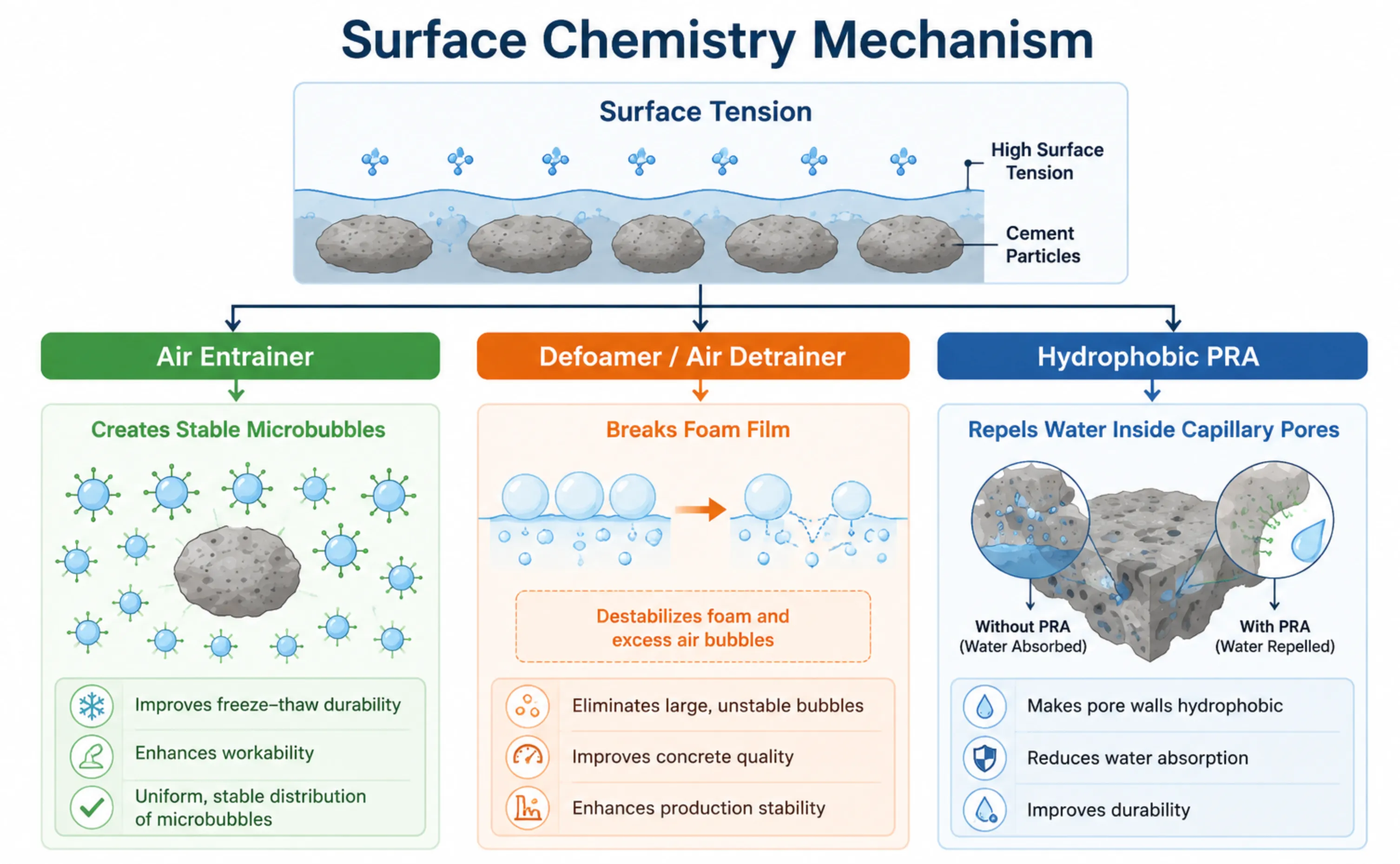
Crystal Formation Mechanism
Some admixtures improve durability by promoting beneficial crystal formation inside the hardened concrete.
Crystalline waterproofing admixtures react with water and cement hydration products to generate insoluble crystals that block capillary pores and microcracks. As moisture enters previously unreacted areas, additional crystals may continue to form, reducing permeability over time.
Alkali–silica reaction (ASR) inhibitors work differently but also rely on chemical interactions within the cementitious matrix. Lithium-based admixtures suppress the expansive gel responsible for ASR, reducing internal expansion and long-term cracking.
Unlike dispersion or hydration-control admixtures, these products primarily influence concrete after placement by modifying its internal microstructure.
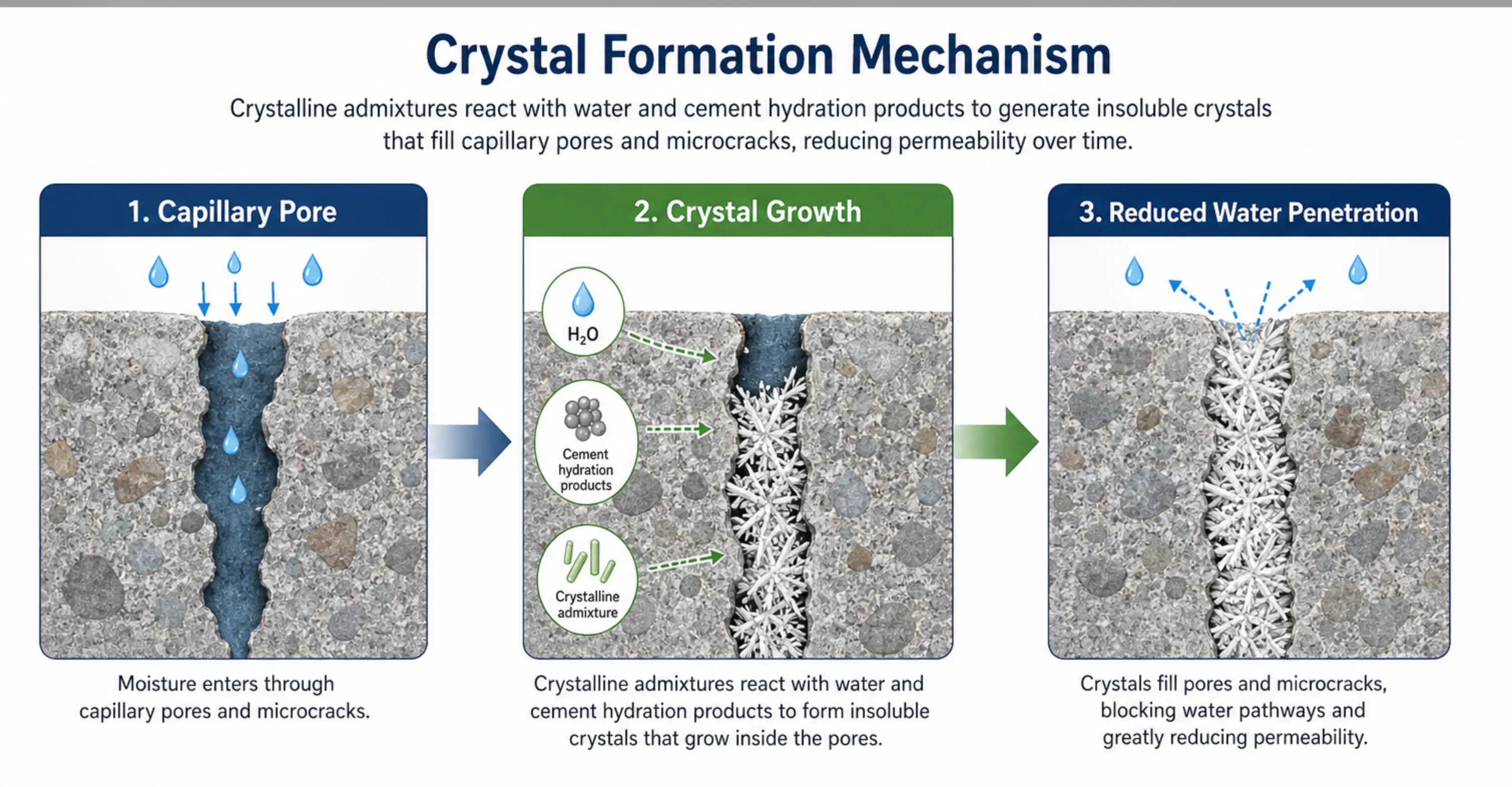 Crystalline waterproofing admixtures react with water and cement hydration products to form insoluble crystals that block capillary pores and microcracks. Continued crystal growth helps reduce permeability and improve the long-term durability of concrete.
Physical Modification Mechanism
Not all admixtures work through chemical reactions. Some improve concrete by physically modifying its internal structure or rheological behavior.
Fibers bridge developing microcracks, limiting crack propagation after concrete begins to harden.
Viscosity modifying admixtures (VMAs) increase paste cohesion, reducing segregation and improving stability in self-consolidating concrete. Shrinkage-reducing admixtures (SRAs) lower the surface tension of pore water, reducing capillary stresses that contribute to drying shrinkage.
Although their mechanisms differ, these admixtures all improve concrete by changing its physical behavior rather than significantly altering cement hydration chemistry.
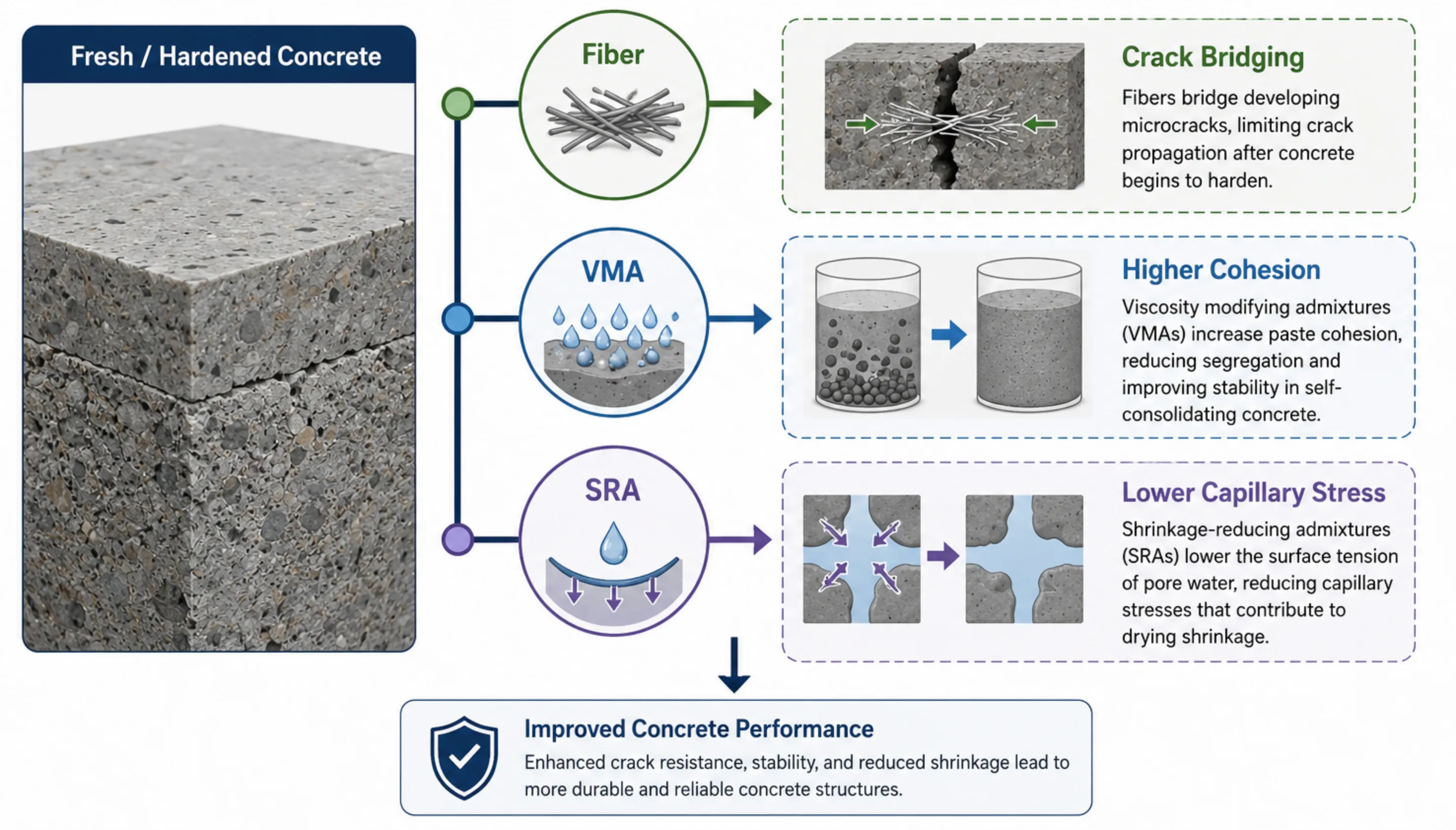 Physical modification admixtures improve concrete performance by reinforcing its internal structure rather than significantly changing cement hydration. Fibers control crack propagation, VMAs improve mixture stability, and SRAs reduce drying shrinkage caused by capillary stress.
Functional Admixture Examples and Engineering Limits
Functional classification is useful only when it leads to a project decision. Water reducers are selected when workability, lower water demand, strength, or durability must improve together. Early-strength agents are used where form turnover, winter work, precast cycles, or emergency repairs make early performance the controlling requirement. Retarders are most relevant to hot-weather concrete, mass concrete, pumped or slip-form construction, and long-haul ready-mix, but their effect can reverse with a change in cement chemistry, so a trial mix is essential.
Air-entraining agents create a controlled system of small, stable bubbles. They can improve workability and freeze-thaw resistance and reduce bleeding or segregation, but excessive air may reduce compressive strength. Expansive agents are used for shrinkage compensation, grouting, filling, or self-stressing systems; the chemistry and exposure conditions must be checked before use. Cold-weather admixtures can support hydration and early strength, but they do not replace insulation, temperature control, or curing. Products containing chloride, nitrite, chromate, or other restricted components require particular care in reinforced, prestressed, potable-water, residential, or food-contact structures.
Conclusion
Concrete admixtures have become an essential part of modern concrete technology rather than optional additives. From improving workability and reducing water demand to controlling setting time, increasing durability, and supporting sustainable construction, different admixtures are designed to solve different engineering challenges throughout the life cycle of concrete.
Understanding how admixtures are classified, how they work, and where they are used allows engineers, contractors, and concrete producers to make better decisions for specific project requirements. While traditional admixtures such as lignosulfonates and air-entraining agents remain important, modern construction increasingly relies on polycarboxylate ether (PCE) superplasticizers, supplementary cementitious materials (SCMs), and viscosity modifying admixtures (VMAs) to meet the demands of ready-mix concrete, pumped concrete, SCC, UHPC, and low-carbon construction.
Selecting the right admixture is not simply a matter of choosing a product—it requires considering the concrete mix design, cement compatibility, environmental conditions, construction method, and long-term performance objectives. Proper laboratory testing and field verification remain the best way to ensure that an admixture system delivers the expected results in practice.
Frequently Asked Questions
What are the main types of concrete admixtures?
The most common concrete admixture categories include water reducers, superplasticizers, retarders, accelerators, air-entraining agents, shrinkage-reducing admixtures, corrosion inhibitors, permeability-reducing admixtures (PRAs), viscosity modifying admixtures (VMAs), hydration-control admixtures, and specialty admixtures such as pumping aids and coloring admixtures. Most international standards classify admixtures according to the function they perform in concrete rather than their chemical composition.
How many types of admixtures are used in concrete?
There is no single universal classification. ASTM C494 defines eight categories of chemical admixtures (Types A, B, C, D, E, F, G, and S), while ACI groups admixtures into broader functional categories such as water reducers, air-entraining agents, retarders, accelerators, corrosion inhibitors, shrinkage reducers, and permeability-reducing admixtures.
Which admixture is used most often?
Water-reducing admixtures are the most widely used chemical admixtures worldwide. For modern commercial concrete, polycarboxylate ether (PCE) superplasticizers have become the dominant technology because they provide efficient water reduction, excellent workability, and good slump retention for ready-mix, pumped concrete, SCC, and UHPC.
What is the difference between a plasticizer and a superplasticizer?
A plasticizer (normal water reducer) generally reduces mixing water by about 5–10%, while a superplasticizer (high-range water reducer) is required by ASTM C494 Type F or G to reduce water by at least 12%, with many modern products achieving 20–35% under suitable mix conditions. Superplasticizers therefore produce much greater flowability while maintaining a low water-cement ratio.
Are PCE superplasticizers better than lignosulfonates?
For most modern concrete applications, yes. PCE superplasticizers combine electrostatic repulsion with steric hindrance, allowing greater water reduction, improved slump retention, and lower dosage than traditional lignosulfonate-based water reducers. However, lignosulfonates remain economical for conventional concrete where extremely high performance is unnecessary.
Which admixture improves concrete strength?
The admixtures that most directly improve compressive strength are water reducers and superplasticizers, because they lower the water-cement ratio while maintaining workability. Lower water-cement ratios generally produce denser concrete with lower permeability and higher long-term strength.
Which admixture reduces water?
Water-reducing admixtures—including normal-, mid-, and high-range water reducers—are specifically designed to reduce mixing water while maintaining the required slump. High-range water reducers (superplasticizers) provide the greatest reduction and are widely used in high-performance concrete.
Which admixture delays concrete setting?
Retarding admixtures delay cement hydration and extend the working time of fresh concrete. They are commonly used during hot weather, long transportation, mass concrete placement, and projects where extended finishing time is required.
Which admixture helps prevent freeze–thaw damage?
Air-entraining admixtures intentionally introduce millions of microscopic air bubbles into concrete. These bubbles relieve internal pressure generated when freezing water expands, greatly improving resistance to freeze–thaw cycles and deicing salts.
Can different admixtures be used together?
Yes. Modern concrete commonly combines several compatible admixtures, such as PCE superplasticizers, retarders, air-entraining agents, VMAs, or corrosion inhibitors. However, compatibility should always be verified through laboratory trial batching because interactions between cement, SCMs, and multiple admixtures can significantly affect performance.
Are mineral admixtures the same as chemical admixtures?
No. Chemical admixtures are typically added in small dosages to modify concrete behavior, while mineral admixtures—more accurately called supplementary cementitious materials (SCMs)—partially replace cement and participate in hydration reactions. Fly ash, slag, silica fume, and metakaolin are examples of SCMs rather than chemical admixtures.
Which admixture is best for waterproof concrete?
Most waterproof concrete uses permeability-reducing admixtures (PRAs) together with a low water-cement ratio. Depending on the application, PRAs may work through hydrophobic technology that repels water or crystalline technology that blocks capillary pores and microcracks. Good mix design and proper curing remain essential for long-term watertightness.